
Can My Employer Deny My FMLA Request? Know Your Rights
 by Alisha Shabbir
 Last updated:
Employer Denied Your FMLA?
Get an independent medical evaluation from a licensed provider, online.
Dealing with a health condition or family crisis is hard enough. Fighting your employer for the leave you’re legally entitled to shouldn’t be part of it. Yet here you are, facing pushback on your FMLA request and wondering whether what they’re doing is even allowed.
The short answer: it depends on why they’re denying your FMLA request. Some reasons are completely illegal. Others are technically valid. And a surprising number fall somewhere in between, where your employer might be wrong but you’ll need to take specific steps to prove it.
This guide breaks down the most common scenarios, explains the laws, and shows you what to do when your employer denies your FMLA request.
How FMLA Protection Actually Works
The Family and Medical Leave Act provides eligible employees with up to 12 weeks of unpaid, job-protected leave per year for qualifying medical and family reasons. Section 105 of the law prohibits employers from “interfering with, restraining, or denying the exercise of” any FMLA right. For covered employers, granting leave to eligible employees isn’t optional.
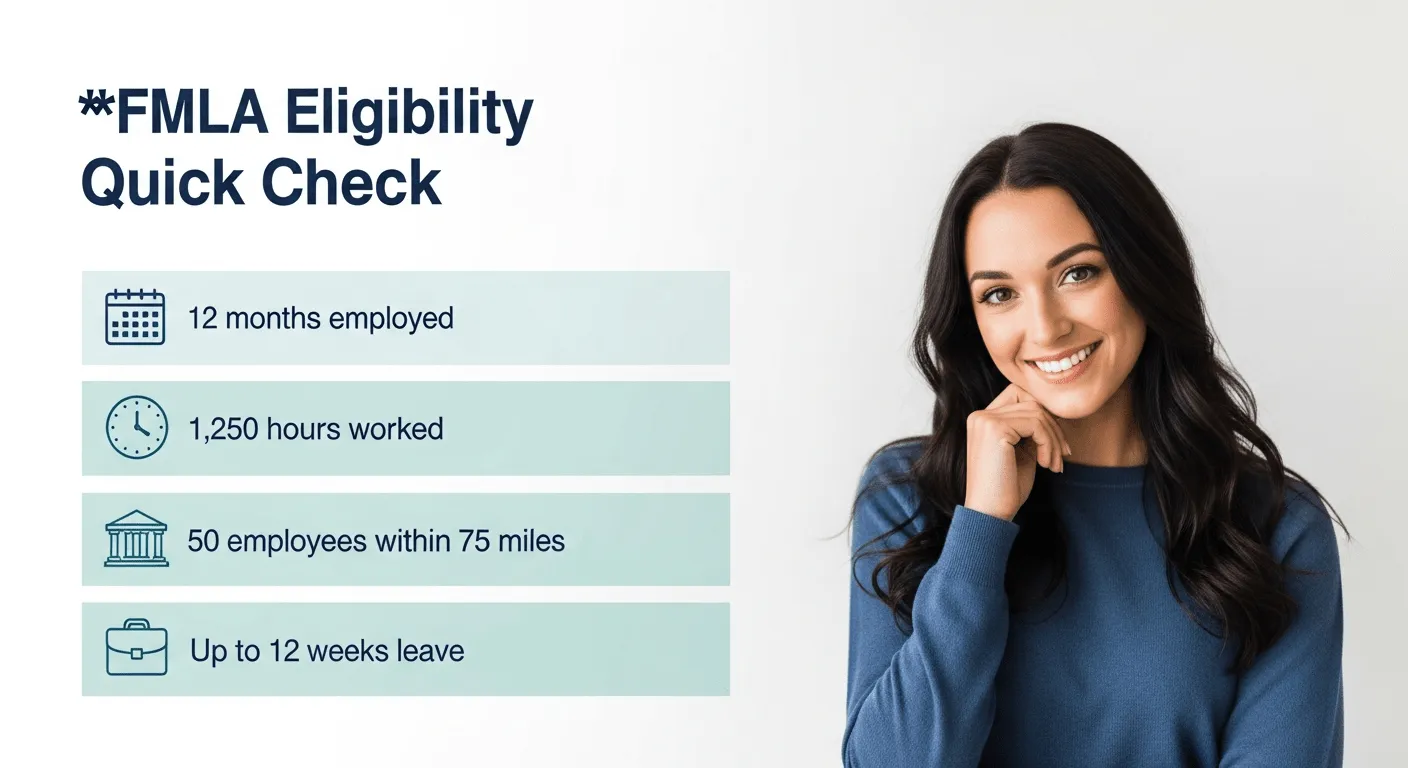
But that protection comes with conditions. You need to meet specific eligibility requirements:
-
12 months of employment,
-
1,250 hours worked in the past year,
-
An employer with 50 or more employees within 75 miles of your worksite.
-
You also need a qualifying serious health condition documented by a healthcare provider.
When those conditions are met, your employer’s hands are tied. The law doesn’t give them discretion to weigh business needs against your leave request. It doesn’t let them decide whether your condition is “serious enough” in their opinion. The determination comes from your healthcare provider, and employers must accept valid certification.
Yet employers deny FMLA requests regularly, sometimes because they don’t understand the law and sometimes because they’re hoping you don’t either. The sections below break down the most common denial scenarios, explain which ones are illegal, and show you exactly what to do in each situation.

“My Employer Denied My FMLA Due to Undue Hardship”
This is one of the most common excuses employees hear. Your employer says approving your leave would cause an “undue hardship” on the business. They cite project deadlines, client obligations, or the difficulty of finding coverage.
This denial is illegal.
The “undue hardship” language comes from the Americans with Disabilities Act, not the FMLA. Under the ADA, employers can deny certain accommodations if they prove significant difficulty or expense. But the FMLA has no such exception. The Department of Labor’s FMLA fact sheet makes clear that if you’re eligible and have a qualifying condition, your employer must grant the leave regardless of business impact.
Some employers genuinely confuse FMLA with ADA requirements. HR departments that handle both types of requests sometimes apply the wrong standard. Others know exactly what they’re doing and hope you don’t know your rights. Either way, the result is the same: “undue hardship” is not a valid reason to deny FMLA leave.
If you received this denial, document it in writing immediately. Send an email to HR stating: “I understand my FMLA request was denied due to undue hardship. Please confirm this in writing and provide the specific legal basis for this decision.” This creates a paper trail and often prompts employers to reconsider when they realize you understand the law.
”My Employer Denied My FMLA Because We’re Understaffed”
Your employer says they can’t approve your leave because the team is already stretched thin. They emphasize how much they need you, how difficult coverage will be, or how your absence would hurt the department.
This denial is illegal.
Staffing is your employer’s problem, not yours. The FMLA doesn’t include a carve-out for busy periods, short-staffed departments, or critical projects. Your federal right to job-protected leave doesn’t disappear because your team is stretched thin.
Managing absences is a normal part of running a business. It’s what employers sign up for when they reach the 50-employee threshold that makes them subject to FMLA. Companies deal with employee absences all the time for vacations, jury duty, military service, and yes, medical leave. Your employer’s failure to plan for predictable staffing needs doesn’t override federal law.
Watch out for a subtler version of this denial: approval on paper but so much guilt and pressure that you feel you can’t actually take the leave. Comments like “I don’t know how we’ll manage without you” or “the team is really going to struggle” can constitute interference under Section 105, even if your leave is technically approved. If the pressure is severe enough to discourage you from exercising your rights, that’s still a violation.
”My Employer Denied My FMLA Because My Condition Isn’t Serious Enough”
Your employer claims your condition “doesn’t seem serious enough” or questions whether you really need leave. Maybe they’ve made comments suggesting your condition isn’t legitimate, or they’ve second-guessed your doctor’s recommendations.
If you have proper medical certification, this denial is illegal.
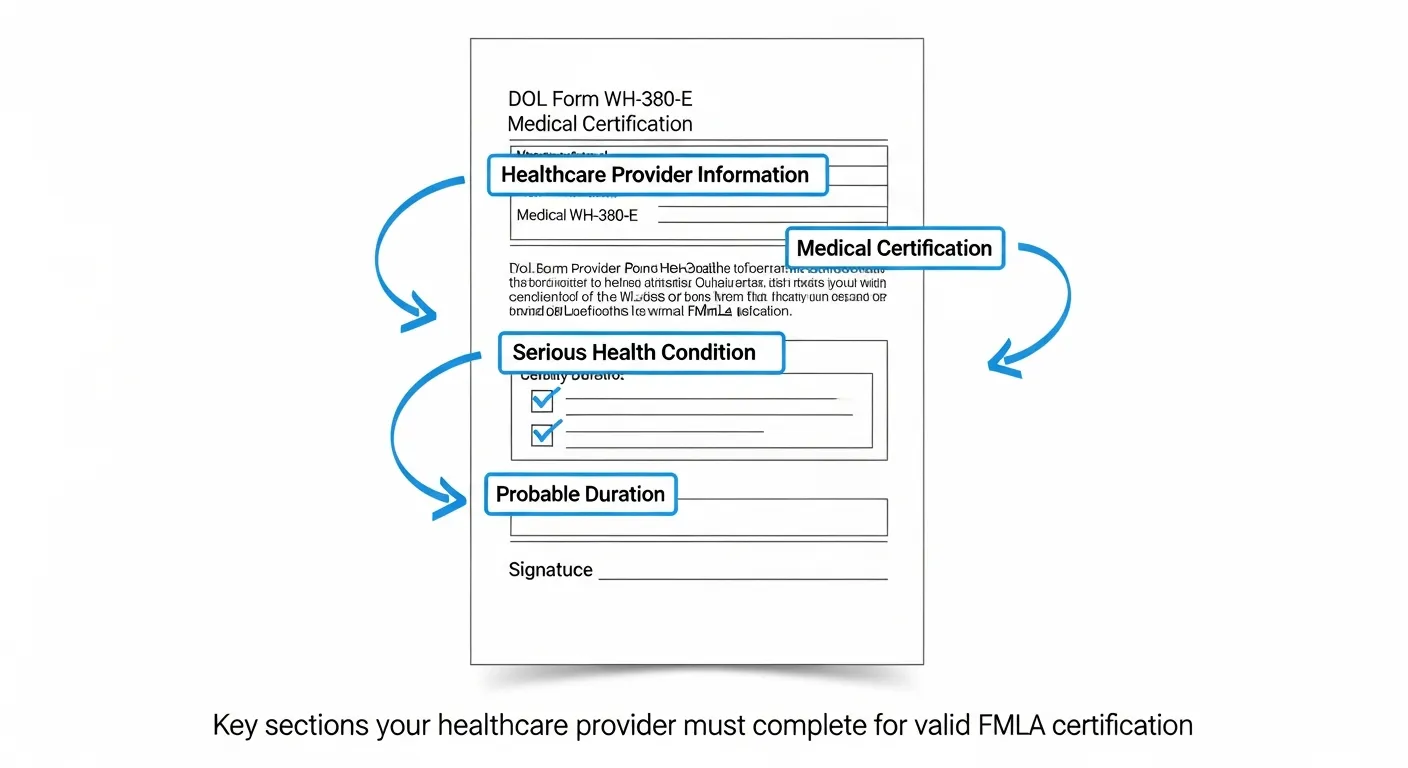
Your employer is not a medical professional. They don’t get to decide whether your condition qualifies for FMLA protection. That determination comes from your healthcare provider through the medical certification process, using the official DOL form WH-380-E for your own serious health condition or WH-380-F for family member care.
Under the FMLA, a “serious health condition” includes:
-
Conditions requiring overnight hospitalization
-
Chronic conditions needing periodic treatment at least twice per year
-
Conditions causing incapacity for more than three consecutive days with ongoing medical care
-
Pregnancy and prenatal care
-
Permanent or long-term conditions requiring supervision
Mental health conditions like anxiety, depression, PTSD, and bipolar disorder absolutely qualify when they meet these criteria. According to the National Institute of Mental Health, nearly one in five U.S. adults lives with a mental illness. The FMLA treats these as legitimate medical conditions requiring the same protections as physical ailments.
Your employer can request certification and even ask for a second opinion at their own expense. But they cannot substitute their judgment for your doctor’s. If your healthcare provider has certified your condition, your employer’s personal opinion about its severity is legally irrelevant.
“My Employer Denied My FMLA Due to Insufficient Medical Certification”
Your employer says your medical certification is incomplete, unclear, or doesn’t adequately support the need for leave.
This can be a legitimate initial response, but you have the right to fix it.
Employers can request medical certification for FMLA leave, and if there are problems with your paperwork, they can ask for more information. But according to Cornell Law School’s analysis of FMLA regulations, your employer must tell you in writing specifically what information is missing or insufficient. Vague rejections don’t count.
You then have at least 15 calendar days to provide the initial certification, and at least 7 calendar days to provide any additional information requested. Your employer cannot simply deny your request without giving you the opportunity to cure deficiencies.
Common Certification Deficiencies and How to Fix Them
| Deficiency | How to Fix It |
|---|---|
| Missing healthcare provider signature | Return form to provider for signature; can often be done via patient portal |
| Vague condition description | Ask provider to specify how condition meets “serious health condition” criteria |
| Unclear treatment schedule | Provider adds frequency (e.g., “weekly therapy” or “monthly infusions”) |
| Missing duration estimate | Provider estimates leave needed (can be a range, e.g., “4-6 weeks”) |
| Incomplete provider contact info | Add provider’s direct phone, fax, and practice address |
A final denial without giving you the chance to cure deficiencies violates FMLA requirements. If your employer denied without specifying what was missing or without giving you time to fix it, that denial itself is improper.
”My Employer Denied My FMLA and Won’t Tell Me Why”
Your employer simply said “denied” without explanation, or refuses to tell you why your request was rejected.
An unexplained denial is itself a potential FMLA violation.
The law requires employers to follow specific notice procedures. Within five business days of your request, they must notify you whether you’re eligible for FMLA leave. If you’re not eligible, they must provide at least one reason why. They must also tell you what additional information is needed if your request is incomplete.
You have the right to know the specific reason for denial so you can address it if possible. Send your employer a written request: “My FMLA leave request dated [MM/DD/YYYY] was denied. Please provide the specific reason for this denial in writing within five business days.” If they refuse or continue to be vague, that refusal itself strengthens any future complaint.
When FMLA Denial Is Actually Legal
Not every denial is wrongful. The FMLA has specific eligibility requirements, and if you don’t meet them, your employer can legally deny your request. Understanding these legitimate reasons helps you assess whether you have a case or need to explore other options. Eligibility requirements you must meet:
12 months of employment
You must have worked for your employer for at least 12 months, though they don’t need to be consecutive. A seven-year lookback applies, so if you left and returned, prior service may count. If you started 10 months ago, you’re not yet eligible for federal FMLA regardless of your condition’s severity.
1,250 hours worked in the past 12 months
This works out to roughly 24 hours per week on average. Only hours actually worked count toward this total, not vacation time, sick leave, or holidays. Part-time employees and those who’ve had significant unpaid time off may fall short.
Employer size and location
Your employer must have 50 or more employees within 75 miles of your worksite. This catches many employees off guard. If your company has 200 employees total but only 30 work within 75 miles of your location, you may not be covered.
Available leave balance
FMLA provides up to 12 weeks per 12-month period. If you’ve already used your allotment, your employer isn’t required to grant more until the period resets. Employers can calculate this period in different ways, so ask HR how your company measures the 12-month window.
Qualifying condition
Your condition must meet the “serious health condition” definition. Routine illnesses like colds or flu, minor injuries, and conditions that don’t require continuing treatment typically don’t qualify. If your healthcare provider determines your condition doesn’t meet the criteria, the denial may be legitimate.
If you don’t meet federal FMLA requirements, check your state’s laws. States like California, New York, New Jersey, Massachusetts, and Washington have their own family and medical leave programs with different eligibility thresholds.
Can My Employer Deny FMLA? Valid vs. Invalid Reasons
An employer can deny FMLA leave when you do not meet federal eligibility or documentation requirements. However, an employer generally cannot deny otherwise protected FMLA leave simply because your absence is inconvenient, the business is understaffed, or management disagrees with your healthcare provider.
| Potentially Valid Reasons for Denial | Generally Invalid Reasons for Denial |
|---|---|
| You have not worked for the employer for at least 12 months | “Your leave would create an undue hardship” |
| You have not worked at least 1,250 hours during the previous 12 months | “We are too understaffed right now” |
| The employer does not meet FMLA coverage requirements | “We need you for an important project” |
| You are not employed at a qualifying worksite under FMLA rules | “Your medical condition does not seem serious enough” when valid certification supports it |
| You have already exhausted your available FMLA leave | “We do not allow FMLA for mental health conditions” |
| The condition does not meet the FMLA definition of a serious health condition | Refusing leave solely because it would inconvenience the employer |
| Required medical certification remains incomplete after you are given the required opportunity to correct it | Denying leave without following required eligibility, certification, or designation procedures |
| You failed to provide required notice without circumstances that reasonably prevented you from doing so | Discouraging or pressuring an eligible employee not to use protected FMLA leave |
If your employer gives you a reason from the right column and you otherwise qualify for FMLA protection, request the decision in writing and consider escalating the matter through HR or the U.S. Department of Labor.
What to Do Next After an FMLA Denial
If your FMLA request was denied, don’t assume the decision is final. Many denials result from incomplete paperwork, missing medical certification, or misunderstandings about FMLA eligibility, not because you aren’t entitled to leave. Taking the right steps now can help protect your rights and strengthen your request.
1. Review the Reason for the Denial
Ask your employer to provide the denial reason in writing. Understanding whether the issue relates to eligibility, missing documentation, or medical certification will help you determine your next steps. Employers should clearly explain why an FMLA request was denied so you can address any correctable issues.
2. Check Your Medical Certification
Review your FMLA paperwork, healthcare provider’s certification, and any supporting documentation to ensure everything is complete and accurate. Missing information or incomplete medical certification is one of the most common reasons for FMLA denials. If your employer requests additional information, respond promptly within the required deadlines.
3. Speak With Your HR Department
If you believe your leave request was denied in error, ask HR to review your case. Many FMLA disputes are resolved after clarifying eligibility requirements or correcting paperwork. Keep copies of emails, denial notices, and any written communication throughout the process.
4. Watch for FMLA Retaliation
FMLA prohibits employers from retaliating against employees for requesting or taking protected FMLA leave. Warning signs include negative performance reviews, reduced hours, demotions, denied promotions, disciplinary actions, or termination shortly after requesting leave. If you experience retaliation, document everything immediately.
5. File a Complaint if Your Rights Were Violated
If your employer continues to deny leave without a valid legal reason, you may file a complaint with the U.S. Department of Labor’s Wage and Hour Division (WHD). In some situations, consulting an employment attorney may also be appropriate, particularly if you believe your employer interfered with your FMLA rights or retaliated against you.
6. Get Complete FMLA Certification
If your request was denied because your medical certification was incomplete, insufficient, or delayed, obtaining accurate, employer-ready documentation can often help resolve the issue. Working with a provider experienced in FMLA certification can reduce avoidable paperwork errors and help ensure your documentation meets Department of Labor requirements.
Don’t let incomplete paperwork stand between you and the leave you may be entitled to. Get your FMLA Certification online from a licensed provider and receive employer-ready medical documentation if you qualify.

What to Do If You Were Denied Over Your Medical Certification
Incomplete or insufficient medical certification is one of the most preventable causes of FMLA delays and denials.
If your employer identifies missing or unclear information, you may have an opportunity to correct the certification before a final decision is made.
If your regular provider is unavailable, slow to respond, or unfamiliar with FMLA paperwork, working with a licensed provider experienced in FMLA certification may help you obtain clearer, more complete documentation.
Get FMLA Certification Online and receive employer-ready documentation if you qualify.
What to Do If Denied: Get Independent FMLA Certification
If your employer denied your request because of incomplete or insufficient medical certification, the fastest path forward is often getting a second opinion from a provider who specializes in FMLA paperwork. An independent certification from a licensed physician can address the deficiencies your employer cited and give you documentation that meets DOL requirements.
This matters especially when your regular doctor is slow to respond, unfamiliar with FMLA forms, or unavailable before your 15-day deadline. Rather than risk a final denial while you wait for an appointment, you can submit a complete, employer-ready certification from an independent provider.
Get independent FMLA certification online through FMLADocs — a licensed physician reviews your case, completes your WH-380 certification, and delivers employer-ready paperwork typically within 24 hours. HIPAA-compliant, accepted nationwide, and backed by a money-back guarantee.
Protecting Yourself from FMLA Retaliation
Retaliation for requesting or taking FMLA leave is illegal. The law prohibits employers from discharging or discriminating against anyone for exercising FMLA rights. This protection covers you when you request leave, while you’re on leave, and after you return. Retaliation claims are among the most common FMLA lawsuits employers face.
Retaliation doesn’t always look like immediate termination. Watch for these warning signs:
-
Termination shortly after requesting or returning from leave
-
Demotion, pay cut, or reduction in hours
-
Negative performance reviews that contradict prior positive feedback
-
Exclusion from projects, meetings, or advancement opportunities
-
Being written up for absences that were FMLA-protected
-
Sudden schedule changes you didn’t request
-
Hostile treatment from management that began after your leave request
If you suspect retaliation, document everything. Save emails, take notes on conversations with dates and witnesses, photograph any written warnings, and keep records of any changes to your job duties, schedule, or treatment. This documentation can be crucial if you need to file a complaint or lawsuit. The timing between your FMLA request and the adverse action is often key evidence.
How to Ensure Your FMLA Request Gets Approved
The best way to handle an FMLA denial is to avoid one in the first place. While you can’t control how your employer responds, you can make sure your request is bulletproof from the start.
Give proper notice
For foreseeable leave like scheduled surgery or expected childbirth, provide at least 30 days’ notice. For unexpected needs, notify your employer the same day you learn of the need or the next business day. Follow your company’s normal call-in procedures unless circumstances make that impossible.
Submit complete medical certification
Incomplete certification is the single most common preventable reason for FMLA problems. Work with a healthcare provider who understands what employers need. Make sure every field is completed, the condition clearly meets the serious health condition criteria, and the provider’s signature and contact information are legible.
Keep copies of everything
Document your request, any correspondence with your employer, all certification paperwork, and notes from verbal conversations. If a dispute arises later, you’ll want records showing exactly what happened and when.
Follow up in writing
After any verbal conversation about your leave, send a follow-up email summarizing what was discussed. Something like: “Per our conversation today, I understand my FMLA leave request has been received and is being processed. Please let me know if you need any additional information.” This creates a paper trail.
Wrapping Up: Protecting Your Right to FMLA Leave
If you meet the eligibility requirements and have a qualifying condition documented by a healthcare provider, your employer cannot legally deny your FMLA request. The excuses you’ve heard, including undue hardship, staffing concerns, project deadlines, and subjective judgments about your condition’s severity, have no legal standing against an eligible employee with proper certification.
When denial does happen, you have clear options. Fix certification problems within the deadlines. Escalate internally to HR or leadership. File a complaint with the Department of Labor. Consult an employment attorney for serious violations. The law provides meaningful remedies including reinstatement, back pay, liquidated damages, and attorney’s fees.
The most common preventable reason for FMLA problems is incomplete medical certification. Your healthcare provider may not be familiar with these forms, and small errors can delay your leave or give employers an excuse to deny. Working with providers who specialize in FMLA documentation ensures your paperwork meets all requirements the first time, so you can focus on what matters: taking care of yourself or your family.
Frequently Asked Questions
Can FMLA be denied?
Yes, an FMLA request can be denied when an employee does not meet federal eligibility requirements, has exhausted available FMLA leave, does not have a qualifying reason for leave, or fails to provide required documentation after being given an opportunity to correct it. However, an employer generally cannot deny valid FMLA leave simply because the absence is inconvenient, the department is understaffed, or the employer disagrees with properly supported medical certification.
What reasons are valid for denying FMLA?
Potentially valid reasons include not having worked for the employer for at least 12 months, not reaching the 1,250-hour requirement, working for an employer or at a worksite that is not covered by the FMLA, exhausting the available FMLA entitlement, or failing to establish a qualifying serious health condition. Incomplete medical certification may also delay or result in denial if the employee does not correct identified deficiencies within the required timeframe.
What should I do if my FMLA is denied?
First, ask your employer to provide the specific reason for the denial in writing. Review your eligibility and medical certification, correct any missing or insufficient documentation promptly, and keep copies of all communications. If you believe the denial violates your FMLA rights, you can escalate the issue to HR, contact the U.S. Department of Labor’s Wage and Hour Division, or speak with an employment attorney. If incomplete or insufficient medical certification is causing the problem, you can also explore FMLA certification services to obtain complete documentation from a licensed provider if you qualify.
Can I be fired for requesting FMLA leave?
No. The FMLA prohibits retaliation for requesting or taking leave. You can still be terminated for legitimate, unrelated reasons like documented performance issues or company-wide layoffs, but if the timing is suspicious and your employer's stated reason doesn't hold up to scrutiny, you may have a retaliation claim. Courts often look at whether the termination happened shortly after the FMLA request and whether the stated reason is pretextual.
What happens if my employer denies my FMLA request?
First, request the denial reason in writing. Compare it to the legal vs. illegal reasons in this guide. If the reason is invalid and you're eligible, document everything and escalate internally to HR. If that doesn't resolve it, file a complaint with the Department of Labor's Wage and Hour Division or consult an employment attorney. You generally have two years to take action.
Can an employer deny FMLA for mental health?
No, not if you're eligible and have proper certification. Anxiety, depression, PTSD, bipolar disorder, and other mental health conditions qualify as serious health conditions under FMLA when they require inpatient care or continuing treatment. Your employer cannot claim mental health conditions "don't count" or override your healthcare provider's certification based on their own opinions about mental illness.
Can my employer deny FMLA if I haven't worked enough hours?
Yes, this can be a legitimate denial. Federal FMLA requires 1,250 hours worked in the 12 months before leave. If you fall short, you don't meet the eligibility threshold. However, check your state's laws. States like California, New Jersey, and New York have family leave programs with lower hour requirements that may still protect you.
Can my employer ask for my specific diagnosis?
No. Your employer can request medical certification confirming you have a qualifying condition, but they cannot require your specific diagnosis. The certification form asks whether your condition meets the FMLA criteria, not what your diagnosis is. Your employer must keep any medical information they do receive confidential and store it separately from your regular personnel file.
Can an employer deny leave if an employee was not aware of the proper procedure for using PTO and applying for Family and Medical Leave Act (FMLA)?
Not necessarily. An employer may require employees to follow reasonable procedures for requesting paid time off (PTO) and FMLA leave, but simply being unaware of those procedures does not automatically justify denying FMLA leave. If an employee provides enough information to indicate they need leave for a qualifying serious health condition, such as pregnancy complications, cancer treatment, chronic pain, or another FMLA-eligible medical condition, the employer generally has a responsibility to notify them of their FMLA rights and eligibility. However, if an employee fails to follow the employer's usual notice procedures without a valid reason, the employer may delay or, in limited circumstances, deny FMLA protection. Promptly notifying your employer and providing complete medical certification can help protect your rights.
Is it possible for an employee to be terminated for using paid time off (PTO) while on Family and Medical Leave Act (FMLA) leave?
Generally, no. An employer cannot legally terminate an employee simply for using approved PTO concurrently with protected FMLA leave. Employees taking FMLA for qualifying serious health conditions are protected from retaliation when they exercise their FMLA rights. However, FMLA does not protect employees from termination for legitimate, non-discriminatory reasons unrelated to their leave, such as company-wide layoffs, misconduct, or documented performance issues. If you believe you were fired because you requested or used FMLA leave, you may have grounds to challenge the decision.
How long do I have to appeal an FMLA denial?
The FMLA does not establish a formal deadline or appeal process for challenging a denial. However, you should act as soon as possible by requesting the reason for the denial in writing, correcting any certification issues, and escalating the matter through your employer's HR department. If you believe your rights were violated, you generally have two years to file a complaint or lawsuit, or three years for willful violations under the FMLA.
Can I reapply for FMLA after being denied?
Yes. You can reapply for FMLA if the reason for the denial has been resolved. For example, you may submit updated or complete medical certification, become eligible after meeting the 12-month employment or 1,250-hour work requirement, or apply for leave related to a new qualifying medical condition. Before reapplying, review your employer's explanation for the denial and ensure your new request fully meets FMLA eligibility and documentation requirements.
Can Independent FMLA Certification Help After My Employer Denies Leave?
Yes, if your employer denied your request because your medical certification was incomplete, insufficient, or delayed. An independent evaluation from a licensed telehealth provider may help provide complete, employer-ready documentation for qualifying conditions such as anxiety, depression, PTSD, bipolar disorder, migraines, pregnancy, chronic pain, or other serious health conditions covered by the FMLA.
My Employer Denied My FMLA. What Should I Do Next?
If your FMLA request was denied, ask your employer for the reason in writing, review whether you meet FMLA eligibility requirements, and determine whether the denial was lawful. If the issue involves incomplete paperwork, work with your healthcare provider to correct it promptly. If you believe your rights were violated, you may escalate the matter to HR, file a complaint with the U.S. Department of Labor, or consult an employment attorney.
Meet the author
Alisha Shabbir
Alisha is a health content specialist with 7 years of experience writing about employee benefits, medical leave, and healthcare access. With a background in healthcare communications, she breaks down complex regulations and medical topics into practical, actionable guidelines. From workplace wellness to preventive health, she helps readers navigate the healthcare system with confidence. When she's not working, she enjoys long walks, baking, and spending time with her pets.
Get Your FMLA Certification Online in Minutes