

Understanding the Family and Medical Leave Act
The Family and Medical Leave Act (FMLA) represents a critical federal law that balances work responsibilities with personal and family health needs. How to apply for FMLA step-by-step becomes essential knowledge for employees facing serious health conditions, family care responsibilities, or qualifying life events. Enacted in 1993, this legislation ensures that eligible employees can take necessary time off without fear of losing their jobs or health insurance coverage.
Under the FMLA, eligible employees receive up to 12 weeks of unpaid, job-protected leave during a 12-month period for specific qualifying reasons. The law applies to public agencies, educational institutions, and private employers with 50 or more employees. Understanding how to apply for FMLA step-by-step allows you to exercise these important rights while maintaining job security and benefits continuation.
The protection extends beyond simply keeping your position. When you return from FMLA leave, your employer must restore you to your original job or an equivalent position with the same pay, benefits, and working conditions. This guarantee provides peace of mind during challenging times when you need to focus on health and family matters rather than employment concerns.
Who Qualifies for FMLA Leave?
Before learning how to apply for FMLA step-by-step, you must determine your eligibility. Not every employee automatically qualifies for FMLA protection, even when working for a covered employer. The law establishes specific criteria that employees must meet to access these benefits.
Employee Eligibility Requirements
To qualify for FMLA leave, you must satisfy three fundamental conditions. First, you must have worked for your current employer for at least 12 months. These months do not need to be consecutive, allowing for breaks in service. Second, you must have completed at least 1,250 hours of work during the 12 months immediately before your leave begins. Third, you must work at a location where your employer has at least 50 employees within a 75-mile radius.
These requirements ensure that FMLA protections apply to employees with established employment relationships and that employers have sufficient workforce depth to accommodate employee absences. Understanding FMLA eligibility helps you determine whether you can pursue this leave option.
Covered Employers
FMLA coverage extends to different employer types. Private sector employers must employ 50 or more employees during at least 20 workweeks in either the current or preceding calendar year. Public agencies, including federal, state, and local government employers, fall under FMLA coverage regardless of employee count. Local educational agencies, encompassing public school boards and both public and private elementary and secondary schools, also must comply with FMLA regulations regardless of size.
Qualifying Reasons for FMLA Leave

Understanding how to apply for FMLA step-by-step requires knowing which situations qualify for protection. The law specifies several distinct categories of qualifying events, each with particular requirements and considerations.
Serious Health Conditions
A serious health condition affecting the employee represents one primary qualifying reason. This condition must render you unable to perform essential job functions. Healthcare providers determine whether your condition prevents you from working at all or from performing any essential function of your position. Conditions requiring inpatient care or ongoing treatment from a healthcare provider typically qualify.
Examples include recovery from surgery, chronic illnesses such as asthma or diabetes requiring regular treatment, or conditions necessitating periodic visits to healthcare professionals. The condition’s impact on your work capacity determines FMLA eligibility rather than the specific diagnosis. Learn about qualifying conditions to better understand whether your situation meets FMLA standards.
Family Care Responsibilities
FMLA leave extends to caring for family members with serious health conditions. You can take leave to care for your spouse, child, or parent when they have a serious health condition requiring your assistance. Caring for family members encompasses providing basic medical assistance, helping with hygiene and nutrition needs, ensuring safety, arranging transportation to medical appointments, and offering psychological comfort and support.
The family member must have a serious health condition involving incapacity, meaning they cannot work, attend school, or perform regular daily activities because of their condition or its treatment. Your role in their care can range from direct physical assistance to providing emotional support and managing care coordination.
Birth and Bonding
Parents can use FMLA leave for the birth of a child and to bond with the newborn during the first 12 months after birth. This protection extends equally to all parents regardless of gender, recognizing that both mothers and fathers need time to establish relationships with new children. The bonding period allows flexibility, permitting parents to take leave immediately after birth or at any point during the child’s first year.
Adoption and Foster Care
Similarly, FMLA covers the placement of a child for adoption or foster care. Employees can take leave when a child first arrives and throughout the first 12 months after placement for bonding purposes. The law also recognizes that the adoption process often requires time before actual placement, permitting leave for attending counseling sessions, appearing in court, consulting with attorneys or medical professionals, completing required physical examinations, or traveling to another country for international adoptions.
Military Family Leave
Special provisions address military family situations. Qualifying exigency leave covers specific situations arising from a family member’s military deployment to a foreign country. These exigencies include making alternative childcare arrangements, attending military ceremonies and briefings, spending time with military members during Rest and Recuperation leave, making financial or legal arrangements, and certain activities related to caring for the military member’s parent.
Military caregiver leave provides up to 26 workweeks in a single 12-month period for caring for a covered servicemember with a serious injury or illness. This extended leave applies when you are the spouse, child, parent, or next of kin of a current servicemember or covered veteran with qualifying conditions.
Need help determining if your situation qualifies? FMLADocs provides comprehensive guidance on qualifying reasons and can help you understand your rights.
How to Apply for FMLA Step-by-Step: The Complete Process

Understanding how to apply for FMLA step-by-step requires following a systematic approach that protects your rights while meeting employer requirements. The process involves several stages, each with specific timelines and responsibilities.
Step 1: Notify Your Employer
The first critical step in the FMLA paperwork guide involves providing notice to your employer. The timing of this notification depends on whether your leave is foreseeable or unexpected. For foreseeable leave, such as scheduled surgery or planned childbirth, you must provide notice at least 30 days before your leave begins. This advance notice allows your employer to make necessary arrangements for your absence.
When leave becomes necessary unexpectedly due to sudden illness, accident, or emergency, you must notify your employer as soon as practicable. Generally, this means within one or two business days of learning about the need for leave. You should contact your supervisor or human resources department following your company’s established notification procedures.
Your notification should provide sufficient information to indicate that you may need FMLA leave. You do not need to specifically mention FMLA or know that your situation qualifies. Instead, provide basic information about the reason for leave, such as describing a medical condition, family emergency, or upcoming medical procedure. This information helps your employer recognize the potential FMLA nature of your request.
Step 2: Receive Eligibility Notification
Within five business days of your notification, your employer must inform you whether you are eligible for FMLA leave. This eligibility notification comes on Form WH-381 (Notice of Eligibility and Rights & Responsibilities). The notice specifies whether you meet the eligibility criteria and provides important information about your FMLA rights and responsibilities.
If the notification indicates ineligibility, your leave will not receive FMLA protection. However, your eligibility status can change over time. You may work additional hours or months to meet requirements and reapply for FMLA leave in the future. If the notification confirms your eligibility, it will include information about any certification requirements and your obligations during the leave period.
Step 3: Complete Required Certification
Your employer may request medical certification to support your FMLA leave request. The specific certification form depends on your leave reason. Form WH-380-E certifies an employee’s own serious health condition, while Form WH-380-F certifies a family member’s serious health condition. Military family leave requires different certification forms addressing qualifying exigencies or military caregiver situations.
You typically have 15 calendar days to provide completed certification to your employer. The certification form goes to your healthcare provider (or your family member’s provider), who completes sections describing the medical condition, treatment requirements, and how the condition affects work capacity or necessitates care. Healthcare providers must provide sufficient detail about the condition and its impact to support the leave request without revealing specific diagnoses or private medical details unnecessarily.
Extensions for providing certification may be granted if circumstances beyond your control prevent timely submission. However, you should make every effort to obtain and submit certification promptly to avoid delays in leave approval. Incomplete or insufficient certification can result in requests for additional information or clarification from healthcare providers.
Step 4: Receive Designation Notice
After receiving your certification (or if no certification is required), your employer has five business days to notify you whether your leave has been designated as FMLA leave. This designation notice comes on Form WH-382 (Designation Notice). The notice specifies whether your leave qualifies as FMLA leave and provides details about how much leave you can take, whether the leave will be paid or unpaid, and any requirements for maintaining contact during your absence.
If your leave is not designated as FMLA leave, it will not receive FMLA protection. You may request leave again in the future if circumstances change or if you can provide additional information supporting your request. If your leave receives FMLA designation, you gain important protections including job protection and health insurance continuation.
Step 5: Take Your Protected Leave
Once your leave is designated as FMLA leave, you can take your time off with the assurance of job protection. During your leave, your employer must maintain your group health insurance coverage under the same terms and conditions as if you continued working. You typically pay your regular employee share of premiums, though specific arrangements may vary.
You should maintain communication with your employer during your leave according to company policies and the terms outlined in your designation notice. Some employers require periodic updates about your status and expected return date. You should also notify your employer if circumstances change, such as if you need to extend your leave or if you can return earlier than anticipated.
Step 6: Return to Work
When you return from FMLA leave, your employer must restore you to your same position or an equivalent position with equivalent pay, benefits, and working conditions. An equivalent position must involve the same or substantially similar duties and responsibilities, require substantially equivalent skill, effort, responsibility, and authority, and provide the same status, pay, and benefits.
Your employer cannot count FMLA leave against you in employment decisions or under attendance policies. Any retaliation for taking FMLA leave violates federal law and provides grounds for legal action. Understanding these protections helps ensure you receive the full benefits of FMLA coverage.
Ready to start your FMLA application? Get step-by-step guidance on filling out FMLA forms to ensure your paperwork is completed correctly.
Obtaining FMLA Forms and Documentation
Learning how to apply for FMLA step-by-step includes knowing where to find necessary forms and how to complete them properly. Several official forms facilitate the FMLA process, each serving a specific purpose in documenting your leave request and protecting your rights.
Department of Labor Forms
The U.S. Department of Labor provides standardized FMLA forms available for free download from their website. These forms include:
-
Form WH-380-E: Certification of Health Care Provider for Employee’s Serious Health Condition
-
Form WH-380-F: Certification of Health Care Provider for Family Member’s Serious Health Condition
-
Form WH-381: Notice of Eligibility and Rights & Responsibilities
-
Form WH-382: Designation Notice
-
Form WH-384: Certification of Qualifying Exigency for Military Family Leave
-
Form WH-385: Certification for Serious Injury or Illness of Current Servicemember
-
Form WH-385-V: Certification for Serious Injury or Illness of a Veteran
These forms are available at the Department of Labor’s FMLA forms page in fillable PDF format. You can complete them electronically or print them for handwritten completion.
Employer-Specific Forms
Many employers maintain their own internal forms in addition to or instead of Department of Labor forms. Your human resources department can provide company-specific forms required for leave requests. These forms often mirror federal forms but may include additional information fields relevant to company policies or procedures.
Always verify with your employer which forms they require. Using incorrect or outdated forms can delay your application. Your HR department should provide clear guidance about which forms to complete and where to submit them.
Medical Certification Requirements
Medical certification forms require detailed information from healthcare providers. The provider must describe the serious health condition, including the date symptoms began or the probable onset date. They must explain the duration of the condition and the probable duration of any incapacity or need for treatment. For intermittent or reduced schedule leave, providers must explain the medical necessity for such leave.
Healthcare providers should complete all sections of certification forms thoroughly. Vague or incomplete certifications may result in requests for additional information, delaying leave approval. The certification should provide enough detail to establish that the condition qualifies as serious under FMLA without revealing unnecessary private medical information.
Types of FMLA Leave Schedules
How to apply for FMLA step-by-step varies depending on whether you need continuous, intermittent, or reduced schedule leave. Understanding these options helps you structure your leave request appropriately.
Continuous Leave
Continuous leave involves taking an uninterrupted block of time off work. This approach suits situations requiring extended absence, such as recovery from major surgery, treatment for serious illness, or bonding with a newborn or newly placed child. Continuous leave provides simplicity in scheduling and administration.
Intermittent Leave
Intermittent leave permits taking FMLA leave in separate blocks of time rather than all at once. This option becomes available when medically necessary for your own serious health condition or when needed to care for a family member with a serious health condition. Intermittent leave allows you to work when able while accommodating unpredictable symptoms or treatment schedules.
For example, someone undergoing chemotherapy might work between treatment sessions but need leave on treatment days and during recovery periods. Someone caring for a family member with a chronic condition might need occasional leave for medical appointments or when the condition flares. Healthcare providers must certify the medical necessity for intermittent leave.
Reduced Schedule Leave
Reduced schedule leave involves working fewer hours than your normal schedule on an ongoing basis. This option suits situations where you can perform work duties but need accommodation due to a serious health condition or family care responsibilities. For instance, you might work half days while recovering from an injury or during ongoing treatment.
Like intermittent leave, reduced schedule leave requires medical certification of necessity for your own or a family member’s serious health condition. Your employer may require you to transfer temporarily to an alternative position with equivalent pay and benefits that better accommodates recurring periods of leave.
Special Rules for Birth and Bonding
Intermittent or reduced schedule leave for birth bonding or placement of a child for adoption or foster care requires your employer’s agreement. Without employer consent, leave for these purposes must be taken continuously. However, many employers offer flexibility recognizing that parents may prefer returning to work part-time initially or taking bonding time in blocks.
Maintaining Health Insurance During FMLA Leave
A critical component of how to apply for FMLA step-by-step involves understanding your health insurance rights during leave. The FMLA requires employers to maintain your group health insurance coverage under the same terms and conditions as if you continued working.
Coverage Continuation
Your employer must continue providing health insurance coverage throughout your FMLA leave period. This includes the same coverage levels, benefits, and dependents as before your leave. You remain responsible for paying your regular employee share of premiums according to the arrangements in place before your leave.
Employers may change health plans during your leave if changes apply to all employees. However, they cannot selectively change your coverage because you are on FMLA leave. Any modifications to health benefits must apply equally to active employees and those on FMLA leave.
Premium Payment
You must continue paying your portion of health insurance premiums during FMLA leave. Employers may require premium payment in several ways. Some employers continue payroll deductions if you receive any compensation during leave (such as paid time off running concurrently with FMLA). Others require direct payment by check or electronic transfer.
Your employer must establish a clear policy about premium payment methods and notify you of payment requirements. If you fail to pay premiums on time, your employer may drop your coverage after providing 15 days’ written notice. However, coverage must be reinstated when you return from FMLA leave under the same terms as before.
Recovery of Premiums
Generally, employers cannot recover premiums they paid to maintain your health insurance during FMLA leave. However, limited exceptions exist. If you fail to return from leave for reasons other than continuation, recurrence, or onset of a serious health condition or other circumstances beyond your control, your employer may recover premiums paid during your leave.
Common Mistakes to Avoid When Applying for FMLA
Understanding how to apply for FMLA step-by-step includes recognizing common pitfalls that can jeopardize your leave approval or protection.
Insufficient Notice
Failing to provide timely notice represents a frequent problem. For foreseeable leave, missing the 30-day notice requirement can result in delayed approval or even denial if the employer suffers prejudice from late notice. Even for unexpected leave, failing to notify your employer as soon as practicable can create issues.
Always notify your employer as early as possible. If you cannot provide 30 days’ notice for foreseeable leave, explain why notice was not possible earlier. Document your notification attempts and timing.
Incomplete Certification
Submitting incomplete or vague medical certification frequently delays leave approval. Healthcare providers must complete all relevant sections of certification forms and provide sufficient detail about the condition and its impact. Generic statements about needing time off do not satisfy FMLA certification requirements.
Review certification forms before submitting them to your employer. Ensure healthcare providers have described the condition adequately, explained why leave is necessary, indicated expected duration, and addressed all form questions. Contact providers to request clarification or additional information if forms appear incomplete.
Missing Deadlines
FMLA processes involve several deadlines. You typically have 15 days to provide medical certification after your employer requests it. Missing this deadline can result in delayed approval or certification rejection. Extensions may be available for good cause, but you must request them proactively.
Track all deadlines related to your FMLA request. Set reminders to ensure timely submission of required documents. If you cannot meet a deadline, contact your employer immediately to explain the delay and request an extension.
Poor Communication
Failing to maintain appropriate communication with your employer during FMLA leave can create problems. While you do not need to provide detailed medical information, you should respond to reasonable requests for status updates and expected return dates. Some employers require periodic contact at specified intervals.
Understand your employer’s communication requirements and comply with them. If circumstances change during your leave, notify your employer promptly. Keep records of all communications regarding your leave.
Not Documenting Everything
Many FMLA disputes arise from inadequate documentation. You should maintain copies of all forms, medical certifications, communications with your employer, and documentation of leave dates. This record protects you if disputes arise about whether you followed proper procedures or if your employer violated your FMLA rights.
Create a file specifically for FMLA-related documents. Copy everything before submitting it to your employer. Document verbal communications in writing when possible, such as sending a follow-up email confirming conversation details.
Your Rights and Protections Under FMLA
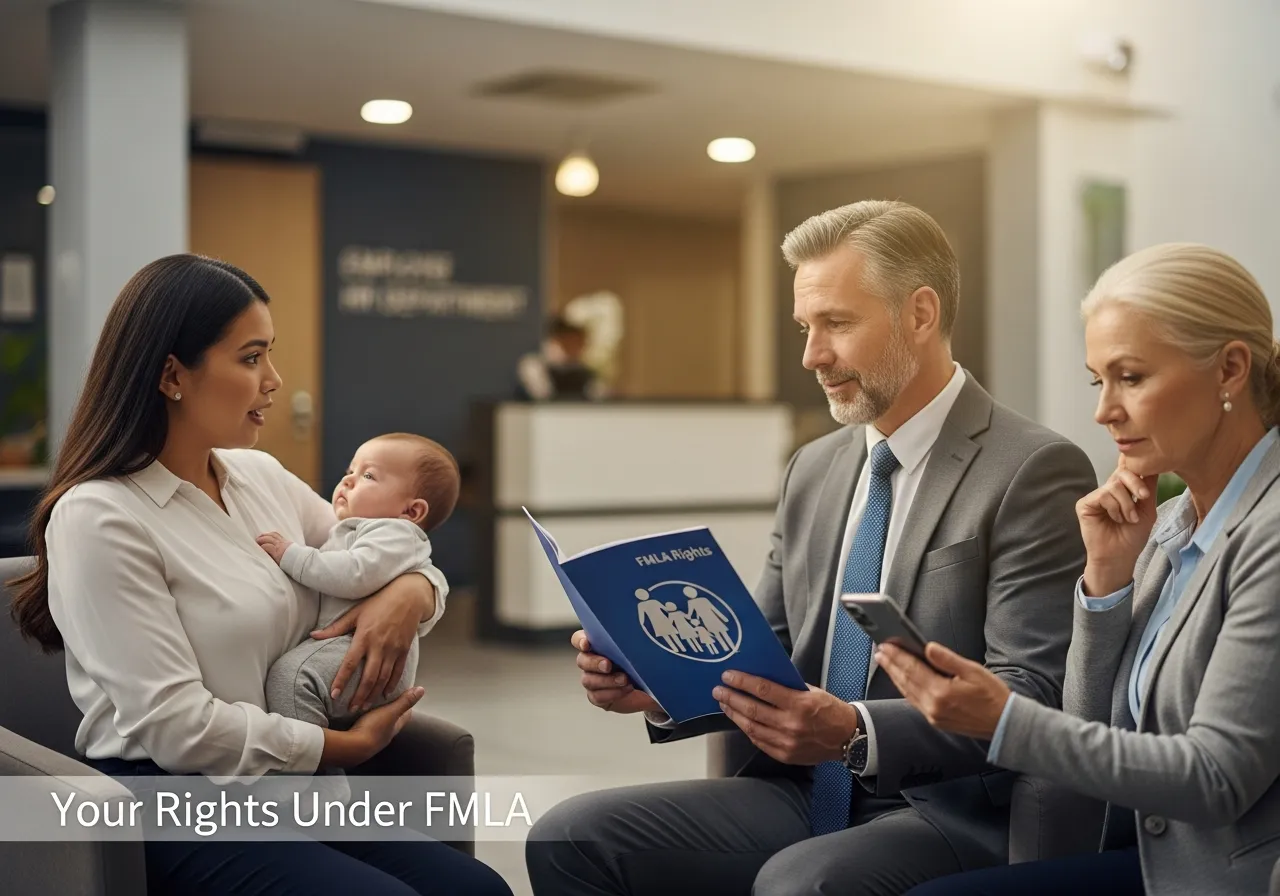
Learning how to apply for FMLA step-by-step must include understanding your rights under the law. The FMLA provides multiple protections ensuring you can take necessary leave without adverse employment consequences.
Job Protection
The FMLA requires employers to restore you to your same position or an equivalent position when you return from leave. An equivalent position must have the same pay, benefits, and working conditions as your previous position. It must require substantially similar duties, responsibilities, skills, and authority.
Your employer cannot use your FMLA leave as a factor in employment decisions such as promotion, discipline, or termination. Leave cannot be counted against you under attendance policies or no-fault systems. Any adverse action because of FMLA leave constitutes unlawful interference with your rights.
Health Insurance Continuation
Your employer must maintain your group health insurance throughout your FMLA leave on the same terms as if you continued working. This protection ensures you maintain coverage when you may need it most. You remain responsible for paying your regular premium share, but your employer cannot change your coverage terms because you are on leave.
Protection from Retaliation
The FMLA prohibits employer retaliation against employees who exercise or attempt to exercise FMLA rights. Retaliation includes any adverse action because you requested or took FMLA leave, participated in an FMLA investigation, or opposed unlawful FMLA practices.
Examples of prohibited retaliation include refusing to authorize eligible leave, discouraging leave use, manipulating work hours to avoid FMLA responsibilities, using FMLA requests against you in employment decisions, or creating a hostile work environment because you took leave.
Right to File Complaints
If your employer violates your FMLA rights, you have several options. You can file a complaint with the Department of Labor’s Wage and Hour Division, which investigates FMLA violations and can pursue enforcement action. You can also file a private lawsuit against your employer in court seeking remedies including back pay, reinstatement, and damages.
Generally, you must file complaints or lawsuits within two years of the violation. For willful violations, this period extends to three years. Consulting with an employment attorney can help you understand your options and deadlines for pursuing claims.
Special Situations and Considerations
How to apply for FMLA step-by-step may involve unique circumstances requiring special attention.
Spouses Working for the Same Employer
When spouses both work for the same employer and both qualify for FMLA leave, special rules limit the combined leave available for certain qualifying reasons. Couples can take a combined total of 12 weeks for birth bonding, adoption or foster placement bonding, or caring for a parent with a serious health condition.
However, each spouse retains a separate 12-week entitlement for their own serious health condition or caring for a child with a serious health condition. The 26-week military caregiver leave entitlement also combines for spouses working for the same employer, limiting them to a combined 26 weeks.
Paid Leave Concurrent with FMLA
FMLA leave is unpaid, but employers may require or permit you to use accrued paid leave concurrently with FMLA leave. This means your vacation time, sick leave, or personal days run simultaneously with FMLA protection. You receive pay for those days while the time counts against your 12-week FMLA entitlement.
Employer policies govern how paid leave interacts with FMLA. Some employers require using all accrued paid leave during FMLA leave. Others permit but do not require it. Understanding your employer’s policy helps you plan financially for leave periods.
State Family and Medical Leave Laws
Many jurisdictions have their own family and medical leave laws providing additional protections beyond federal FMLA. State laws may cover smaller employers, provide longer leave periods, include additional qualifying reasons, or offer paid leave benefits. You may be entitled to protections under both federal and state law.
When federal and state laws provide different benefits, you generally receive the protection most favorable to you under each law. For example, if state law provides 16 weeks of leave while FMLA provides 12, you may be entitled to 16 weeks. If state law covers smaller employers, you may have state leave rights even if your employer is not covered by federal FMLA.
Interactions with Other Leave Laws
FMLA may interact with other leave entitlements such as the Americans with Disabilities Act (ADA), workers’ compensation, or short-term disability insurance. Understanding how these laws work together helps you maximize available benefits and protections.
For instance, FMLA and ADA may both apply to a serious health condition that constitutes a disability. ADA reasonable accommodation obligations may extend beyond FMLA leave periods. Workers’ compensation for work-related injuries may run concurrently with FMLA if the injury qualifies as a serious health condition.
Employer Responsibilities in the FMLA Process
Understanding how to apply for FMLA step-by-step includes recognizing what your employer must do. Employers have specific obligations ensuring the FMLA process operates fairly and consistently.
Posting Requirements
Covered employers must post a notice explaining FMLA provisions in a conspicuous location where employees can see it. This notice informs employees about FMLA rights, eligibility requirements, and how to file complaints about violations. Employers must also include FMLA information in employee handbooks or distribute it to new employees.
Providing Required Notices
Employers must provide specific notices at different stages of the FMLA process. Within five business days of learning you may need FMLA leave, employers must notify you of your eligibility and provide information about your rights and responsibilities. They must also notify you whether your leave has been designated as FMLA within five business days of receiving sufficient information.
These notices must be in writing and explain applicable entitlements, requirements, employee rights, and potential consequences of failing to meet obligations. Failure to provide proper notices can prevent employers from denying leave or taking action based on unmet requirements.
Avoiding Interference and Retaliation
Employers cannot interfere with, restrain, or deny exercise of FMLA rights. This prohibition extends beyond directly denying leave to include any action that discourages leave use or makes it more difficult to exercise rights. Employers cannot retaliate against employees for using FMLA leave or participating in FMLA-related activities.
Maintaining Confidentiality
Medical information obtained during the FMLA process must be kept confidential. Employers should maintain medical certifications and related documents in files separate from regular personnel files. Access to medical information should be limited to those with a legitimate need to know.
Tips for a Successful FMLA Application
Following these practical tips improves your chances of a smooth FMLA process.
Start Early
Begin the FMLA process as soon as you know you may need leave. Early notification gives your employer time to process your request and allows you to gather necessary documentation without rushing. For foreseeable leave, start at least 30 days in advance when possible.
Keep Detailed Records
Document everything related to your FMLA request. Keep copies of all forms, certifications, notices, and communications. Note dates and times of conversations with supervisors and HR representatives. Write follow-up emails confirming verbal discussions. This documentation protects you if disputes arise.
Understand Your Employer’s Policies
Familiarize yourself with your company’s FMLA procedures, which should appear in employee handbooks or policy manuals. Know who to contact, which forms to use, how to submit requests, and what communication your employer expects during leave. Following company procedures smooths the process.
Work with Your Healthcare Provider
Communicate clearly with your healthcare provider about FMLA requirements. Explain that you need medical certification for family or medical leave. Provide the certification form promptly and ask your provider to complete all sections thoroughly. Follow up if you do not receive the completed form within a reasonable time.
Maintain Communication
Stay in contact with your employer according to company policies and leave terms. Respond promptly to requests for information or status updates. Notify your employer if circumstances change, such as if you need to extend leave or can return early. Consistent communication prevents misunderstandings.
Seek Help When Needed
If you encounter difficulties with your FMLA application or believe your employer is violating your rights, seek assistance. Contact the Department of Labor’s Wage and Hour Division for guidance or to file a complaint. Consider consulting an employment attorney for advice about complex situations or potential violations.
Conclusion
Understanding how to apply for FMLA step-by-step empowers you to access important protections when facing serious health conditions, family care responsibilities, or qualifying life events. The process requires careful attention to eligibility requirements, timely notification, proper documentation, and clear communication with your employer. By following the steps outlined in this guide, maintaining detailed records, and understanding your rights under the law, you can navigate the FMLA process successfully while protecting your job security and health benefits.
Remember that FMLA provides critical protections, but it also involves specific procedures and deadlines that you must follow. Starting early, gathering necessary documentation, working cooperatively with healthcare providers and employers, and seeking help when needed all contribute to a positive FMLA experience. Whether you need continuous leave for major surgery, intermittent leave for ongoing treatment, or time to bond with a new child, the FMLA offers the flexibility and protection you need during life’s important moments.