What to Do If Your FMLA Denied by Your Employer? Get Approved
 by Nida Hammad
 Last updated:
When your FMLA denied by employer situation happens, it’s important to understand the cause. Some denials are legal. Others violate federal law.
Employers must meet specific requirements to deny FMLA leave. You need to know the difference between legitimate and wrongful denials.
Legitimate Reasons for FMLA Denial
First, your employer must have 50+ employees within 75 miles. You must have worked for 12 months and logged 1,250 hours in the past year.
Paperwork issues are simply the most common reason or leading cause of denials. Your doctor must provide sufficient medical facts to prove you need leave.
Then, timing matters. You need to give 30 days’ notice for foreseeable leave. For emergencies, notify your employer as soon as you can.
Finally, your condition must be serious enough. It needs inpatient care or continuing treatment by a healthcare provider.
Common Mistakes: Why Your FMLA is denied by the employer
However, many employers make errors when processing FMLA requests. They misunderstand eligibility requirements or fail to provide proper notice.
Business needs can’t justify denial. This is illegal under federal law. Your employer can’t deny leave because it’s inconvenient.
Red Flags That Indicate an Illegal Denial
Identify the following signs that may indicate a wrongful FMLA denial:
-
Denial shortly after you report workplace issues
-
Inconsistent application of FMLA policies across employees
-
Pressure to not take leave or return early
These patterns may indicate retaliatory action. Document all relevant communications and interactions if you observe these indicators.
Immediate Steps to Take After Your FMLA Denial
Request Written Explanation Within 5 Business Days
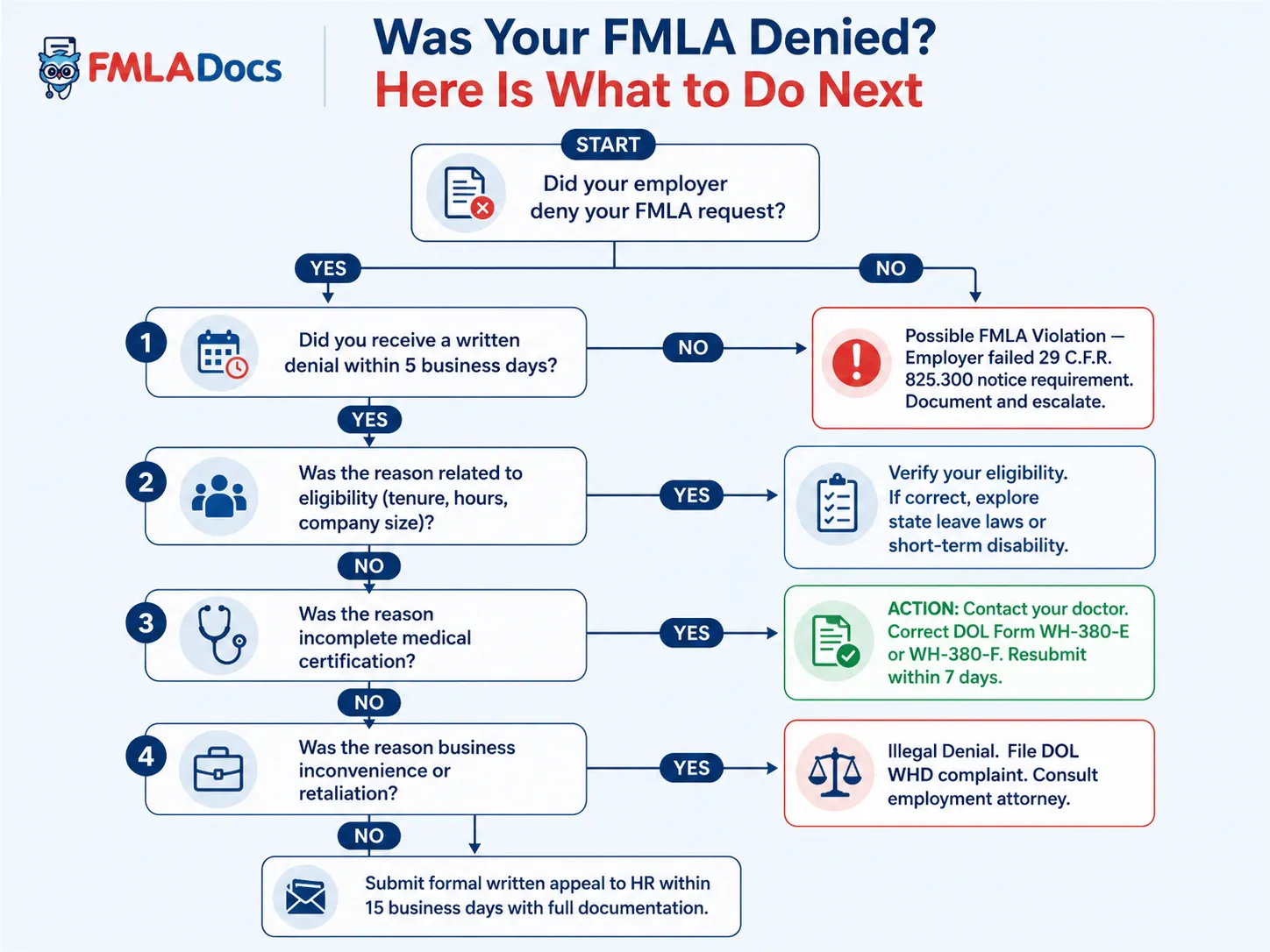
Federal law requires employers to provide written denial notice within 5 business days. The notice must include specific reasons and your rights.
Check if your employer provided DOL Form WH-382 when you first requested leave. This form outlines your eligibility and responsibilities under FMLA.
Review Your Medical Certification Requirements
Contact your healthcare provider right away to review the medical certification. Many denials stem from vague language or missing information.
Your doctor can correct incomplete forms or add needed details. This simple fix resolves most certification-related denials.
FMLADocs connects you with licensed healthcare professionals who understand FMLA requirements. They complete proper medical certification without office visits.
Document Everything Related to Your Request
Create a detailed timeline of your entire FMLA process. Include when you requested leave and what documentation you submitted.
Get complete copies of your FMLA request, all submitted documentation, and company policy. Add the denial letter to your records.
Preserve all emails, text messages, and written communications with HR. These serve as evidence for appeals or legal action.
Document all communications with dates, times, and participants present. This record protects your rights during the appeals process.
How to Appeal an FMLA Denial and Strengthen Your Case
When your employer denies FMLA, you can fight back. Start by fixing any problems with your paperwork. Then submit a formal appeal.
Correcting Medical Certification Deficiencies
Work with your doctor to complete DOL Form WH-380-E or WH-380-F. Make sure every question gets answered fully.
Your doctor must address these points:
-
The serious health condition diagnosis
-
Expected duration of the condition
-
Why you need leave
-
How the condition prevents job functions
FMLADocs connects you with licensed doctors who understand FMLA requirements. They complete certifications correctly the first time.
Filing a Formal Internal Appeal
Submit your appeal in writing to HR within 15 business days. Reference specific FMLA regulations in your letter.
Include all corrected documentation with your appeal. Request a meeting to discuss the denial face-to-face.
Bring your complete timeline and documentation. Be ready to address each reason for the FMLA denial.
When to Involve Legal Representation
Consider an employment attorney if the denial seems retaliatory or discriminatory. Get legal help if HR refuses to reconsider despite proper documentation.
Many attorneys offer free consultations for wrongful FMLA denied by employer cases. They work on contingency, so you pay nothing unless you win.
Filing a Complaint and Exploring Legal Options
When your employer denies your FMLA request, you have legal options. Don’t let a wrongful FMLA denial by your employer go unchallenged. Federal law protects your right to take leave.
Filing with the Department of Labor Wage and Hour Division
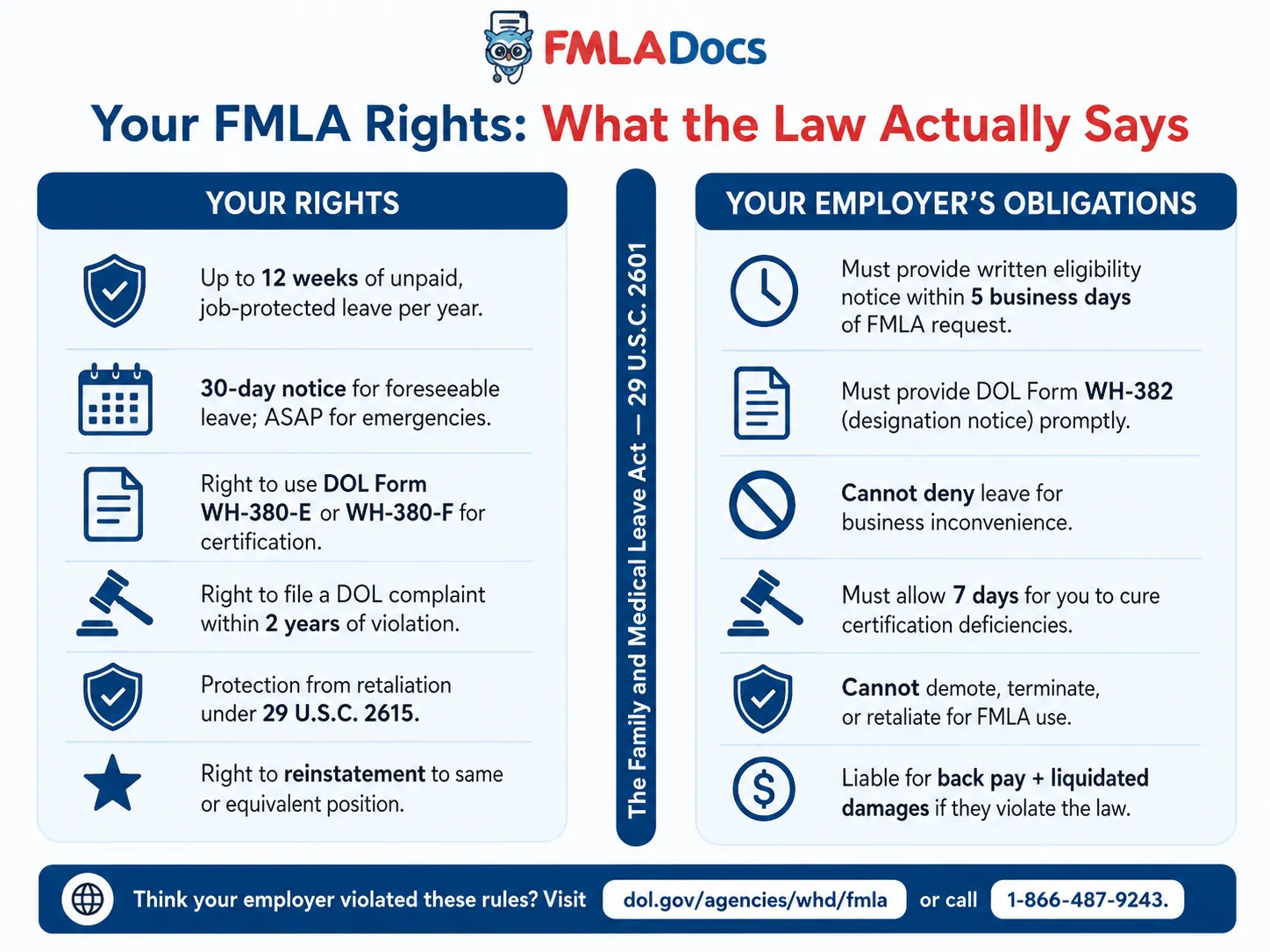
You can file a complaint with the DOL Wage and Hour Division. The process is free and accessible through multiple channels.
-
File online through the DOL website
-
Call 1-866-487-9243 to speak with an investigator
-
Visit your local DOL office in person
You have two years from the violation date to file. If the violation was willful, you get three years. Don’t delay if your internal appeal fails.
The DOL will investigate your FMLA denial claim by your employer. They’ll review company records and interview relevant parties. They can order reinstatement, back pay, and benefit restoration.
Understanding Your Legal Rights and Potential Remedies
Legal remedies for wrongful FMLA denial can be substantial. You may recover up to 12 weeks of lost wages.
Courts can award compensation for actual monetary losses. This includes lost benefits and out-of-pocket expenses. Liquidated damages can double your recovery amount.
You can file a private lawsuit in federal or state court. This option exists alongside or after DOL filing. The same timeframe applies to private lawsuits.
Protecting Yourself from Retaliation
Federal law prohibits retaliation for exercising FMLA rights. Document any adverse actions after your request. This includes demotion, termination, or harassment.
Continue performing your job duties while pursuing your appeal. Only stop if your medical condition prevents you from working.
Conclusion
Getting FMLA denied by employer doesn’t end your options. You now know why denials happen and what red flags to watch. You understand how to request written explanations within five business days. You’ve learned the appeal process and how to strengthen your case.
First, review your denial letter for specific reasons. Then, gather all missing documents your employer needs. Next, follow the appeal steps we covered to challenge the decision. If your employer violated your rights, file a complaint about an FMLA violation with the DOL.
Federal law protects workers who need medical leave. Employers face serious penalties for wrongful denials. Don’t let incomplete paperwork block your protected leave rights.
If you need help with medical certification, FMLADocs connects you with licensed doctors who understand FMLA cases. Our healthcare professionals complete your certification remotely, so you can focus on what matters. Get expert support today to strengthen your request and protect yourself when employers deny FMLA requests.
Take action now to secure the job-protected leave you deserve when facing FMLA denied by employer situations.
Frequently Asked Questions
What are the most common reasons for FMLA denied by employer?
Employers deny FMLA requests for several legal reasons. First, you might not meet the 12-month work requirement. You need 1,250 hours in the past year. Also, your employer must have 50+ workers within 75 miles. Missing or wrong medical forms cause many denials. Your doctor must complete DOL Form WH-380-E or WH-380-F correctly. Some employers deny requests when you don't give 30 days' notice for planned leave. However, wrongful FMLA denial happens when employers ignore valid requests or retaliate against workers.
How quickly must I appeal FMLA denial after my employer rejects my request?
You should appeal right away after getting your denial notice. Federal law doesn't set a strict deadline for appeals. However, you have two years to file a complaint with the Department of Labor. Act fast to protect your rights. First, get your written denial within 5 business days. Then fix any medical certification problems with your doctor. Submit your appeal with corrected forms within 7-10 days. This shows you're serious about your FMLA rights after denial.
Can I file a complaint if my FMLA denied by employer was wrongful?
Yes, you can file a complaint for wrongful FMLA denial. Contact the Department of Labor Wage and Hour Division online or by phone. You don't need a lawyer to start this process. The DOL will look at your case for free. They can order your employer to give you leave and back pay. You can also hire an employment lawyer to file a lawsuit. This option works well for serious violations or retaliation cases. Keep all denial letters and medical forms as proof.
What medical certification requirements must I meet to avoid FMLA denial?
Your doctor must complete the right DOL form for your case. Use Form WH-380-E for your own health condition. Use Form WH-380-F to care for a family member. The form needs specific details about your condition and why you need leave. Your doctor must explain how long you'll be out. They should describe any work limits you have. Leaving blank spaces causes denials. FMLADocs connects you with licensed doctors who know these forms well.
What happens to my job if I can't appeal FMLA denial in time?
Your job isn't safe without approved FMLA leave. Your employer can fire you for missing work. This happens even if you have a real medical need. That's why you must appeal FMLA denial fast. Try to fix your paperwork before your leave starts. If you're already out, send corrected forms right away. Talk to HR about using other leave types while you appeal. Some employers offer short-term disability or paid time off. These options can protect your job during the appeal process.
How does FMLADocs help prevent FMLA denied by employer situations?
FMLADocs matches you with licensed doctors who know FMLA medical certification requirements. You don't need to leave home for your visit. The doctor completes your DOL forms correctly the first time. This stops common FMLA denial reasons before they happen. You get help with all paperwork and forms. The service works for your own health needs or family care. Licensed pros understand what employers need to see. They make sure your forms have all the right details and dates.
What should I do when FMLA is denied but I still need time off?
First, ask for a written explanation of your denial. Check if you can fix the problems quickly. Work with your doctor to correct any form errors. Submit your appeal with new paperwork right away. Meanwhile, ask HR about other leave options. You might use sick days, vacation time, or unpaid personal leave. Some states have their own family leave laws that might help. If your employer won't work with you, file an FMLA violation complaint with the DOL. Don't just stop showing up to work.Recognize potential FMLA denial warning signs: a rejection that comes quickly after reporting workplace issues, unequal FMLA policy enforcement across workers, and management pushing you to forgo or cut short your authorized leave. Such behaviors could suggest discriminatory intent.
Meet the author
Nida Hammad
I am a professional writer with over five years of experience creating clear, engaging, and well-researched content. I specialize in healthcare topics, helping readers understand complex information in simple wording. Currently, I write for FMLA DOC, where I focus on producing accurate and trusted guides for people seeking support with FMLA and medical needs.
Get Your FMLA Certification Online in Minutes