
Can You Work While on FMLA? Your Rights Explained
 by Nida Hammad
 Last updated:
The Family and Medical Leave Act stands as one of the most important workplace protections in America. Since 1993, this federal law has helped millions of workers balance serious health issues and family responsibilities without losing their jobs. But navigating FMLA can feel overwhelming, especially when you’re dealing with questions about working while on FMLA leave or how to get paid during this critical time.
Whether you’re facing a serious health condition, caring for a family member, or welcoming a new child, understanding your rights under FMLA is essential. This comprehensive guide will walk you through everything you need to know about working while on FMLA, from legal restrictions to employer violations you should watch for.
What is FMLA and Who Qualifies?

The Family and Medical Leave Act provides eligible employees up to 12 workweeks of unpaid, job-protected leave per year. The law also requires employers to maintain group health benefits during this period as if employees were still actively working.
Eligibility Requirements
To qualify for FMLA leave, you must meet several criteria. First, you need to work for a covered employer, this includes private companies with 50 or more employees, all public agencies, and schools. Second, you must have worked for your employer for at least 12 months, though these months don’t need to be consecutive. Third, you must have logged at least 1,250 hours of work during the 12 months before your leave begins. Finally, you must work at a location where your employer has 50 or more employees within 75 miles.
Find out the Detail Eligibility Requirement of FMLA
Qualifying Reasons for FMLA Leave
FMLA leave can be taken for several important reasons. You can use it to manage your own serious health condition that makes you unable to perform your job. You can also take leave to care for an immediate family member, your spouse, child, or parent, who has a serious health condition. New parents can use FMLA for the birth and bonding with a newborn or for the placement of a child through adoption or foster care. Additionally, qualifying exigencies related to a family member’s military service are covered.
Complete your FMLA Certification Online within 24 Hours.
Working While on FMLA is legal or Not?

The short answer is that employers cannot require employees to work during FMLA leave. The law specifically prohibits employers from interfering with an employee’s protected leave rights. When you take FMLA leave, you’re entitled to actual time away from your job duties.
Understanding the Prohibition
Employers may not interfere with an employee’s protected FMLA leave, which means making an employee work during leave violates the law because the employee isn’t truly receiving the benefit of time away from work. While your employer may contact you periodically for legitimate business purposes, asking too much of you during your leave crosses the line into an FMLA violation.
Voluntary Work Arrangements
There’s an important exception to understand. The Fifth Circuit Court of Appeals ruled that giving employees the option to work while on leave does not constitute interference with FMLA rights, as long as working while on leave is not a condition of continued employment. This means that if you and your employer mutually agree to a voluntary work arrangement, it may be permissible.
For example, you might agree to handle specific tasks remotely or check emails while recovering. The key requirement is that this arrangement must be completely voluntary—your employer cannot make it a requirement for keeping your job or returning to your position after leave.
Important Considerations for Remote Work
If you do agree to work during FMLA leave, several factors need careful attention. The arrangement should be clearly documented in writing, specifying exactly what work you’ll perform and how you’ll be compensated. The agreement must state that the arrangement is voluntary and that you can terminate it at any time without affecting your underlying leave rights or job restoration.
Working remotely during FMLA can raise wage and hour issues, particularly for non-exempt employees, as it may lead to off-the-clock claims and time record problems. These opportunities may be better suited to salaried, exempt employees, provided the temporary arrangement doesn’t change their exempt status.
Can You Work Another Job While on FMLA?
This question surprises many employees, but the answer is more nuanced than you might expect. Whether you can hold a second job while on FMLA leave largely depends on your employer’s policies and the nature of your leave.
What the Law Says
The FMLA does not prevent an employee from working at another job while taking leave, as long as company policy does not prohibit it. The law itself doesn’t specifically address moonlighting or second jobs during FMLA leave. However, working another job during your leave must not be inconsistent with the serious health condition that qualified you for FMLA in the first place.
When Second Jobs Are Problematic
If you’re on FMLA leave because of your own serious health condition, working another job could undermine your leave claim. For instance, if you claim you’re too ill to perform your regular job duties but you’re working full-time elsewhere, your employer might rightfully question whether you truly have a qualifying serious health condition.
Company policies often address whether employees may work for another employer during leave, and employees must comply with these restrictions or risk violating their employment terms. Many employers include provisions in their handbooks that prohibit outside employment during any type of leave. Violating such policies could result in disciplinary action or even termination.
Acceptable Scenarios
There are situations where working another job during FMLA leave might be acceptable. If you’re taking intermittent FMLA leave and your second job doesn’t conflict with your treatment schedule or exacerbate your condition, it may be permissible. Similarly, if you’re taking leave to care for a family member rather than for your own health condition, working another job might not raise the same concerns.
The safest approach is to review your employer’s policies carefully and consider consulting with HR before taking on additional employment during FMLA leave.
Understanding FMLA Leave Restrictions
While on FMLA leave, employees need to understand certain limitations and requirements to maintain their protections under the law.
The FMLA 3 Day Rule
One important provision involves what’s commonly called the “FMLA 3 day rule.” For a condition to qualify as a serious health condition, it typically must involve incapacity for more than three consecutive days plus ongoing medical treatment. This means either multiple appointments with a healthcare provider or a single appointment with follow-up care like prescription medication.
This rule matters because it helps define what conditions qualify for FMLA protection. A simple cold that keeps you home for a day or two won’t qualify, but an illness that incapacitates you for more than three days and requires continuing medical supervision could meet the threshold.
Activity Restrictions During Leave
Many employees wonder what they can and cannot do while on FMLA leave. The key principle is that your activities should be consistent with the medical condition for which you’re taking leave. If you’re on leave for a back injury, your employer might have legitimate concerns if they see photos of you playing basketball or lifting heavy furniture.
However, reasonable daily activities are generally acceptable. If you’re recovering from surgery, doing light grocery shopping or taking short walks as recommended by your doctor should not jeopardize your leave. The restriction is against activities that contradict your stated medical limitations or suggest you could perform your job duties.
Documentation Requirements
Throughout your FMLA leave, maintaining proper documentation is crucial. Your employer can request medical certification from your healthcare provider to support your need for leave. You must provide this certification within 15 calendar days of the request. If the certification is incomplete, your employer must notify you in writing and give you at least seven calendar days to correct the deficiency.
Your employer may also require recertification periodically. For conditions lasting more than 30 days, employers can request new certification every 30 days in connection with an absence, or every six months in all cases. When you return to work, your employer may require a fitness-for-duty certification confirming you’re able to resume your job duties.
How to Get Paid While on FMLA

One of the biggest challenges of taking FMLA leave is the financial impact. The law requires unpaid leave, but several options can help you maintain income during this period.
Using Accrued Paid Leave
The law permits an employee to elect, or the employer to require the employee, to use accrued paid vacation leave, paid sick or family leave for some or all of the FMLA leave period. Many employees start by exhausting their paid time off, including vacation days, sick leave, and personal days. When you substitute paid leave for FMLA leave, both types run concurrently—you’re using your PTO while also being protected under FMLA.
Your employer must follow their normal leave policies when determining if and how paid leave can be substituted. Some employers require you to use all available paid leave before taking unpaid FMLA leave, while others make it optional.
Short-Term Disability Insurance
Short-term disability insurance, typically available as part of a compensation package, could help cover 50 to 100 percent of your income if you become disabled and are unable to work. Many employers offer short-term disability as a standard benefit or as an optional add-on.
For pregnancy-related FMLA leave, short-term disability typically covers only the period when you’re medically disabled due to childbirth—usually six weeks for an uncomplicated delivery and eight weeks for a C-section. The remaining FMLA time for bonding with your newborn would be unpaid unless you use accrued paid leave.
State Disability Programs
Several states offer temporary disability insurance programs that can provide income during FMLA leave. California, Hawaii, New Jersey, New York, Puerto Rico, and Rhode Island have short-term income replacement programs. These state programs can be a valuable resource if you live in one of these locations.
Additionally, some states have begun implementing paid family leave programs that provide partial wage replacement for qualifying reasons covered by FMLA. These programs vary significantly by state, so check your state’s labor department website for specific information.
Long-Term Disability Insurance
If your condition extends beyond the 12-week FMLA period, long-term disability insurance becomes important. While employer-provided long-term disability can help, it may not fully cover your financial needs. Consider whether you need additional individual disability coverage to protect your income adequately.
Government Assistance Programs
For lower-income families, government assistance programs can provide crucial support during FMLA leave. The Supplemental Nutrition Assistance Program (SNAP) helps with food costs for eligible households. The Special Supplemental Nutrition Program for Women, Infants, and Children (WIC) provides nutritional support for pregnant women, new mothers, and young children.
Life Insurance Cash Value
If you have a permanent life insurance policy, you’ve been building cash value that you can borrow against during FMLA leave. You can take a loan from your policy’s cash value for any reason. However, remember that unpaid loans will reduce your death benefit, so plan to repay the amount once you return to work.
Retirement Account Loans
As a last resort, you might consider borrowing from your 401(k). Many plans allow you to borrow up to 50 percent of your vested balance or $50,000, whichever is less. You typically must repay the loan within five years. However, this should be your final option, as it can significantly impact your retirement savings and may have tax consequences if you cannot repay the loan.
Common FMLA Violations by Employers
Understanding employer violations helps you protect your rights and recognize when you may need to take action.
Failing to Recognize FMLA Requests
Employees don’t need to mention the Family and Medical Leave Act by name to request FMLA leave—they only need to give the employer enough information to realize they’re asking for time off for a reason covered by the law. If you tell your employer you need time off for chemotherapy, that’s an FMLA request even if you never say “FMLA.”
When you make a request that could be FMLA-qualifying, your employer must notify you of your eligibility within five business days, absent unusual circumstances. Failure to provide this notification is an FMLA violation.
Improper Notice Requirements
While employers can generally require employees to follow normal call-off procedures, they must make exceptions for unusual circumstances when leave is unforeseeable. If you’re receiving emergency medical treatment and physically cannot call in within your employer’s standard timeframe, they must be flexible.
For unforeseeable leave, employees need only provide notice as soon as practicable under the circumstances. Punishing an employee for not meeting normal notice requirements during an emergency situation violates FMLA.
Counting FMLA Leave Against Attendance
One of the most common FMLA violations by employers is counting protected FMLA absences against employees under an attendance policy, even for employers with a no-fault attendance policy. Your employer cannot use your FMLA leave as a negative factor in employment decisions, disciplinary actions, or point-based attendance systems.
This protection extends to performance metrics too. Your employer cannot penalize you for failing to meet productivity quotas while you were out on protected leave.
Denying Job Restoration
On return from FMLA leave, whether after a block of leave or an instance of intermittent leave, employees must be returned to the same job or one that is nearly identical, with the same shift, work schedule, and geographically proximate worksite. The equivalent position must offer identical pay, including premium pay and bonus opportunities, and the same benefits.
There are limited exceptions, such as if the employer can prove they would have laid off the employee regardless of the FMLA leave. Outside these narrow exceptions, denying proper job restoration is a violation.
Retaliation for Taking Leave
Employers cannot retaliate against employees for exercising their FMLA rights. Retaliation can take many forms, including negative performance reviews, demotion, reduced hours, undesirable reassignments, or creating a hostile work environment. If you face adverse treatment after taking FMLA leave, it may constitute illegal retaliation.
Requiring Work During Leave
As discussed earlier, requiring employees to work during FMLA leave violates the law’s fundamental purpose of providing actual time away from work. While periodic contact for legitimate business purposes is acceptable, excessive demands on your time or requiring you to complete work tasks interferes with your leave rights.
Failing to Notify Employees of Rights
Employers covered by FMLA must post a notice about the Family and Medical Leave Act in a conspicuous workplace location and notify new employees of their FMLA rights. When you request leave or your employer learns your absence may be FMLA-related, they must provide specific notices about your eligibility, rights, and responsibilities.
Failure to provide these required notices can constitute an FMLA violation and may impact the employer’s ability to designate your leave as FMLA-qualifying.
What If I Find Another Job While on FMLA?
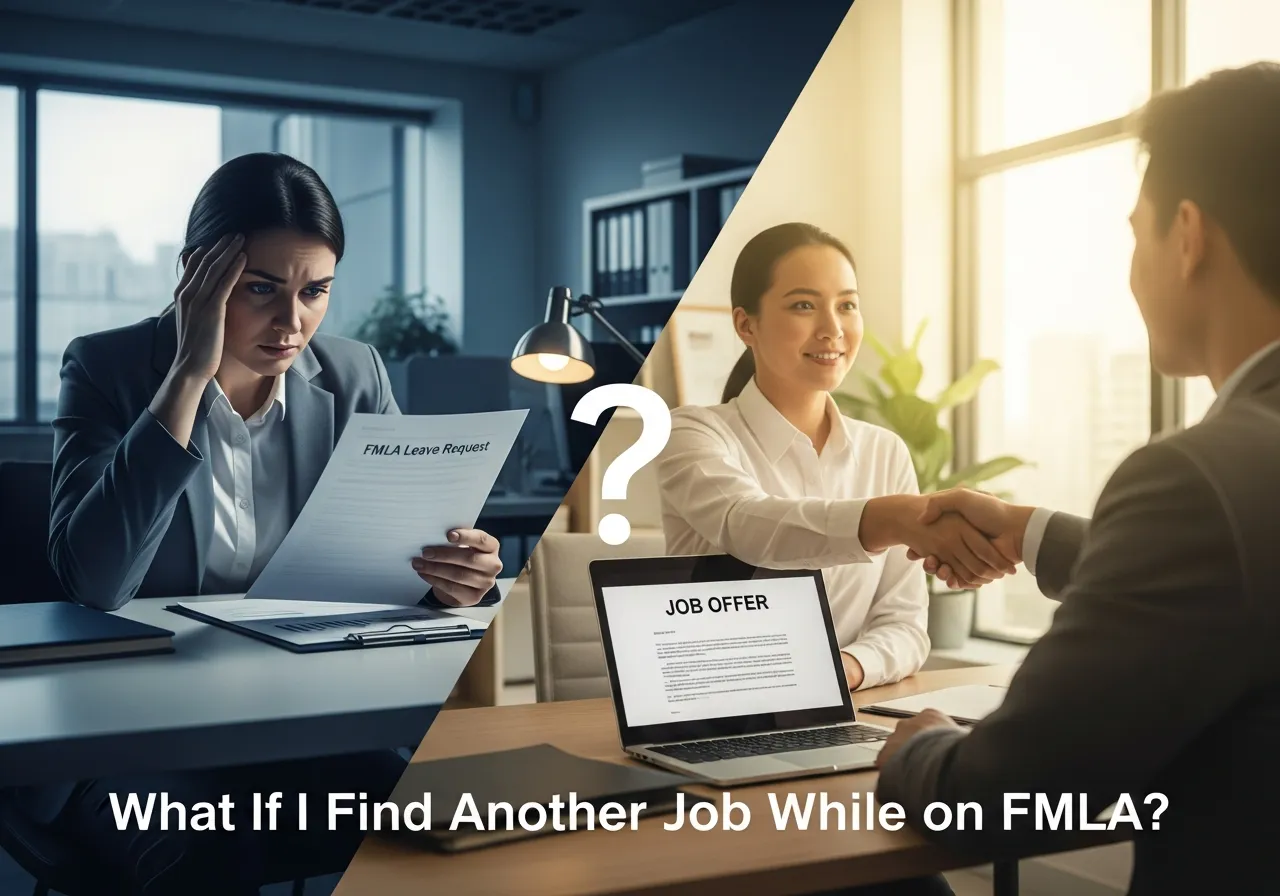
Finding new employment while on FMLA leave from your current job raises interesting questions about your rights and obligations.
Your Rights to FMLA Protection
Your FMLA rights remain intact until you formally resign from your position. Even if you’re interviewing for other jobs or have accepted a new offer, you’re still entitled to FMLA protection from your current employer until your employment ends. Your employer cannot terminate you simply because they learn you’re job searching while on leave.
Resignation Considerations
If you decide to accept another job while on FMLA leave, you’ll need to provide appropriate resignation notice to your current employer. Standard professional courtesy suggests giving at least two weeks’ notice, though your company policy may specify a different requirement.
Keep in mind that if you resign while on FMLA leave, you may be required to repay health insurance premiums your employer paid on your behalf during your leave, depending on the circumstances and your employer’s policies.
Impact on Health Benefits
When you resign while on FMLA leave, your health insurance coverage will typically end based on your employer’s standard termination policies. You’ll likely be eligible for COBRA continuation coverage, which allows you to maintain your health insurance by paying the full premium yourself.
Starting a New Job
There’s no legal prohibition against starting a new job while on FMLA leave from your previous employer, but timing and circumstances matter. If you resign and immediately start working elsewhere, it raises questions about whether you had a genuine serious health condition requiring FMLA leave. If you were on leave for your own health condition but are suddenly able to work full-time at a new job, your previous employer might investigate whether your leave was fraudulent.
If you were on leave to care for a family member rather than for your own health condition, starting a new job may be less problematic, though you should still consider the ethical and practical implications.
Can You Work Another Job While on Leave of Absence?
The answer depends on several factors, including the type of leave, your employer’s policies, and the reason for your absence.
Non-FMLA Leave Considerations
If you’re on a leave of absence that’s not protected by FMLA—such as personal leave, sabbatical, or extended unpaid leave—your employer has more discretion in setting terms and conditions. Many employers explicitly prohibit outside employment during any leave of absence. Review your employee handbook and any leave approval documentation carefully.
Company Policy Requirements
Your employment agreement, offer letter, or employee handbook may contain specific provisions about outside employment. Some companies prohibit all outside employment, while others only restrict work that competes with the employer’s business or uses company resources. Violating these policies can result in termination, regardless of your leave status.
Practical Considerations
Even if working another job during leave isn’t explicitly prohibited, consider the practical implications. If colleagues or managers learn you’re working elsewhere while on leave, it can damage professional relationships and trust. Additionally, if you’re claiming inability to work due to a health condition but are working another job, you could face accusations of leave fraud.
Medical Restrictions Alignment
If your leave is medically-based, any outside work must align with your medical restrictions. For example, if your doctor has restricted you to sedentary work and light duty, taking a job that requires heavy lifting would be inconsistent with your medical limitations. This inconsistency could jeopardize your leave status and potentially your job.
Intermittent FMLA Leave and Work
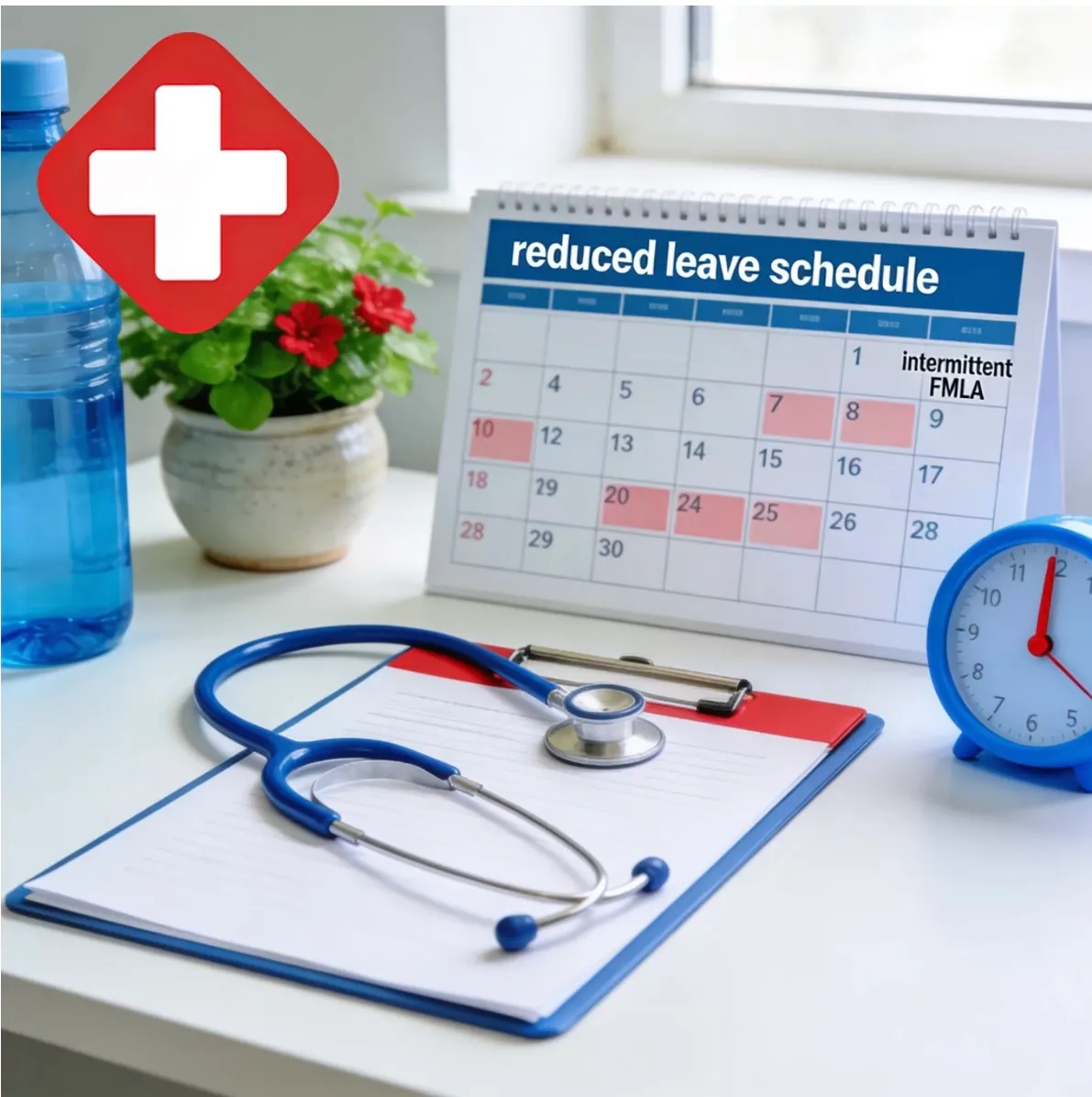
Intermittent FMLA leave allows you to take leave in separate blocks of time or reduce your work schedule when medically necessary.
When Intermittent Leave is Available
When it is medically necessary, employees may take FMLA leave intermittently, taking leave in separate blocks of time for a single qualifying reason, or on a reduced leave schedule, reducing the employee’s usual weekly or daily work schedule. For medical treatments, you must make reasonable efforts to schedule appointments to minimize workplace disruption, subject to your healthcare provider’s approval.
Work Requirements During Intermittent Leave
When you’re not on intermittent leave (that is, during your scheduled work hours when you’re not taking FMLA time), you must perform your regular job duties. Your employer can temporarily transfer you to an alternative position with equivalent pay and benefits if it better accommodates recurring leave periods, but this must be approved by your healthcare provider.
Tracking Intermittent Leave
Your employer must track intermittent leave time carefully. You should receive documentation showing how much of your 12-week entitlement you’ve used. If requested, your employer must provide this information at least every 30 days, and only if you took leave during that period.
Can I Get Government Assistance While on FMLA?
Yes, several government programs can help support you financially during FMLA leave, particularly if your income drops significantly.
Federal Assistance Programs
The Supplemental Nutrition Assistance Program (SNAP) provides food purchasing assistance for low-income households. Eligibility depends on your household size and income. If your FMLA leave is unpaid or partially paid, your reduced income might qualify you for SNAP benefits.
The WIC program specifically supports pregnant women, new mothers, and young children up to age five. If you’re taking FMLA leave related to pregnancy or caring for a young child, WIC can provide nutritional support, education, and healthcare referrals.
Unemployment Benefits
Generally, you cannot collect unemployment benefits while on FMLA leave because you’re not available for work. Unemployment compensation requires that you be ready, willing, and able to accept employment, which contradicts the purpose of FMLA leave. However, if your employer terminates you while on FMLA leave (which may be illegal), you might become eligible for unemployment benefits.
Workers’ Compensation
If your FMLA leave stems from a work-related injury or illness, you should file for workers’ compensation benefits. These benefits can provide wage replacement and cover medical expenses related to your workplace injury. Workers’ compensation and FMLA often run concurrently, meaning you can receive both protections simultaneously.
Protecting Your Rights While on FMLA

Taking FMLA leave is your legal right, but protecting that right requires understanding the rules and recognizing potential violations.
Check out Your Rights Under FMLA
Document Everything
Keep detailed records of all communications with your employer regarding your leave. Save emails, written notices, medical certifications, and any documentation about your leave request, approval, and status. This documentation can be invaluable if you later need to prove an FMLA violation.
Know Your Employer’s Policies
Review your employee handbook, leave policies, and any other relevant documentation before taking FMLA leave. Understanding your employer’s specific procedures and requirements helps you comply with all necessary steps while also recognizing when your employer oversteps legal boundaries.
Maintain Communication
While you’re entitled to time away from work, maintaining appropriate communication with your employer benefits everyone. Respond to reasonable requests for information or updates, and inform your employer of any changes to your expected return date. However, remember that you’re not required to provide excessive detail about your medical condition or treatment.
Seek Legal Advice When Needed
If you believe your employer has violated your FMLA rights, consult with an employment attorney who specializes in FMLA cases. Many attorneys offer free initial consultations and can help you understand whether you have a valid claim and what remedies might be available.
File Complaints if Necessary
If your employer violates your FMLA rights, you can file a complaint with the U.S. Department of Labor’s Wage and Hour Division. You can also file a private lawsuit against your employer. Be aware that FMLA claims have time limits, so don’t delay in seeking help if you believe your rights have been violated.
Conclusion
Understanding your rights and responsibilities regarding working while on FMLA is essential for successfully navigating this important workplace protection. The Family and Medical Leave Act provides crucial job protection when you need time away from work for serious health conditions or family care, but it comes with specific rules and limitations.
Remember these key points: employers cannot require you to work during FMLA leave, though voluntary arrangements may exist; taking a second job during FMLA depends on company policy and consistency with your medical condition; FMLA leave is unpaid but multiple compensation options can help you maintain income; and your employer must follow strict rules about notifications, job restoration, and protecting you from retaliation.
If you believe your employer has violated your FMLA rights, don’t hesitate to seek help. Contact the U.S. Department of Labor’s Wage and Hour Division or consult with an employment attorney who specializes in FMLA cases. Your right to take leave without losing your job is protected by federal law, and resources are available to help you enforce those rights.
Taking FMLA leave is often necessary during challenging times in your life. By understanding the rules about working during FMLA, recognizing common violations, and knowing your options for maintaining income, you can protect both your health and your livelihood during these important periods.
Frequently Asked Questions
Can I be fired while on FMLA leave?
Your employer cannot fire you for taking FMLA leave or for a condition that necessitated the leave. However, FMLA provides job protection, not absolute protection against termination. If your employer can prove they would have laid you off or terminated your employment for legitimate reasons unrelated to your FMLA leave, termination might be lawful. For example, if your company is downsizing and eliminating your entire department, the fact that you're on FMLA leave doesn't provide immunity from the layoff.
How to get paid while on FMLA if you have no paid time off?
If you have no accrued paid leave, several options remain. Check if you're eligible for short-term disability insurance through your employer or a private policy. Research whether your state offers temporary disability insurance or paid family leave programs. Apply for government assistance programs like SNAP if your income qualifies. Consider borrowing from your life insurance cash value if you have a permanent policy. As a last resort, you might take a loan from your 401(k), though this impacts your retirement savings. Building an emergency fund before you need FMLA leave provides the best financial protection.
Is it illegal to work while on FMLA leave?
It's not illegal for you as an employee to work while on FMLA, but your employer cannot require you to work during your protected leave. Whether you can work depends on several factors. Voluntary work arrangements between you and your employer may be permissible if clearly documented as optional and not a condition of employment. Working a second job might be acceptable depending on your employer's policies and the consistency with your medical condition. However, if you're taking leave for your own serious health condition, working could undermine your FMLA claim if the work is inconsistent with your stated limitations.
What are common FMLA violations by employers that I should watch for?
Watch for employers who fail to recognize your FMLA request or don't provide required notifications within five business days. Be alert if your employer counts FMLA absences against you in attendance policies or uses your leave as a negative factor in performance reviews. Employers violate FMLA when they require excessive notice for unforeseeable leave or demand you work during your leave period. Denial of job restoration to the same or equivalent position upon return is another violation. Retaliation for taking leave—through demotions, reduced hours, or hostile treatment—also breaks the law. Finally, failing to post FMLA notices or inform employees of their rights constitutes a violation.
What restrictions apply while I'm on FMLA leave?
While on FMLA leave, your activities should be consistent with the medical condition necessitating your leave. Avoid activities that contradict your stated limitations or suggest you could perform your job duties. For example, if you're on leave for a back injury, heavy physical activities like sports could be problematic. However, reasonable daily activities and light exercise recommended by your doctor are generally acceptable. You must provide requested medical certifications and recertifications within the specified timeframes. Comply with your employer's periodic contact for legitimate business purposes, but remember they cannot require you to perform work duties. If you're on leave for your own health condition, working another job may be restricted, especially if the work is inconsistent with your medical limitations or violates company policy.
Meet the author
Nida Hammad
I am a professional writer with over five years of experience creating clear, engaging, and well-researched content. I specialize in healthcare topics, helping readers understand complex information in simple wording. Currently, I write for FMLA DOC, where I focus on producing accurate and trusted guides for people seeking support with FMLA and medical needs.
Get Your FMLA Certification Online in Minutes