

Your FMLA Employee Rights: Complete Protection Guide 2026: Can I Be Fired on FMLA?
 by Nida Hammad
 Last updated:
The Family and Medical Leave Act (FMLA) stands as one of the most important workplace protections available to American workers. Understanding your FMLA employee rights is essential when facing serious health conditions, family caregiving responsibilities, or military family situations.
This comprehensive guide explains your FMLA protections, eligibility requirements, and critically answers the question many employees ask: can I be fired on FMLA? Whether you’re considering taking leave for your own medical condition, caring for a family member, or welcoming a new child, knowing your rights ensures you can take necessary time off without jeopardizing your employment.
Understanding Your FMLA Employee Rights and Comprehensive Workplace Protections

The FMLA is a federal law enacted to help workers balance job responsibilities with personal and family health needs. This legislation recognizes that employees occasionally face circumstances requiring extended time away from work without risking their careers. The law creates a framework that protects both employee welfare and employer operational needs.
Core Purpose of FMLA Protections
FMLA was designed to address the reality that serious health situations affect working families. Before this law, employees often faced impossible choices between caring for themselves or loved ones and maintaining employment. The legislation establishes minimum standards for family and medical leave, ensuring workers can address critical life events without losing their livelihoods.
The law applies to both private-sector employers and public agencies, creating consistent protections across different employment sectors. This standardization enables employees across various industries to rely on similar safeguards when navigating health-related work absences.
Who Qualifies for FMLA Employee Rights?

Understanding whether you’re eligible for FMLA protections involves examining both your employer’s characteristics and your employment history. Not all workers automatically qualify, so reviewing these requirements is your first step.
Employer Coverage Requirements
FMLA applies to specific categories of employers. All public agencies qualify as covered employers, including federal, state, and local government entities. Local education agencies, which include public schools and educational institutions, also fall under FMLA requirements regardless of size.
For private-sector employers, coverage depends on workforce size. A private company must have employed 50 or more employees for at least 20 workweeks during the current or preceding calendar year. This calculation includes all employees on the payroll, whether full-time, part-time, or temporary. Joint employers and successor companies to covered employers also maintain FMLA obligations.
Individual Employee Eligibility
Even when working for a covered employer, individual employees must meet specific criteria to access FMLA protections. You must have worked for your current employer for at least 12 months. These months need not be consecutive; previous periods of employment with the same employer count toward this requirement.
Additionally, you must have completed at least 1,250 hours of service during the 12-month period immediately before your leave begins. This translates to approximately 24 hours weekly over a full year. The law includes special provisions for airline flight crew employees, who face modified hours-of-service calculations reflecting their unique work schedules.
The final eligibility criterion involves worksite location. You must work at a location where your employer maintains at least 50 employees within a 75-mile radius. This geographic requirement ensures FMLA doesn’t create undue hardship for small, isolated worksites while protecting employees at larger facilities.
Comprehensive Qualifying Reasons for FMLA Leave
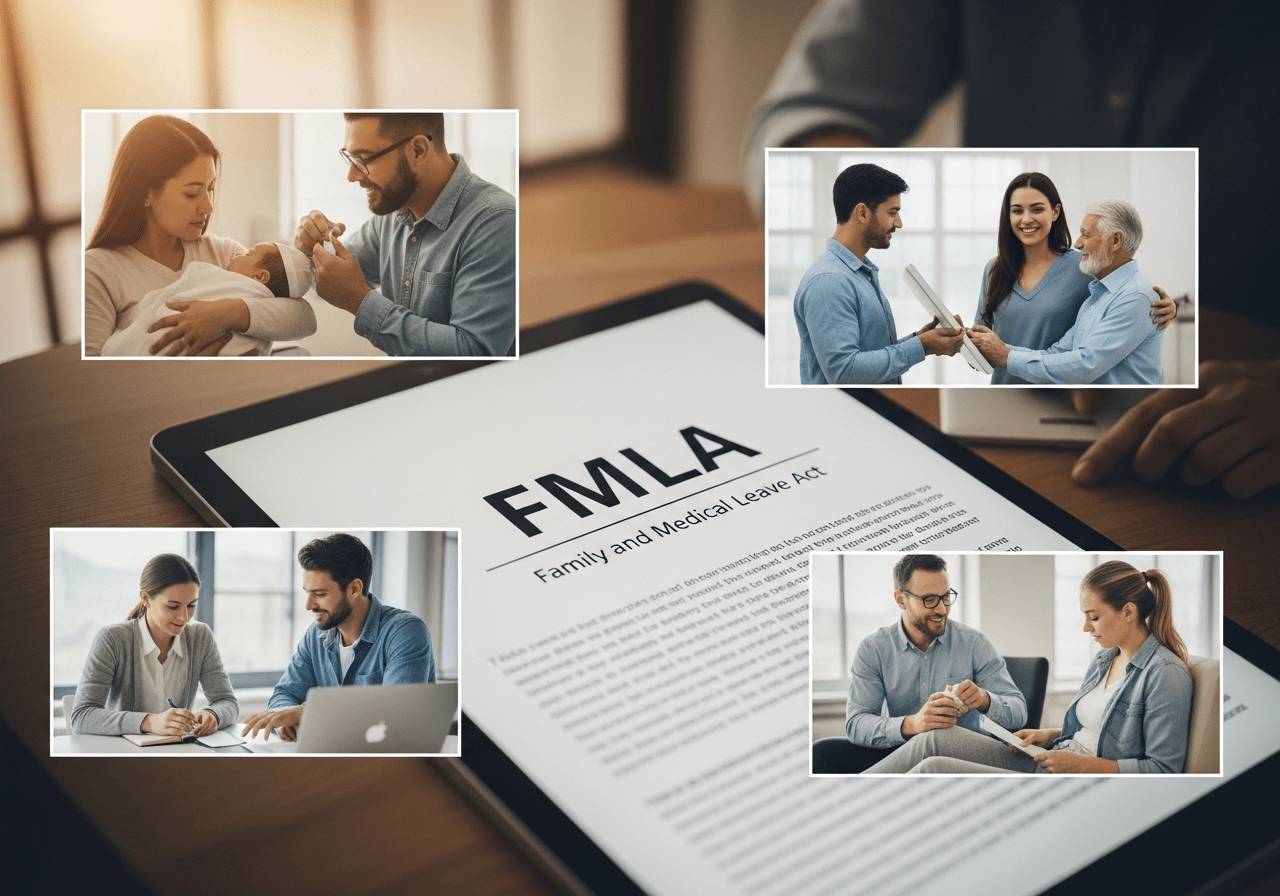
FMLA protections extend to various family and medical circumstances. Understanding which situations qualify helps you recognize when you can invoke these rights.
Personal Medical Conditions
When you suffer from a serious health condition preventing you from performing your job functions, the FMLA provides protection. A serious health condition involves illness, injury, impairment, or physical or mental conditions requiring specific types of medical care.
The law defines serious health conditions through several criteria. Conditions requiring overnight hospitalization automatically qualify. Continuing treatment by healthcare providers for conditions preventing work performance also meets the threshold. This continuing treatment requirement can be satisfied through multiple scenarios.
A period of incapacity exceeding three consecutive calendar days combined with at least two healthcare provider visits, or one visit plus a continuing treatment regimen, qualifies as a serious health condition. Pregnancy-related incapacity and chronic conditions requiring periodic healthcare provider visits also meet the definition. Permanent or long-term conditions requiring ongoing supervision, even without active treatment, qualify under FMLA provisions.
Family Caregiving Responsibilities
FMLA recognizes that employees sometimes need to care for family members facing serious health conditions. You can take leave to care for your spouse, son, daughter, or parent experiencing conditions meeting the serious health condition definition.
This caregiving provision acknowledges that family support often proves crucial during medical crises. Whether your parent requires assistance during cancer treatment, your spouse needs help recovering from surgery, or your child faces a serious illness, FMLA protections allow you to provide necessary care without employment consequences.
The law specifically defines which family relationships qualify. Spouses include legal marriages recognized in the state where performed. Sons and daughters encompass biological, adopted, foster, stepchildren, legal wards, or children for whom you stand in loco parentis (acting as a parent). Parents include biological, adoptive, step, or foster parents, or individuals who stood in loco parentis when you were a child. Notably, in-laws do not qualify as parents under FMLA definitions.
Birth and New Child Bonding
Welcoming a new child represents a qualifying FMLA event. Leave can be taken for incapacity due to pregnancy, prenatal medical care, or childbirth. Additionally, parents can take leave to care for and bond with their newborn child.
FMLA also covers leave following adoption or foster care placement. This provision recognizes that building family bonds and managing placement logistics requires time and attention. Both parents can take FMLA leave for the same birth or placement event, though their leave entitlements are independent.
Leave for birth, adoption, or foster care placement must be completed within 12 months following the qualifying event. This timeframe ensures leave serves its intended bonding purpose while providing flexibility for families to determine optimal timing.
Military Family Leave Entitlements
FMLA includes special provisions supporting families of military servicemembers. When your spouse, son, daughter, or parent is on covered active duty or called to covered active duty status, you can use your 12-week leave entitlement to address qualifying exigencies.
Qualifying exigencies encompass various situations arising from military deployment. These include attending military events and related activities, arranging alternative childcare, addressing financial and legal arrangements necessitated by deployment, attending counseling sessions, spending time with servicemembers on short-term leave, attending post-deployment reintegration briefings, and addressing issues arising from death of a servicemember.
Military Caregiver Leave
FMLA provides enhanced leave entitlements for employees caring for covered servicemembers with serious injuries or illnesses. Eligible employees can take up to 26 weeks of leave during a single 12-month period for this purpose, more than double standard FMLA leave.
A covered servicemember includes current Armed Forces members, National Guard members, or Reservists undergoing medical treatment, recuperation, or therapy for serious injuries or illnesses incurred or aggravated during active duty. Veterans discharged or released under conditions other than dishonorable within five years before the leave also qualify if they’re undergoing treatment for service-related serious injuries or illnesses.
The FMLA definitions of serious injury or illness for servicemembers differ from standard serious health condition criteria, reflecting the unique nature of service-related medical issues.
Understanding Your Job Protection Rights Under FMLA
One of FMLA’s most valuable aspects involves its job protection guarantees. These provisions address the fundamental employee concern: Can I be fired on FMLA leave?
Guaranteed Job Restoration
Upon returning from FMLA leave, most employees must be restored to their original position or an equivalent position. An equivalent position means one with equivalent pay, benefits, and other employment terms and conditions. The position must involve substantially similar duties and responsibilities, entailing substantially equivalent skill, effort, responsibility, and authority.
This restoration right ensures taking FMLA leave doesn’t result in demotion, reduced responsibilities, or diminished compensation. If you held a supervisory position before leave, you should return to a supervisory role. If you worked specific shifts, your restored position should maintain similar scheduling arrangements.
Continued Health Insurance Coverage
During FMLA leave, employers must maintain your group health plan coverage under the same terms existing before leave commenced. You pay the same premium contributions required of active employees. This continuation prevents gaps in health insurance precisely when medical needs may be heightened.
If you don’t return to work after leave expires, your employer may recover premiums paid during your leave under specific circumstances. However, if you don’t return because your or a family member’s serious health condition prevents return, or other circumstances beyond your control occur, employers cannot recoup these costs.
Protection of Accrued Benefits
FMLA leave cannot result in losing employment benefits accrued before leave began. Your seniority, pension rights, and other accrued benefits remain intact. While benefits don’t continue accruing during unpaid leave periods, you don’t forfeit what you’ve already earned.
This protection ensures taking legally protected leave doesn’t penalize your long-term career progression or retirement planning.
Can I Be Fired on FMLA? Understanding the Limitations
The critical question many employees ask is whether FMLA truly protects against termination. The answer requires understanding both the protections and their limitations.
FMLA prohibits employers from terminating employees because they took or requested FMLA leave. Using FMLA leave cannot be counted against you under attendance policies, including “no-fault” systems. Your employer cannot use your leave request as a negative factor in employment decisions such as promotions, raises, or discipline.
However, FMLA doesn’t provide absolute job security. You can be terminated during or after FMLA leave if the termination is unrelated to your leave. For example, if your position is eliminated as part of a legitimate restructuring that would have occurred regardless of your leave, FMLA doesn’t prevent that termination. Similarly, if you violated company policies before taking leave, your employer can proceed with disciplinary action.
The key distinction involves causation. Termination because of FMLA leave is illegal. Termination that happens to occur during or after FMLA leave but stems from independent, legitimate business reasons may be lawful. Proving the motivation behind employment actions often becomes central to FMLA disputes.
How to Use Your FMLA Leave Rights Effectively

Understanding procedural requirements helps you access FMLA protections smoothly while fulfilling your obligations.
Providing Proper Notice to Your Employer
When the need for FMLA leave is foreseeable, you must provide 30 days advance notice. Foreseeable situations include scheduled surgeries, planned medical treatments, or expected birth or adoption dates. This advance notice allows employers to arrange coverage and minimize operational disruption.
When 30 days notice isn’t possible, such as medical emergencies or unexpected complications, you must provide notice as soon as practicable. Generally, this means notifying your employer within one or two business days of learning about the need for leave. You should follow your employer’s normal call-in procedures unless unusual circumstances prevent this.
What Information to Provide
You must provide sufficient information for your employer to determine whether your leave request may qualify for FMLA protection. You don’t need to specifically mention “FMLA” or reference the law. Instead, provide enough details for your employer to recognize a potential qualifying reason.
Sufficient information might include explaining that you’re unable to perform job functions due to a medical condition, that a family member cannot perform daily activities and needs your care, that you require hospitalization or continuing treatment, or circumstances supporting military family leave. If you previously took FMLA leave for the same condition or situation, inform your employer of this connection.
Medical Certification Requirements
Employers can require medical certification supporting your need for FMLA leave. For your own serious health condition, certification should come from your healthcare provider and include relevant medical facts, the condition’s expected duration, and your inability to perform job functions.
For family member care, certification should include the family member’s condition details, care requirements, and an estimate of needed leave duration. Your employer must allow at least 15 calendar days to provide requested certification.
If certification is incomplete or insufficient, your employer must notify you and provide at least seven calendar days to correct deficiencies. Employers can contact healthcare providers directly for authentication or clarification purposes but cannot ask for additional information beyond what the certification form requires.
Your employer may require periodic recertification, though not more frequently than every 30 days unless circumstances change or you need additional leave beyond originally certified amounts.
Intermittent and Reduced Schedule Leave
FMLA leave doesn’t have to be taken all at once. When medically necessary, you can take leave intermittently, in separate blocks of time, or work a reduced schedule. This flexibility proves valuable for conditions requiring periodic treatment, such as chemotherapy, physical therapy, or prenatal appointments.
For planned medical treatments, you must make reasonable efforts to schedule leave to avoid unduly disrupting your employer’s operations. This might mean scheduling appointments during less busy work periods when possible.
When taking intermittent or reduced schedule leave for foreseeable medical treatments, employers can temporarily transfer you to alternative positions with equivalent pay and benefits if the alternative position better accommodates recurring leave.
Substitution of Paid Leave
FMLA leave is unpaid, but employees can choose to use accrued paid leave during FMLA leave. Alternatively, employers can require you to use accrued paid leave concurrently with FMLA leave. Common examples include using accrued vacation, sick leave, or personal days.
When substituting paid leave, you must comply with your employer’s normal paid leave policies. For instance, if sick leave typically requires medical documentation, you must provide such documentation even though the absence also qualifies as FMLA leave.
Understanding Prohibited Employer Actions and FMLA Protections
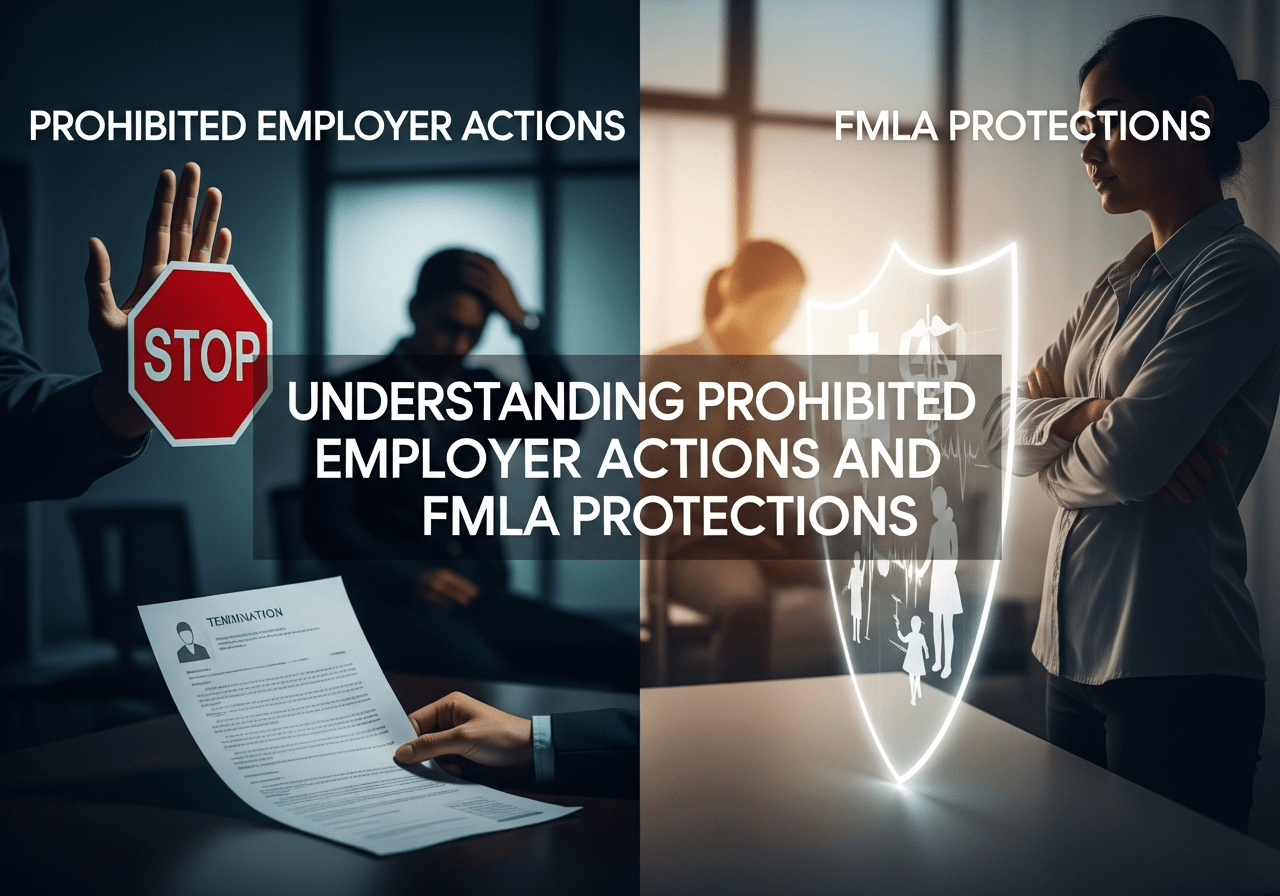
Federal law strictly prohibits employers from retaliating against employees for exercising FMLA rights. Understanding these prohibitions helps you recognize when your rights are violated.
Interference with FMLA Rights
Employers cannot interfere with, restrain, or deny the exercise of any FMLA right. This prohibition is broad and encompasses various employer actions that impede FMLA access or benefits.
Interference includes refusing to authorize FMLA leave for eligible employees with qualifying reasons. Manipulating employee work hours to avoid FMLA responsibilities, such as reducing hours to prevent employees from reaching the 1,250-hour threshold, also constitutes interference.
Discouraging employees from using FMLA leave through subtle or overt pressure violates the law. This might involve suggesting that taking leave will harm career advancement or creating a hostile environment for those who use FMLA protections.
Retaliation and Discrimination
Employers cannot discriminate or retaliate against employees or prospective employees for exercising or attempting to exercise FMLA rights. This protection extends beyond current employees to job applicants and former employees.
Using FMLA leave requests as negative factors in employment decisions constitutes prohibited discrimination. This includes denying promotions, raises, or favorable assignments because someone took FMLA leave. Similarly, imposing disciplinary action or negative performance reviews based on FMLA usage is unlawful.
Counting FMLA leave under “no-fault” attendance policies represents a common violation. Many employers maintain attendance systems assigning points or occurrences for absences. Applying such systems to FMLA-protected absences is illegal.
Protection for Opposing Unlawful Practices
FMLA protects individuals who oppose or complain about unlawful practices under the law. If you report your employer’s FMLA violations or support a coworker’s FMLA complaint, you’re protected from retaliation.
This protection extends to participating in FMLA-related proceedings. If you file a complaint with the Department of Labor, testify in an FMLA investigation, or provide information during an inquiry, your employer cannot retaliate through termination, demotion, or other adverse actions.
The law prohibits all persons, not just employers, from discriminating against individuals for participating in FMLA proceedings. This broader protection prevents third-party interference with FMLA rights.
Common Examples of FMLA Violations
Recognizing violations helps you identify when to seek assistance. Common violations include:
- Denying leave requests that meet FMLA qualifications
- Firing or disciplining employees for taking FMLA leave
- Forcing employees to accept lighter duties or reduced hours upon return
- Refusing to restore employees to equivalent positions after leave
- Canceling health insurance during FMLA leave
- Counting FMLA absences as negative attendance occurrences
- Retaliating against employees who request FMLA information
- Creating hostile work environments for those using FMLA leave
Your Responsibilities as an FMLA Leave Recipient
While FMLA provides strong protections, employees must fulfill certain responsibilities to maintain these rights.
Timely Notification Requirements
Providing timely notice represents your primary responsibility. When leave is foreseeable, 30 days notice is mandatory unless extraordinary circumstances prevent this. For unforeseeable leave, notify your employer as soon as practicable, typically within one or two business days of learning about the need for leave.
Follow your employer’s established call-in procedures unless unusual circumstances make this impossible. Using proper notification channels demonstrates good faith and helps your employer manage your absence.
Providing Adequate Information
When requesting leave, provide sufficient information for your employer to determine FMLA applicability. While you don’t need to diagnose your condition or provide detailed medical information initially, you must explain enough for your employer to recognize a potentially qualifying reason.
Inform your employer if your leave request relates to a previous FMLA-covered situation. This connection helps your employer properly administer leave benefits and avoid requesting redundant certifications.
Cooperating with Certification Requests
When your employer requests medical certification, obtain and submit it within designated timeframes, typically 15 calendar days. If you cannot meet this deadline due to circumstances beyond your control, communicate with your employer and request an extension.
Ensure certification forms are complete and contain required information. Incomplete certifications delay leave approval and may result in denial if deficiencies aren’t corrected promptly.
Maintaining Communication During Leave
Stay in reasonable contact with your employer during extended leaves. Update your employer about your status and expected return date if circumstances change. This communication helps your employer plan for your return and demonstrates your commitment to resuming work when able.
If you learn you need additional leave beyond what was initially anticipated, notify your employer promptly and provide updated medical certification if requested.
Returning to Work
When you’re able to return to work, notify your employer according to established procedures. Some employers require fitness-for-duty certifications confirming you can resume job duties. Comply with these requirements, which employers can mandate for leave due to your own serious health condition.
Return on the scheduled date unless circumstances prevent this. If you cannot return as planned, communicate this immediately and explain the reasons.
Employer Responsibilities Under FMLA Law

Understanding what employers must do helps you hold them accountable for FMLA compliance.
Notice and Designation Obligations
When you request leave that may qualify for FMLA protection, your employer must inform you whether you’re eligible. If eligible, the employer must specify additional required information and explain your rights and responsibilities under FMLA.
If you’re ineligible, your employer must provide the reason for ineligibility. Common ineligibility reasons include insufficient length of employment, insufficient hours worked, or working at a location with fewer than 50 employees within 75 miles.
Employers must designate leave as FMLA-protected and inform you of the amount of leave counted against your entitlement. This designation should occur within five business days of the employer having sufficient information to determine FMLA applicability.
If your employer determines leave doesn’t qualify for FMLA protection, they must notify you of this decision and provide reasons.
Maintaining Required Postings
Covered employers must post notice explaining FMLA provisions where employees can readily see it. This poster must be displayed prominently in each workplace where employees are stationed. Employers with employees who don’t regularly work at a central location must ensure those employees receive notice of FMLA rights.
Providing Specific Employee Notices
Beyond general postings, employers must provide individualized notices when employees request FMLA leave or when circumstances trigger FMLA coverage. These notices explain eligibility, designation of leave as FMLA-protected, required certifications, and consequences of failing to meet obligations.
Maintaining Records
Employers must maintain records related to FMLA compliance, including employee leave requests, notices provided, dates and hours of FMLA leave taken, and documentation supporting FMLA-related employment actions. These records must be preserved for at least three years.
Enforcement of Your FMLA Rights and Available Remedies

When employers violate FMLA protections, several enforcement mechanisms are available.
Filing Complaints with the Department of Labor
The Wage and Hour Division of the U.S. Department of Labor administers and enforces FMLA for private employers and state and local government employees. You can file complaints with your local Wage and Hour office.
The Department investigates complaints and attempts to resolve violations satisfactorily. If resolution proves impossible, the Department may bring legal action in court to compel compliance and obtain remedies on your behalf.
Filing a complaint with the Department doesn’t prevent you from also filing a private lawsuit, though pursuing both simultaneously may affect remedies available.
Private Lawsuits
Employees can bring private civil actions against employers for FMLA violations. You can sue for damages including lost wages, benefits, and other actual losses resulting from violations. Courts can also award liquidated damages equal to the amount of actual damages in cases of willful violations.
Additional remedies include employment reinstatement and promotion, with courts possessing authority to order appropriate equitable relief. Successful plaintiffs can recover attorney’s fees and litigation costs, making it financially feasible to pursue valid FMLA claims.
Statute of Limitations
You must file FMLA complaints or lawsuits within specific timeframes. Generally, actions must be commenced within two years of the alleged violation’s last occurrence. For willful violations, this timeframe extends to three years.
This statute of limitations means promptly addressing potential violations is important. Don’t delay seeking assistance when you believe your FMLA rights have been violated.
Remedies Available to Employees
When courts find FMLA violations, they can order various remedies including:
- Back pay for lost wages and benefits
- Front pay when reinstatement is inappropriate
- Reinstatement to your position or an equivalent role
- Promotion if denial was due to FMLA retaliation
- Compensation for emotional distress and suffering in certain circumstances
- Liquidated damages equaling actual damages for willful violations
- Attorney’s fees and court costs
These remedies aim to make you whole, restoring you to the position you would have occupied absent the FMLA violation.
Special FMLA Considerations and Common Scenarios
Several specific situations warrant additional explanation regarding FMLA application.
FMLA and Workers’ Compensation
FMLA and workers’ compensation laws can overlap when work-related injuries occur. If your work-related injury constitutes a serious health condition under FMLA definitions, you may be entitled to both workers’ compensation benefits and FMLA protections.
FMLA provides job-protected leave while workers’ compensation provides wage replacement and medical benefits. Employers cannot require you to return to work before your FMLA leave expires, even if workers’ compensation benefits end earlier.
FMLA and the Americans with Disabilities Act (ADA)
FMLA and ADA can intersect when serious health conditions also constitute disabilities. While FMLA provides temporary job-protected leave, ADA requires reasonable accommodations enabling qualified individuals with disabilities to perform essential job functions.
When returning from FMLA leave for conditions that may constitute ADA-covered disabilities, you might request reasonable accommodations. Employers must engage in interactive processes to identify effective accommodations, which might include extended unpaid leave beyond FMLA entitlements, modified duties, or flexible schedules.
FMLA and Employer Leave Policies
Many employers maintain leave policies more generous than FMLA’s minimum requirements. These policies might provide paid leave, longer leave durations, or coverage for additional situations. FMLA doesn’t supersede more generous employer policies.
However, employers can require simultaneous use of employer leave and FMLA leave. Understanding how your employer’s policies interact with FMLA helps you maximize available benefits.
FMLA and State Family Leave Laws
Several states and localities have enacted their own family and medical leave laws. Some provide greater protections than federal FMLA, such as covering smaller employers, allowing leave for additional reasons, or providing paid benefits.
When state laws offer greater rights or protections, employees benefit from those enhanced provisions. FMLA establishes a minimum baseline; it doesn’t prevent states from providing superior benefits. Consulting both federal and state laws ensures you understand your complete range of protections.
FMLA During Pregnancy and Childbirth
Pregnancy-related leave involves several FMLA applications. Incapacity due to pregnancy and prenatal care qualifies for FMLA leave. Childbirth itself qualifies, as does recovery from childbirth.
Following childbirth, parents can take leave to bond with their new child. This bonding leave must be completed within 12 months of birth. If both parents work for the same employer, special rules may limit their combined leave entitlement in certain circumstances.
FMLA for Mental Health Conditions
Mental health conditions can constitute serious health conditions under FMLA when they meet the statutory criteria. Conditions requiring inpatient treatment or continuing treatment by healthcare providers qualify if they prevent you from working or performing daily activities.
Mental health treatment increasingly occurs on an outpatient basis. Chronic mental health conditions requiring periodic visits to healthcare providers for treatment qualify for FMLA protection, as do conditions requiring continuing treatment even without active intervention.
Seeking FMLA leave for mental health conditions carries the same protections as leave for physical conditions. Employers cannot discriminate based on the nature of your serious health condition.
Best Practices for Protecting Your FMLA Rights
Taking proactive steps helps ensure you can access and maintain FMLA protections effectively.
Document Everything
Maintain careful records of all FMLA-related communications with your employer. Keep copies of leave requests, medical certifications, employer notices, and correspondence. Document dates, times, and content of verbal conversations regarding your leave.
This documentation proves invaluable if disputes arise about whether proper notice was given, what information was provided, or how your employer responded to your requests.
Understand Your Employer’s Policies
Review your employee handbook and company leave policies. Understand your employer’s specific procedures for requesting leave, required forms, and designated contacts for FMLA matters. Following established procedures demonstrates compliance with your obligations.
Seek Clarification When Needed
If you’re uncertain about FMLA procedures or your rights, ask your human resources department for clarification. Requesting information about FMLA is a protected activity—employers cannot retaliate against you for seeking to understand your rights.
If you remain uncertain after consulting your employer, contact the Department of Labor’s Wage and Hour Division for guidance.
Obtain Adequate Medical Documentation
Work closely with your healthcare providers to ensure medical certifications are complete and accurate. Incomplete certifications delay leave approval and create unnecessary complications.
Explain to your healthcare providers why you need documentation and what information employers can request. Most providers are familiar with FMLA but may need reminders about specific form requirements.
Communicate Professionally
Maintain professional, respectful communication with your employer throughout the leave process. While FMLA protects your rights, cordial relationships help ensure smooth leave administration.
Respond promptly to employer inquiries and requests for information. Delayed responses can jeopardize leave approval and create tension that might be avoided through timely communication.
Know When to Seek Legal Assistance
If you believe your FMLA rights have been violated, consult with an employment attorney experienced in FMLA matters. Many attorneys offer initial consultations to evaluate your situation.
Legal assistance becomes particularly important when facing termination, demotion, or other adverse employment actions potentially related to FMLA leave. Early legal consultation helps you understand your options and take appropriate action to protect your rights.
Conclusion: Protecting Your FMLA Employee Rights
The Family and Medical Leave Act provides critical protections for workers facing serious health situations or family caregiving responsibilities. Understanding your FMLA employee rights empowers you to take necessary leave without fear of losing your job or health insurance. While FMLA doesn’t guarantee paid leave, it establishes job protection and benefit continuation that allow you to focus on health and family when it matters most.
If you face questions like “can I be fired on FMLA” or need guidance navigating FMLA protections, remember that federal law prohibits retaliation for exercising your rights. Document your communications, follow proper procedures, and don’t hesitate to seek assistance from the Department of Labor or legal professionals when needed.
Your FMLA rights represent more than technical legal protections, they embody recognition that workers are human beings with lives, families, and health needs extending beyond employment. When circumstances require taking leave, understand that federal law supports your decision and provides mechanisms to protect your career.
For assistance with FMLA matters, disability benefits, or workplace accommodations, consult experienced legal professionals who can provide personalized guidance for your specific situation.
Frequently Asked Questions
1. Can my employer fire me while I'm on FMLA leave?
Your employer cannot fire you because you took or requested FMLA leave. However, you can be terminated during FMLA leave if the termination is unrelated to your leave. For example, if your position is eliminated as part of a legitimate company-wide restructuring that would have occurred regardless of your leave status, that termination may be lawful. The key factor is whether the termination was motivated by your FMLA leave or by independent, legitimate business reasons. If you believe your termination was related to your FMLA leave, you should contact the Department of Labor or consult an employment attorney.
2. Do I get paid during FMLA leave?
FMLA leave is unpaid, but you may be able to use accrued paid time off concurrently. Many employees choose to use or employers require substitution of accrued vacation, sick leave, or personal days during FMLA leave. When using paid leave during FMLA leave, you must comply with your employer's normal paid leave policies. While the leave itself is unpaid under FMLA, some states have enacted paid family leave programs that provide wage replacement benefits during qualifying absences. Check whether your state offers such programs, as they can supplement federal FMLA protections.
3. Can I take FMLA leave intermittently rather than all at once?
Yes, when medically necessary, you can take FMLA leave intermittently or work a reduced schedule. This flexibility is particularly valuable for conditions requiring periodic treatment such as chemotherapy, physical therapy, dialysis, or prenatal appointments. For planned medical treatments, you must make reasonable efforts to schedule leave to minimize disruption to your employer's operations. When taking intermittent or reduced schedule leave for foreseeable treatments, employers can temporarily transfer you to an alternative position with equivalent pay and benefits if it better accommodates recurring absences. Intermittent leave is calculated in the smallest time increment your employer's payroll system uses, typically in hourly increments.
4. What happens to my health insurance while I'm on FMLA leave?
Your employer must maintain your group health insurance coverage under the same terms that applied before your leave began. You'll continue paying your normal employee premium contributions—the same amount you paid while actively working. Your coverage continues throughout the duration of your FMLA leave, up to 12 weeks (or 26 weeks for military caregiver leave). If you don't return to work after your leave expires, your employer may recover the premiums they paid during your leave under certain circumstances. However, if you don't return because your serious health condition or a family member's serious health condition prevents return, or circumstances beyond your control occur, your employer cannot recover these costs.
5. How much advance notice do I need to give my employer for FMLA leave?
When your need for leave is foreseeable, you must provide 30 days advance notice. Foreseeable situations include scheduled surgeries, planned medical treatments, expected birth or adoption dates, or scheduled military family qualifying exigencies. When 30 days notice isn't possible—such as during medical emergencies, unexpected complications, or premature births—you must provide notice as soon as practicable, generally within one or two business days of learning about the need for leave. You should follow your employer's normal call-in procedures unless unusual circumstances prevent doing so. Failing to provide proper notice when circumstances allow it may result in delay or denial of FMLA leave.
6. Can my employer require me to provide medical certification for FMLA leave?
Yes, employers can require medical certification to support your need for FMLA leave. For leave due to your own serious health condition, certification should come from your healthcare provider and include relevant medical facts about your condition, expected duration, and your inability to perform job functions. Your employer must allow at least 15 calendar days to provide requested certification. If the initial certification is incomplete or insufficient, your employer must notify you in writing and provide at least seven calendar days to correct deficiencies. Employers can contact your healthcare provider to authenticate or clarify certification but cannot request additional medical information beyond what the certification form requires. For ongoing conditions, your employer may require periodic recertification, though generally not more frequently than every 30 days.
Meet the author
Nida Hammad
I am a professional writer with over five years of experience creating clear, engaging, and well-researched content. I specialize in healthcare topics, helping readers understand complex information in simple wording. Currently, I write for FMLA DOC, where I focus on producing accurate and trusted guides for people seeking support with FMLA and medical needs.
Get Your FMLA Certification Online in Minutes