

How to Appeal FMLA Denial: Your Step-by-Step Options
 by Areeba Imran
Last updated:
If you’re searching for how to appeal an FMLA denial, start here: your employer’s rejection may not be final. Many employees assume a denial means the end of the road, but it’s not. You have legal options to push back, and time matters. Deadlines for appeals and corrections are measured in days, not weeks. Roughly 60–70% of FMLA denials come from paperwork mistakes, not because you’re actually ineligible. If your employer rejected your leave, you can file an appeal, fix certification errors, or escalate to federal investigators. This guide shows you how.
Below, you’ll find a step-by-step roadmap for appealing your denial. First, get the rejection in writing from HR. Verbal denials don’t count. Next, compare the stated reason against federal eligibility rules to spot errors. If the problem is incomplete certification, you have 7 calendar days to fix it. Then learn when to request a second opinion (employer-paid), how to file a DOL complaint, and what retaliation looks like so you can document it. By the end, you’ll know whether your denial is reversible and which agency to contact if internal appeals fail.
Most denials happen because of incomplete medical certification, vague functional limitations, missing provider signatures, or missed deadlines. They don’t happen because you’re legally ineligible. Once you understand the appeal process and the rules employers must follow, you can recover the leave you deserve and protect your job during a medical crisis.
This guide shows you what to do after a denial. You’ll learn how to tell a real denial from a fixable paperwork issue, how to fix certification problems within the 7-day window, and when to escalate your FMLA denial appeal to the Department of Labor. We’ll also cover how to spot retaliation and when you need an employment attorney.
Most denials happen because of paperwork problems, not because you’re ineligible. Once you understand the process, you can fix these issues and get the job-protected leave you deserve. Here are your specific next steps to appeal your FMLA denial and protect your rights.
What Counts as an FMLA Denial (vs. Delay or Incomplete Paperwork)
A true FMLA denial means your employer formally rejected your request in writing. They stated you’re not entitled to job-protected leave. This is different from asking for more information or clarification. If you’re wondering, can my employer deny FMLA leave outright, the answer depends on whether your paperwork was complete and whether you actually met the eligibility rules.
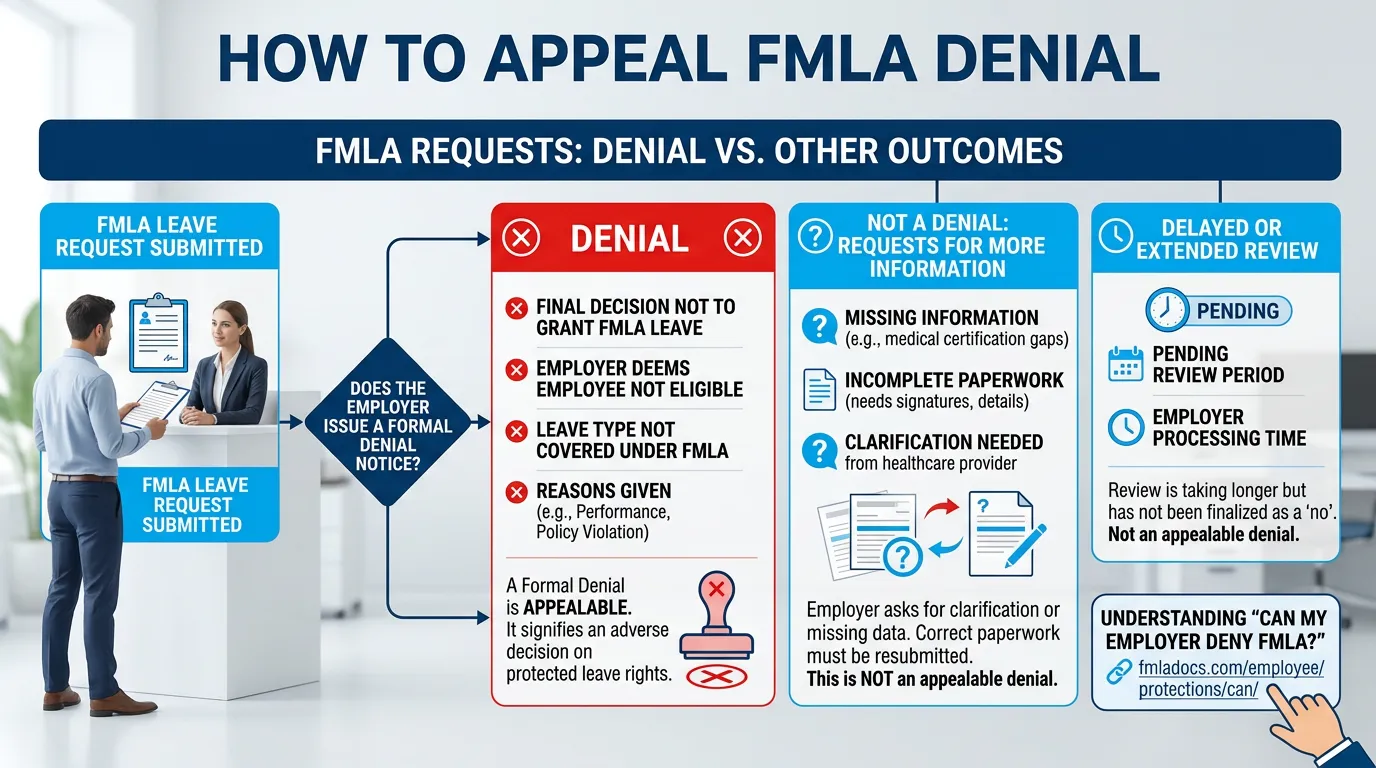
True Denials vs. Requests for Additional Information
Employers must provide written notice within five business days. The notice explains whether your leave is approved, denied, or if they need more information. Watch for denial language like “your request is denied,” “you do not qualify for FMLA,” or “your certification does not establish a serious health condition.” These phrases trigger your appeal rights.
Don’t jump to conclusions when your employer asks for more information. It doesn’t mean they’re denying your request. They might need recertification if your original form was incomplete, or HR might ask you to clarify parts of your WH-380 forms. Your employer could be verifying your work hours or employment dates. When they say “we need more information” or “please have your doctor fill out section 4,” they’re simply asking you to complete what’s missing. That’s not a denial. You can still make corrections.
Understanding Your Employer’s Written Notice Requirements
Your employer must document their decision in writing. The notice should state the specific reason for denial. It should reference which FMLA eligibility requirement you failed to meet. Without written documentation, you don’t have a formal denial to appeal. If you’re unsure whether you received a denial or just a request for more information, ask HR directly: “Is my FMLA request denied, or are you asking me to provide additional documentation?”

Timeline Delays That Aren’t Actually Denials
Delays caused by slow HR processing aren’t denials. Your doctor taking weeks to return forms isn’t a denial either. However, missing the 7-day cure deadline (after a deficiency notice) can result in one. If you miss the initial 15-day deadline to submit certification, that also triggers a denial. Understanding how FMLA certification deadlines work protects you from preventable rejections.
Get your FMLA certification completed.
Step 1. Get the denial in writing from HR
If you received a verbal denial or vague communication, immediately request written documentation from HR. Federal regulations require your employer to state the specific reason your FMLA was denied. This written notice protects your rights and starts your appeal timeline.
Your denial notice must explain exactly why you don’t qualify. Common reasons include insufficient work hours, employer size under 50 employees, less than 12 months tenure, or the condition doesn’t meet serious health condition standards. Sometimes the issue is incomplete medical certification.
Requesting Formal Written Denial Documentation
Don’t accept a verbal “no” from your manager or HR. Send an email requesting formal written denial documentation that includes the specific regulatory basis for rejection. According to DOL FMLA regulations, this written record becomes your starting point for any appeal or complaint. Save this notice immediately to a personal email account.

Eligibility Failures (Hours, Employer Size, Tenure)
Compare the stated denial reason against actual DOL eligibility requirements. You need 1,250 hours worked in the past 12 months, 12 months employed (don’t have to be consecutive), and an employer with 50+ employees within 75 miles of your worksite.
Pull your time records from HR or payroll to verify the hours-worked claim. Employers sometimes miscalculate, especially for employees with variable schedules or multiple leave periods. Check whether your employer is actually covered by FMLA. Private employers need 50+ employees, but all public agencies and schools are covered regardless of size.
Certification Deficiencies (Incomplete WH-380, Missing Information)
For certification deficiencies, review exactly which sections your employer claims are incomplete. Common issues include missing diagnosis codes, vague functional limitations, no treatment frequency, or unsigned forms. If the denial cites “not a serious health condition,” compare your situation against DOL’s definition.
Document everything now. Save the denial letter, print emails, screenshot portal messages, and keep copies of all forms you submitted. This paper trail protects you if you need to escalate to the Department of Labor or pursue legal action.
Step 2 — Review the reason against DOL eligibility rules
If your FMLA denial stems from incomplete certification, you have 7 calendar days to fix it. This cure period starts when your employer notifies you in writing of the deficiency. Missing this deadline can turn a fixable paperwork issue into a permanent denial.
Understanding the 7-Day Cure Period for Incomplete Certification
The 7-day window is strict. It counts calendar days, not business days. Weekends and holidays count against you. Your employer must tell you in detail what’s missing or insufficient. They can’t reject your certification for vague reasons.
Common deficiencies include missing onset dates, vague duration statements, incomplete functional limitations, or missing provider signatures. According to DOL certification requirements, employers must give you a chance to cure before denying leave outright. Track your deadline carefully. Mark it on your calendar the day you receive the deficiency notice.
Working With Your Provider to Address Specific Deficiencies
Contact your healthcare provider immediately. Don’t just ask them to “fix it.” Point to the exact sections your employer flagged. Be specific about what’s missing.
Common fixes include:
-
Change “as needed” to “2-4 times per month” for episode frequency
-
Replace “ongoing” with “expected 6-8 weeks” for duration
-
Add how your condition prevents specific job duties
-
Complete provider signature and credential fields
If your provider can’t complete forms quickly, FMLADocs connects you with licensed physicians who finish certifications within 24-48 hours. They know exactly what employers need to see.
Step 3 — Cure certification defects (15-day window)
Your employer can request a second opinion if they doubt your certification. They pay for it. They choose the provider. You must cooperate with the exam. Understanding what happens if your employer denies FMLA leave after you’ve submitted certification helps you know whether to push back or escalate.
Second opinions happen most often for subjective conditions. Mental health issues, chronic pain, and fatigue-related conditions get scrutinized more. Employers also request them when they suspect exaggerated limitations.
If the second opinion conflicts with yours, a third opinion may be required. Both parties must agree on the third provider. That opinion is final and binding. During the cure period, keep HR updated in writing. Say when you contacted your provider and when you’ll submit corrected forms.
Talk to a licensed physician about your certification
Don’t let certification delays cost you your job protection. FMLADocs physicians complete forms correctly within 24–48 hours.
Step 4 — Request a second medical opinion (employer-paid)
If your employer questions your certification, they can ask you to see a different health care provider for a second opinion, and they have to pay for it. You don’t get to pick that provider, but you also don’t have to settle for just anyone your employer names off a list. The provider should have no ongoing relationship with your company. Before the appointment, bring your medical records, a summary of your symptoms, and a copy of your original certification so the doctor sees the full picture, not just a snapshot.
Expect this visit to feel similar to a regular exam, though the doctor may ask pointed questions about your job duties and limitations. If the second opinion contradicts your original certification, your employer can request a third, mutually agreed-upon opinion, which is treated as final and binding. Keep copies of everything and note dates, since this back-and-forth often becomes central if you later need to appeal.
Step 5 — When to involve DOL Wage and Hour or an employment attorney
If internal appeals fail, you can file a complaint with the DOL Wage and Hour Division. This is free. You don’t need a lawyer.
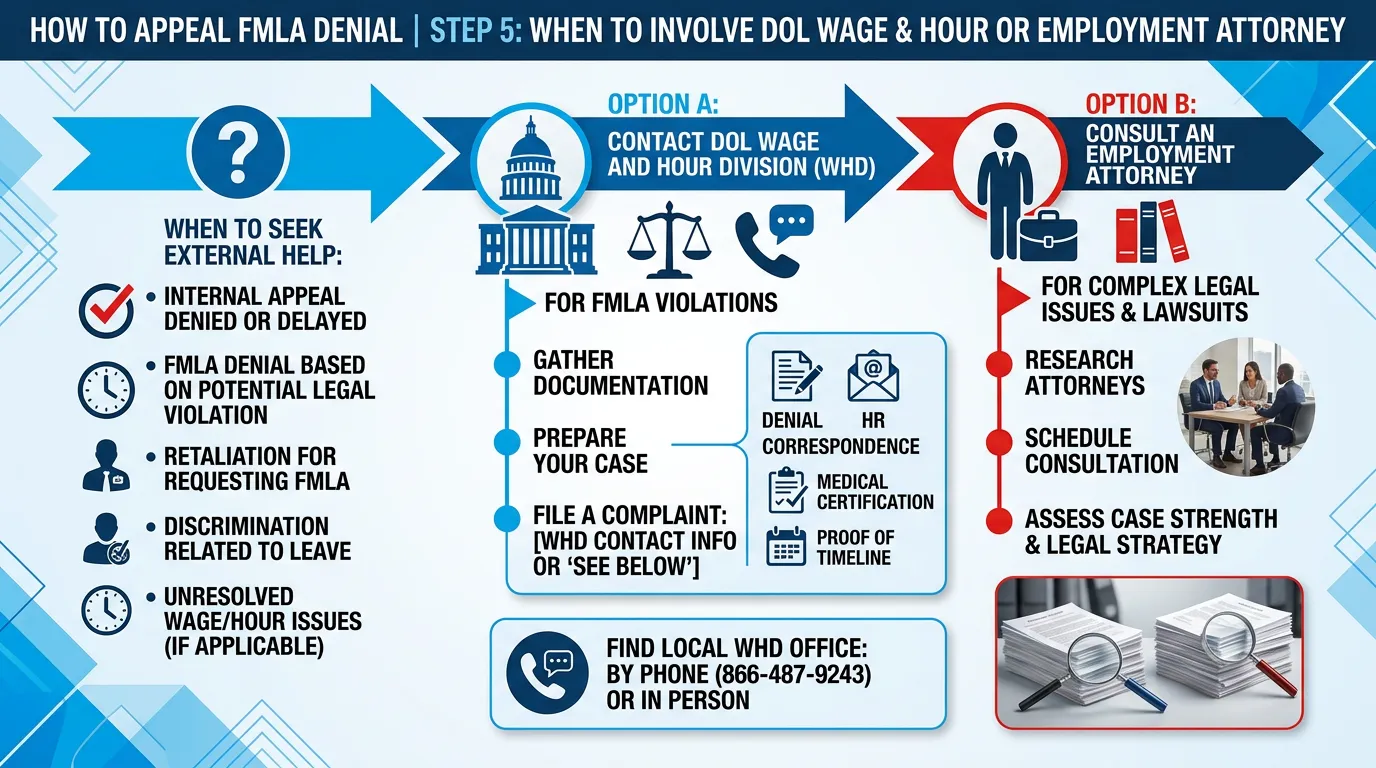
Filing a Complaint With the Department of Labor
You can file online at dol.gov/whd, by phone at 1-866-487-9243, or in person at your local WHD office. Bring your denial letter, all HR correspondence, medical certification, proof of eligibility, and timeline of events.
DOL investigations can take several months. According to the DOL FMLA protection guidelines, employers may be required to grant leave, restore your position, provide back pay, or face penalties for violations.
Contact an employment attorney if your employer denied leave in bad faith. You should also get legal help if you were fired or demoted after requesting FMLA, or if you suffered financial damages exceeding what DOL can recover.
Retaliation warning signs after you push back
Watch for sudden performance write-ups after your FMLA request. Schedule changes that make your job harder are another red flag. Being excluded from meetings or projects you previously handled is a warning sign.
Document any adverse actions immediately. Save emails. Note verbal conversations with dates and witnesses. Report retaliation to HR in writing. This creates a protected record.
How FMLADocs helps before and after a denial
FMLADocs connects you with licensed physicians who complete FMLA certifications correctly the first time. Our doctors include all required details employers and the DOL expect to see. Ready to start FMLA certification online? You can begin the process in minutes.
After denial, FMLADocs can provide corrected certification within 24-48 hours. This helps if your original was rejected for insufficient detail, missing information, or vague language.
Our physicians understand exactly what a serious health condition means under federal law. They document functional limitations, treatment frequency, and episode duration in language that satisfies employer requirements. Getting certification right the first time is often the difference between approval and losing job protection during a medical crisis.
Conclusion
An FMLA denial doesn’t end your options. You can fix paperwork issues, file internal appeals, or escalate to the DOL. Start by getting written documentation of why your request was rejected. Check if you’re facing a true denial or just incomplete certification. If your forms need corrections, act within your 7-day cure window. Work with your healthcare provider to address specific deficiencies the employer identified.
When internal appeals fail, the Department of Labor investigates complaints at no cost. They can compel employers to follow federal law. Document everything from the start. Save emails, denial letters, and medical records. Watch for retaliation after you file an appeal. Employers can’t punish you for exercising FMLA rights.
Speed matters when you need to appeal an FMLA denial. Deadlines pass quickly, and incomplete documentation weakens your case. If you need help with the FMLA denial appeal process, FMLADocs connects you with licensed physicians who complete certifications correctly within 24-48 hours. Our doctors know precisely what employers and the DOL require, giving you the strongest basis for approval.
Frequently Asked Questions
Can I appeal an FMLA denial?
Yes. Start by requesting written reasons, fixing certification gaps within 15 days, and using DOL second-opinion rules when medical certification is disputed.
How long do I have to fix FMLA paperwork after a denial?
You have 15 calendar days to cure deficient certification from the date you receive written notice. Missing this deadline can result in a permanent denial.
Can my employer deny FMLA without a reason?
No. They must state in writing whether the denial is based on eligibility, certification defects, or failure to follow notice rules.
Does a second opinion doctor work for FMLA?
Yes, employers may require a second opinion at their expense if they doubt your certification. A third opinion, if needed, is binding on both parties — see this FMLA paperwork and forms guide for what to submit.
Is an FMLA denial the same as being fired?
No, but wrongful denial combined with adverse action may support retaliation claims. Document everything in writing from the start.
Can I reapply for FMLA after fixing my forms?
Often yes, if the underlying qualifying reason still exists and you submit complete certification. Check with HR about resubmitting corrected forms.
Should I contact the DOL about an FMLA denial?
Yes, file a WHD complaint if your employer won't accept valid certification or retaliates after you appeal. The DOL investigates violations at no cost.
What happens if I miss the 15-day deadline to fix my FMLA certification?
Your employer can deny your request if you don't submit corrected forms within 15 days. This deadline is strict under federal rules. However, you might still have options. If you had a valid reason for missing the deadline, explain it to HR in writing. Some employers grant extensions for good cause. You can also file a new FMLA request with complete certification from the start. If your employer denied you unfairly or didn't give proper notice about the deadline, file a DOL complaint to challenge the denial.

Meet the author
Areeba Imran
I am a healthcare professional and seasoned medical writer with 13+ years of experience across health, wellness, and clinical content. My work focuses on delivering trustworthy, evidence-based information that empowers readers to make informed decisions. With a keen interest in innovation and evolving areas of patient care, I bring a modern perspective to today's healthcare setup.
Get Your FMLA Certification Online in Minutes