

Can I Use FMLA One Day at a Time? Intermittent Leave 101
 by Areeba Imran
Last updated:
Can I use FMLA one day at a time? Yes. Yes, you can take FMLA in single-day chunks instead of one long block. Many employees with chronic conditions assume FMLA only covers extended leave like surgery recovery or maternity, so they never apply. In fact, intermittent FMLA lets you take protected leave in single days or even partial days when a chronic condition causes flare-ups that come and go. You don’t need to take six straight weeks off. Recurring migraines, occasional anxiety-related mental health days, or periodic diabetes appointments can all qualify for this kind of single-day protection. That misconception leaves employees exposed to attendance discipline for absences that should be protected under federal law. This intermittent FMLA overview breaks down when single-day leave qualifies.
This guide shows you how intermittent FMLA works when you need single-day or partial-day leave. You’ll learn what your certification must document for one-day episodes, how much notice to give HR for unforeseeable flare-ups, and whether employers can demand a doctor’s note for every absence. We’ll walk through real examples like migraines, IBD flares, and chemo days. You’ll also see how to track your 12-week entitlement when using FMLA for occasional absences in partial-day increments.
By the end, you’ll know precisely how to protect yourself from discipline while managing a chronic condition that requires time off during the year.
Can I Use FMLA One Day at a Time? Yes, for Single-Day Absences
Federal FMLA rules let you use FMLA one day at a time for chronic conditions. You can take leave in single days, partial days, or even in hourly increments.
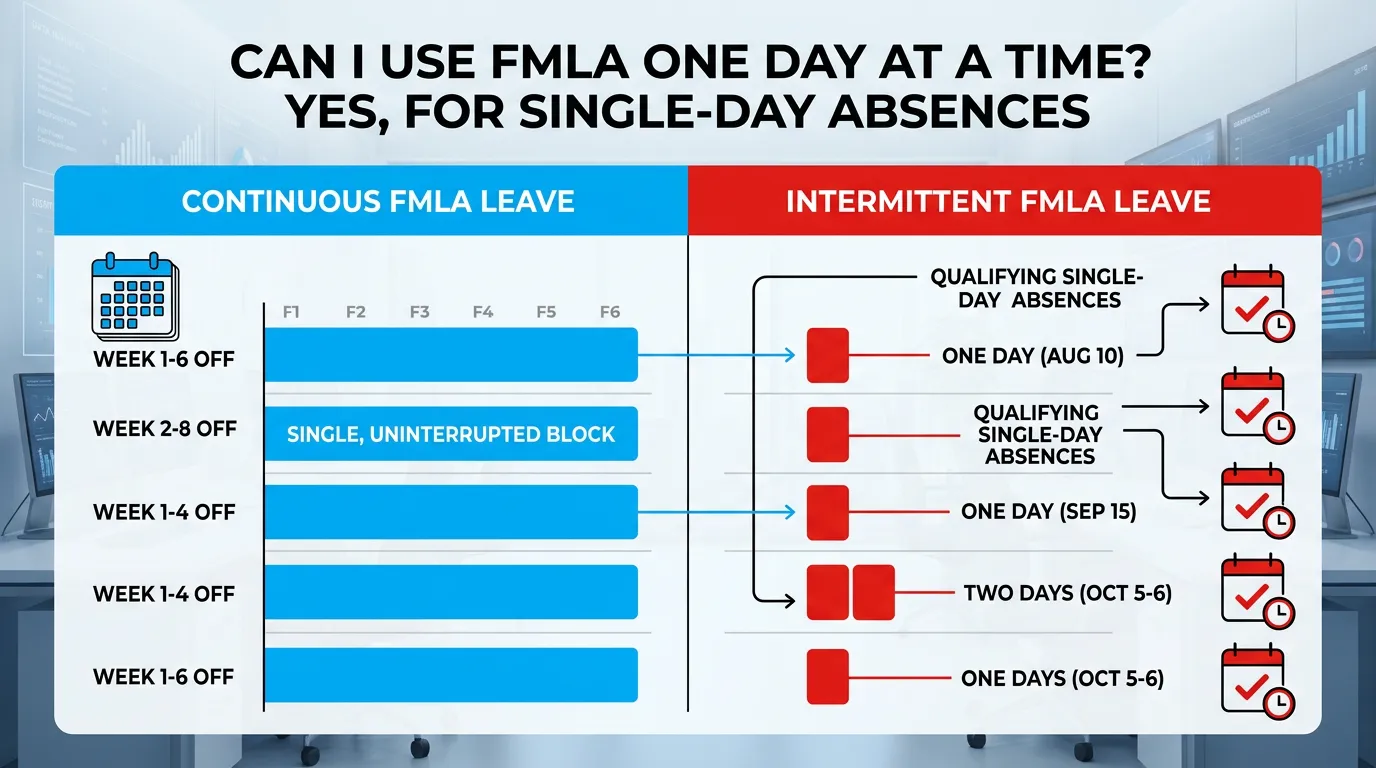
The main factor is medical necessity. Your provider needs to document why your condition requires unplanned time away from work. You can explore this further in intermittent FMLA.
Common scenarios include migraine episodes, IBD flares, mental health crisis days, and chemotherapy appointments. Physical therapy sessions also qualify.
What Makes Single-Day Absences Qualify
Your condition needs to cause episodic incapacity — symptoms that flare unpredictably and keep you from doing your job.
Your healthcare provider documents the need for intermittent leave. They explain how your condition requires irregular absences for treatment or recovery.
You don’t need to take full weeks off. FMLA protects your job whether you miss one hour or one full day.
The Difference Between Intermittent and Continuous Leave
Continuous leave means taking time off in one uninterrupted block. You might use this after surgery or childbirth.
Intermittent leave lets you take time as needed. You work most days but miss time when symptoms flare, or treatment is scheduled.
Both types provide job protection. The format depends on what your medical condition requires.
Intermittent vs. Reduced Schedule Leave Quick Comparison

Overview
FMLA offers two ways to take leave in smaller increments. Both let you work while managing health needs.
Intermittent leave covers unpredictable absences in separate blocks. You might miss full days, partial days, or just hours. This works when symptoms flare without warning.
Reduced schedule leave means working fewer hours on a set pattern. You might work 30 hours weekly instead of 40. This fits ongoing treatment schedules. Learn more about the differences in our guide on reduced schedule vs intermittent FMLA.
[TABLE: Comparison of intermittent vs. reduced schedule leave types]
| Feature | Intermittent Leave | Reduced Schedule Leave |
|---|---|---|
| Pattern | Unpredictable, as needed | Predictable, ongoing schedule |
| Best For | Flare-ups, appointments, bad days | Regular treatment, recovery periods |
| Tracking Method | Actual time absent | Reduction from normal hours |
Key Considerations
Both types count against your 12-week annual entitlement. The tracking differs based on how you use time.
Your medical certification must specify which type fits your condition. Doctors base this on symptom patterns and treatment needs.
You can’t switch between types without new certification. Choose the one that matches your situation best from the start.
What Your Certification Must Say for One-Day Episodes
When you use FMLA one day at a time, your certification needs specific details. Vague language gets forms rejected and restarts the clock. Your provider must document exactly how often episodes occur and how long each one lasts.
Certify intermittent FMLA with a licensed physician to get your paperwork approved fast. FMLADocs connects you with board-certified providers who complete certifications within 24-48 hours.
Required Documentation Elements
Your certification must include estimated frequency of episodes. Write “2-4 times per month” instead of “as needed.” Employers need concrete numbers to track your intermittent leave properly.

Next, include the expected duration of each episode. Write “4-8 hours” or “1-2 days” instead of “varies.” This helps HR calculate how much of your 12-week entitlement you’re using per absence.
Your provider should state whether episodes are predictable or unpredictable. According to federal FMLA regulations, this distinction affects how employers track your absences and whether they can require advance notice.
The form must explain why intermittent leave is medically necessary for your condition. Your provider should describe how your condition affects your ability to perform job functions during episodes. This connects your medical situation to your work limitations.
Common Certification Mistakes That Get Denied
Writing “ongoing” instead of a specific duration fails the documentation test. Employers reject these forms because they can’t establish a clear leave schedule.
Listing “as needed” for frequency doesn’t work either. HR needs to know if you’ll miss two days monthly or eight days monthly. That difference matters for staffing and tracking your entitlement.
Providers who skip the functional impact section create problems. Stating a diagnosis without explaining work limitations doesn’t prove you need protected time off. Your certification must show how symptoms prevent you from doing your job during episodes.
How to Use FMLA One Day at a Time: Notice Requirements for Flare-Ups
When your chronic condition flares without warning, you can’t plan ahead. You need to know how fast you must notify your employer to keep your job protection intact.
Notice Requirements for Unpredictable Episodes
When an episode catches you off guard, let your employer know as soon as you reasonably can — usually within one to two business days after the absence begins.
You don’t need to mention FMLA by name during your initial call-in. Your employer’s normal call-in procedures apply. Call the same person you’d contact for any sick day. Follow the same process you’d use for any absence.
If your condition makes same-day notification impossible, notify as soon as you’re able. A severe migraine that leaves you unable to look at screens or speak clearly doesn’t require you to call while incapacitated. A mental health crisis that prevents you from communicating can wait until you’re stable enough to make contact.
What Counts as ‘As Soon as Practicable’
According to federal FMLA regulations, as soon as practicable means as soon as circumstances allow. For most situations, this means the same day or next business day.
Your employer can require you to follow their usual call-in procedures. This includes who to contact, when to call, and how to report the absence. These rules apply to everyone, not just FMLA users.
Document every notification carefully:
-
Date and time you made contact
-
Who you spoke with (name and title)
-
What you said about your absence
-
Any response or instructions you received
Repeated failure to give timely notice can result in denial of FMLA protection for specific absences. Your employer can’t deny your entire FMLA approval. But they can refuse to protect individual days when you didn’t follow proper notification procedures.
Keep a log of all absences and notifications. This protects you if your employer later claims you didn’t provide proper notice.
Using FMLA One Day at a Time: Doctor’s Note Rules for Each Absence
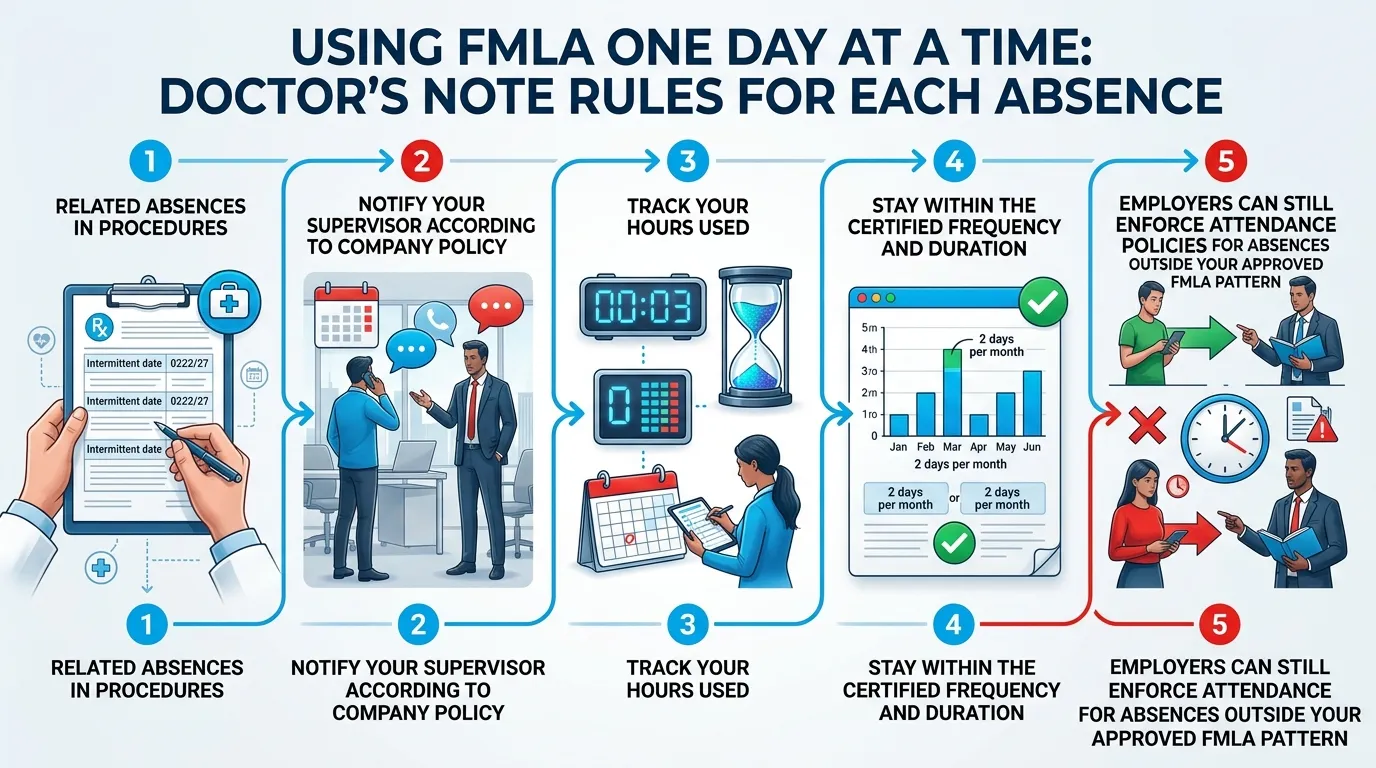
Once your intermittent FMLA leave is approved, your employer can’t demand a new doctor’s note for each absence. Your original certification covers all absences within the documented frequency and duration. This protection exists to prevent employers from creating barriers that discourage you from using approved leave.
What Employers Can and Cannot Require
Your approved certification establishes a pattern. If your doctor certified migraines occurring two to four times monthly, your employer can’t request new documentation each time you call in with a migraine. The same applies to chronic conditions like Crohn’s disease, anxiety disorders, or diabetes-related absences.
However, you must follow normal call-in procedures. Notify your supervisor according to company policy. Track your hours used. Stay within the certified frequency and duration. Employers can still enforce attendance policies for absences outside your approved FMLA pattern.
When Recertification Is Allowed
Employers can request recertification under specific circumstances. For conditions lasting more than 30 days, they can ask for updated certification every 30 days. For chronic conditions, recertification is allowed every six months. These timeframes prevent excessive documentation demands while ensuring ongoing medical necessity.
According to DOL recertification rules, your employer can also request new certification if circumstances change a great deal. This includes situations where your absence pattern differs substantially from what was certified. They can also request recertification if they receive information casting doubt on your stated reason for leave.
If your employer demands a doctor’s note for every single absence despite approved intermittent FMLA, this may violate federal regulations. Document each request in writing. Save all correspondence. Consider filing a complaint with the Department of Labor if the pattern continues. This excessive documentation requirement can constitute interference with your FMLA rights.
Real Examples: How to Use FMLA One Day at a Time for Common Conditions
You can use FMLA one day at a time for chronic conditions that cause unpredictable episodes. These real scenarios show how intermittent leave works in practice.
Chronic Migraines
Migraine episodes can occur two to four times monthly or more. Each can last 4-72 hours with severe pain, light sensitivity, and nausea. You can’t look at screens or function at work.
Your certification should document this frequency and duration. This shows your employer why you need protection for single-day absences when episodes strike. Learn more about how intermittent FMLA for migraines works to protect your job.
Inflammatory Bowel Disease (IBD)
Crohn’s disease and ulcerative colitis cause sudden flare-ups. During flares, you need bathroom access every 15-30 minutes. Severe abdominal pain makes sustained work impossible.
These episodes might last one to three days. According to federal FMLA guidance, unpredictable flares qualify for single-day protection when properly documented.
Mental Health Conditions
Anxiety, depression, and PTSD can cause crisis days two to three times monthly. Symptoms become overwhelming for 4-8 hours or a full day. You can’t concentrate, interact with coworkers, or complete tasks safely.
Your certification must explain how these episodes affect your ability to work. Functional impact matters more than diagnosis alone.
Cancer Treatment
Chemotherapy happens every two to three weeks. Treatment takes a full day for infusion. You need one to two recovery days after, with severe fatigue and nausea.
This pattern stretches your 12 weeks across the entire year. You use only the hours you actually miss, not full weeks at once.
Tracking Your 12-Week FMLA Bank in Partial-Day Increments
When you use FMLA one day at a time, your 12-week entitlement equals 480 hours for a 40-hour workweek. That’s 60 days times 8 hours. You don’t lose a full day when you leave early for a migraine. You only use the actual hours you miss.
How Employers Calculate Intermittent Leave
Employers track intermittent FMLA leave in the smallest increment they use for other leave types. Most companies use 15-minute or 1-hour blocks. If you leave work at 2 PM for a medical appointment, you use 3 hours of your bank, not a full 8-hour day.
This tracking method makes your 12 weeks stretch much further. A four-hour migraine uses four hours of your 480-hour limit. Two migraines per month at 6 hours each equals 144 hours per year. That’s well within your annual entitlement.
| Scenario | Hours Per Episode | Frequency | Annual Total |
|---|---|---|---|
| Migraines | 6 hours | 2x/month | 144 hours/year |
| Therapy appointments | 2 hours | Weekly | 104 hours/year |
| Chronic pain flares | 4 hours | 3x/month | 144 hours/year |
Strategies to Make Your 12 Weeks Last
Request your FMLA usage report from HR monthly. This helps you verify accurate tracking. Errors happen when managers manually log hours. Catching mistakes early protects your remaining balance.
If you’re using leave faster than expected, talk to your provider. Your certification might need adjustment. Maybe your episodes last longer than originally documented. Or they happen more often than predicted. Updated medical information can support a revised schedule.
Conclusion
To asnwer ‘can I use FMLA one day at a time?’ Yes. You can use FMLA one day at a time when your chronic condition causes unpredictable episodes. Your certification must document frequency, duration, and medical necessity for intermittent leave. You only burn FMLA hours for actual time missed. This means your 12-week bank can stretch across an entire year of periodic absences.
The protection works when your paperwork is complete and specific. Your provider needs to explain why your condition requires intermittent FMLA leave. You must follow normal call-in procedures each time you’re absent. HR can’t demand new doctor’s notes for every single-day absence once your leave is approved.
Track your hours carefully to avoid surprises. Know how much of your 480-hour bank remains available. If your condition causes recurring absences that threaten your job, intermittent FMLA for chronic conditions offers the protection you need.
FMLADocs connects you with board-certified physicians who complete certifications within 24-48 hours. Our providers understand precisely what documentation employers require for intermittent leave certification requirements. Start your consultation today to protect your job while managing your health condition.
Get FMLA certification online. A quick eligibility check confirms your hours, tenure, and employer size meet FMLA requirements so your certification isn’t delayed.
Frequently Asked Questions
Can I take FMLA leave one day at a time for chronic conditions?
Yes, you can take FMLA one day at a time for chronic conditions. Federal rules allow intermittent leave in single days, partial days, or hourly blocks. Your healthcare provider must document why your condition needs unplanned time away from work. Common examples include migraine episodes, IBD flares, mental health crisis days, and chemotherapy appointments. You don't need to take full weeks off. FMLA protects your job whether you miss one hour or one full day. The main factor is medical necessity for episodic symptoms that flare unpredictably.
What medical conditions qualify for single-day FMLA absences?
Conditions that cause episodic incapacity qualify for single-day FMLA. This includes recurring migraines, occasional anxiety-related mental health days, and periodic diabetes appointments. IBD flares, physical therapy sessions, and chemotherapy treatments also qualify. Your condition needs to flare unpredictably and keep you from doing your job. Your healthcare provider documents the need for irregular absences for treatment or recovery. The symptoms must come and go rather than stay constant. This protection covers absences that should be protected under federal law but often trigger attendance discipline instead.
How much notice do I need to give for unforeseeable FMLA absences?
For unforeseeable flare-ups, you must notify your employer as soon as possible. You don't need to predict when symptoms will strike. Call or text HR when the episode happens. You can't give advance notice for unpredictable conditions. Your employer can't demand 30 days' notice for a migraine that starts overnight. The law recognizes that chronic conditions flare without warning. You just need to follow your company's normal call-in procedures. Give notice the same way you would for any sick day. Your certification should explain why your condition causes unplanned absences.
What's the difference between intermittent and reduced schedule FMLA?
Intermittent leave covers unpredictable absences in separate blocks. You might miss full days, partial days, or just hours when symptoms flare without warning. Reduced schedule leave means working fewer hours on a set pattern. You might work 30 hours weekly instead of 40 for ongoing treatment schedules. Both types provide job protection while you manage health needs. Intermittent works for conditions like migraines that strike randomly. Reduced schedule fits regular chemotherapy appointments or dialysis sessions. Your provider determines which type your medical situation needs based on how your condition affects your ability to work.
Can my employer require a doctor's note for every FMLA absence?
No, your employer can't demand a new doctor's note for every single absence. Once your intermittent FMLA gets approved, your certification covers all qualifying absences during that period. Your provider already documented why your condition requires irregular time off. Employers can ask you to confirm each absence relates to your certified condition. They can't make you get fresh medical documentation each time you miss work. That would defeat the purpose of intermittent leave protection. Your original certification explains the frequency and duration of expected episodes. Recertification only happens at specific intervals the law allows.
How do I track my 12-week entitlement when taking partial days?
Your employer tracks FMLA usage in the smallest increment they use for other leave types. If they track sick time in hours, they track FMLA in hours too. Each partial day counts toward your 12-week total. Leaving two hours early for a doctor visit uses two hours of your entitlement. You get 480 hours total if you work 40-hour weeks. Missing four hours for a migraine uses four hours of that bank. Your employer must tell you how much leave you've used after each absence. Keep your own records too. Track every hour you take so you know how much protection remains.
Do I need to take six straight weeks off to use FMLA?
No, you don't need to take six straight weeks off to use FMLA. That's a common misconception that leaves employees exposed to attendance discipline. Intermittent FMLA lets you take protected leave in single days or even partial days. You can work most days but miss time when symptoms flare or treatment is scheduled. Many employees with chronic conditions assume FMLA only covers extended leave like surgery recovery or maternity. In fact, recurring conditions that cause flare-ups qualify for single-day protection. You use FMLA as your medical situation requires, not in one uninterrupted block.
What must my certification document for one-day FMLA episodes?
Your certification must explain why your condition requires unplanned time away from work. Your provider documents that you have episodic incapacity with symptoms that flare unpredictably. They describe how often episodes occur and how long each one lasts. The form should state whether you need full days, partial days, or hourly increments off. Your doctor explains what triggers flare-ups if known. They confirm you can't perform your job duties during these episodes. The certification covers the expected frequency and duration of absences. This documentation protects you from discipline for absences that qualify under federal law.

Meet the author
Areeba Imran
I am a healthcare professional and seasoned medical writer with 13+ years of experience across health, wellness, and clinical content. My work focuses on delivering trustworthy, evidence-based information that empowers readers to make informed decisions. With a keen interest in innovation and evolving areas of patient care, I bring a modern perspective to today's healthcare setup.
Get Your FMLA Certification Online in Minutes