
Reduced Leave Schedule or Intermittent FMLA? Find the Right Fit for Your Situation
 by Nida Hammad
 Last updated:
Employees requiring extended medical leave should understand the distinction between reduced leave schedules and intermittent FMLA options. Most workers don’t know FMLA offers two flexible choices that go beyond regular continuous leave. You might need to work shorter days while recovering from surgery, or you might need occasional days off for ongoing treatments.
Confusion between these FMLA leave types frequently results in denied claims and compromised job protection during medical absences. Many workers submit the wrong paperwork or choose an option that doesn’t match their situation — and that puts job protection at risk.
This guide explains the key differences between a reduced work schedule FMLA and intermittent FMLA leave. You’ll learn exactly how each option works, see real examples that match common medical situations, and discover which FMLA leave type protects your job while meeting your specific health needs.
What Is a Reduced Leave Schedule Under FMLA?
A reduced leave schedule lets you work fewer hours each day or week while maintaining a consistent pattern as you recover from a serious health condition. This differs from taking full days off sporadically.
The schedule follows a predictable routine that both you and your employer can plan around. For example, you might work six hours daily instead of eight, or work four days weekly instead of five.
How Reduced Work Schedules Function
Your doctor must confirm that reduced hours are medically necessary. This FMLA medical certification document explains why you need fewer work hours and specifies how long you will need this arrangement.
Each hour you don’t work counts against your 12-week FMLA entitlement. For a standard full-time employee, that equals 480 total protected hours, though this number is adjusted proportionally for part-time workers or those on non-standard schedules.
Typical Reduced Schedule Scenarios
Common situations include:
- Recovery from surgical procedures requiring restricted physical activity
- Predictable fatigue caused by cancer treatment
- Mental health conditions needing a gradual return to full duties
- Long-term health issues that require regular rest periods
Duration and Frequency Limits
You cannot exceed 12 weeks of total FMLA leave in a year. This includes any combination of full days and reduced hours. Your employer tracks every hour you miss.
The reduced schedule must be medically justified throughout the period. Your doctor may need to provide updated certification to ensure the arrangement still meets your health needs. The U.S. Department of Labor provides further guidance on reduced schedule rules and tracking.
What Is Intermittent FMLA Leave?
Intermittent FMLA leave permits employees to take leave in separate increments rather than as a continuous block. Employees take time off in hours or days based on their health needs.
This type of leave works differently from continuous time off. You might miss work unpredictably based on medical needs — flare-ups, treatment visits, or symptom episodes cause these absences.
How Intermittent Leave Works
Your healthcare provider must document why you need intermittent leave, estimate how often episodes occur, and estimate how long they last. This medical certification supports your FMLA job protection.
You still get 12 weeks total per year, but the time adds up across all your absences. Your employer tracks each hour or day you take.
Employers must track intermittent leave using an increment no greater than the shortest increment they use for any other type of leave, and that increment can never exceed one hour. In practice, many employers track in 15- or 30-minute blocks depending on their general leave policies.
Common Intermittent FMLA Uses
Chronic migraines often cause unpredictable absences — you can’t predict when they’ll strike. Chemotherapy appointments happen every few weeks on a set schedule. Diabetes management requires regular medical appointments to document ongoing treatment and maintain health status.
FMLADocs connects you with licensed doctors who understand these patterns and complete the required forms remotely.
Tracking Intermittent Leave Time
Your employer tracks each absence carefully and adds up hours and days throughout the year to ensure you don’t exceed your 12-week entitlement. Keep your own records too — track when you take leave and why to help you stay within your annual limit.
Key Differences Between Reduced Schedule and Intermittent FMLA
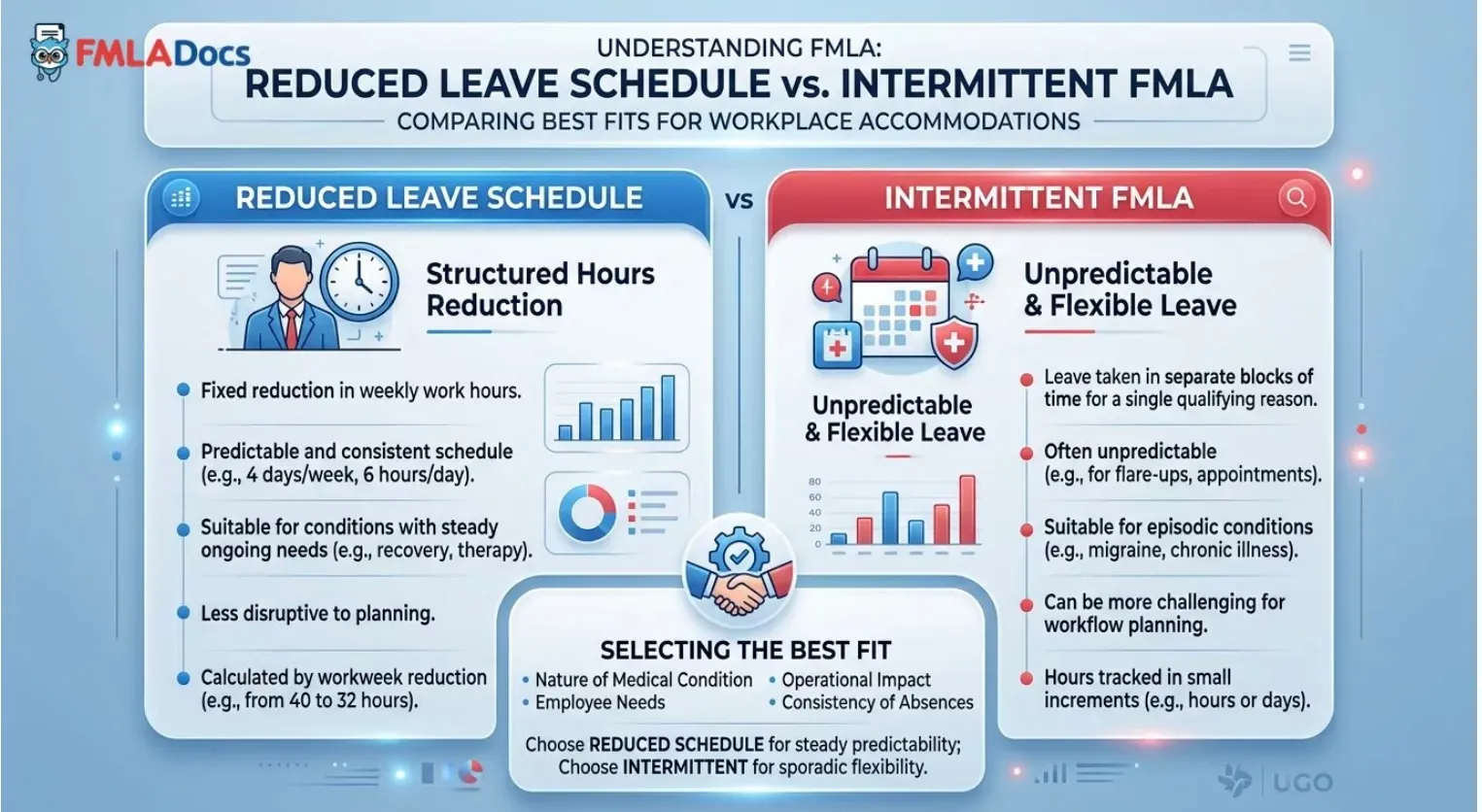
Understanding the difference between Reduced Leave Schedule vs. Intermittent FMLA helps you choose the right option. Both provide job protection under FMLA but work differently in practice.
Note: Intermittent FMLA for bonding with a newborn or newly placed child requires mutual employer-employee agreement — it is not an automatic right like intermittent leave for a serious health condition.
Predictability and Planning
| Factor | Reduced Schedule | Intermittent Leave |
|---|---|---|
| Scheduling Pattern | Consistent, predictable hours | Unpredictable, episodic absences |
| Typical Medical Situations | Recovery requiring gradual return | Chronic conditions with flare-ups |
| Employer Planning Ability | High — can plan coverage | Low — requires flexible staffing |
| Tracking Method | Hours reduced per week | Separate absence instances |
Employer Approval and Documentation
Both FMLA leave types require medical certification. Your doctor must explain why you need this specific leave pattern. For intermittent leave, forms must show it is unpredictable and must estimate how often you will need it.
Many employers prefer reduced schedules because they can plan staffing more easily. However, no one can force you to choose one over the other — your medical certification decides which type you need.
FMLADocs connects you with licensed doctors who understand these form requirements and complete the paperwork correctly from the start.
Impact on Workplace Operations
Reduced schedules cause less disruption because your employer knows when you will be present and can assign tasks accordingly.
Intermittent FMLA requires more flexibility. Your employer must allow absences you cannot predict, which can challenge workflow planning — but it remains your legal right when medically necessary.
How to Determine Which FMLA Leave Type Applies to Your Situation
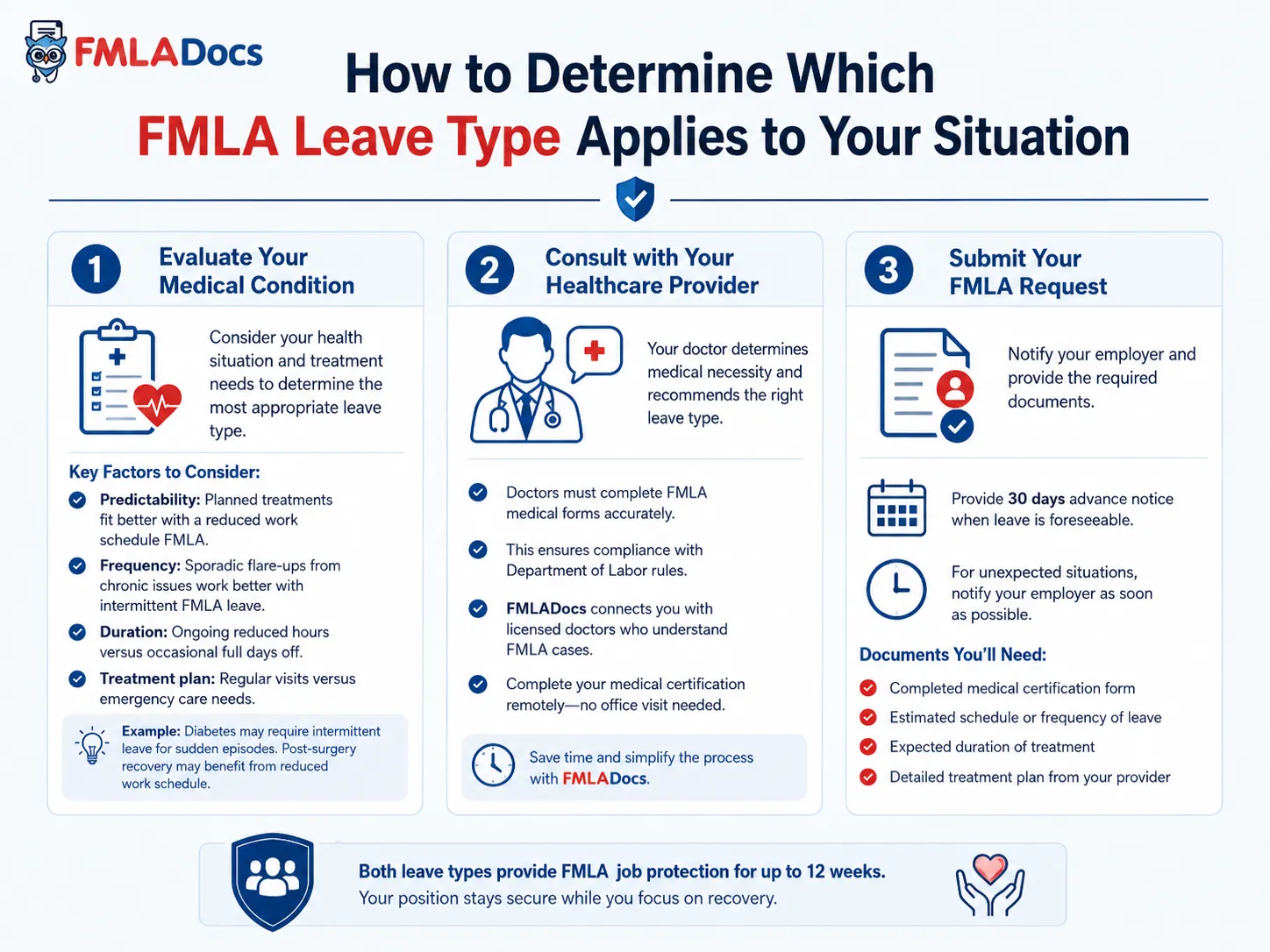
Choosing between a reduced leave schedule vs. intermittent FMLA starts with your medical needs. You need to understand how your condition affects your work schedule to pick the right FMLA leave type.
Evaluating Your Medical Condition
Ask yourself key questions about your health situation: Can you predict when you will need time off? Does your treatment follow a set schedule?
Consider these factors:
- Predictability: Planned treatments like chemotherapy fit better with a reduced work schedule FMLA
- Frequency: Sporadic flare-ups from chronic issues work better with intermittent FMLA leave
- Duration: Ongoing reduced hours versus occasional full days off
- Treatment plan: Regular visits versus emergency care needs
For example, someone with diabetes might need intermittent leave for sudden episodes. In contrast, a person recovering from surgery might benefit from working half days.
Consulting with Healthcare Providers
Your doctor plays a key role in this decision. They determine medical necessity and recommend the right leave type. Doctors must fill out FMLA medical forms correctly to ensure you comply with Department of Labor rules.
FMLADocs connects you with licensed doctors who understand FMLA cases. You can complete your medical certification remotely — no office visits required.
Submitting Your FMLA Request
Once you know which leave type fits your needs, notify your employer. Give 30 days advance notice when you can forecast your leave. For unexpected situations, inform them as soon as possible.
You will need these documents:
- Completed medical certification form
- Estimated schedule or frequency of leave
- Expected duration of treatment
- Detailed treatment plan from your provider
Both leave types provide FMLA job protection for up to 12 weeks. Your position stays secure while you focus on recovery.
Conclusion
Choosing between a reduced leave schedule vs. intermittent FMLA depends on your health needs. A reduced schedule works best for predictable recovery. Intermittent FMLA leave fits chronic conditions you cannot predict. Both options protect your job for up to 12 weeks each year.
The key is proper medical certification. Your doctor must document why you need FMLA leave and which type fits your situation. Without correct paperwork, you risk losing FMLA job protection.
FMLADocs connects you with licensed doctors who know FMLA medical certification rules. They will evaluate your condition and complete the necessary forms — expert guidance without leaving home. Start your FMLA certification at FMLADocs.com and take control of your health and job security today.
Frequently Asked Questions
Can I switch between a reduced leave schedule and intermittent FMLA during my 12-week period?
Yes, you can switch between leave types if your medical needs change. You will need updated medical certification from your doctor. The new certification must explain why your condition now requires a different schedule. Your employer must approve the change based on medical documentation.
How does my employer track my FMLA hours under a reduced schedule versus intermittent leave?
Employers track both types by counting hours against your 12-week total. For reduced schedules, they calculate the difference between your normal hours and reduced hours. For intermittent leave, they track each absence separately. Both methods ensure you do not exceed 480 hours total.
What happens if I need more flexibility than a reduced leave schedule provides?
You should request intermittent FMLA instead. This gives you unpredictable time off when symptoms flare up. Your doctor must certify that your condition requires sporadic absences. Intermittent leave works better for conditions with variable symptoms that do not follow a set pattern.
Do I get paid differently under reduced schedule FMLA versus intermittent FMLA leave?
FMLA itself is unpaid for both types. However, you may use accrued paid time off during either leave type. Some employers offer short-term disability that covers reduced schedules. Check your company's policies and state disability programs for potential wage replacement options.
Can my employer deny my request for intermittent FMLA if they prefer a reduced schedule?
No. Your employer cannot choose your leave type. Your medical certification determines which type you need. If your doctor certifies that your condition requires intermittent leave, your employer must approve it. The medical necessity drives the decision, not employer preference.
How far in advance must I notify my employer when using a reduced leave schedule versus intermittent FMLA?
For reduced schedules, you typically provide advance notice since the pattern is predictable. For intermittent FMLA, you give notice as soon as possible, often the same day. Unforeseeable medical needs may require only verbal notice initially. Follow your employer's call-in procedures.
What medical certification requirements differ between reduced schedule and intermittent FMLA leave types?
Both require the same FMLA medical certification form. However, the doctor must specify different details. For reduced schedules, they outline your new work hours and duration. For intermittent leave, they estimate frequency and duration of flare-ups. FMLADocs connects you with licensed doctors who complete either certification type.
Meet the author
Nida Hammad
I am a professional writer with over five years of experience creating clear, engaging, and well-researched content. I specialize in healthcare topics, helping readers understand complex information in simple wording. Currently, I write for FMLA DOC, where I focus on producing accurate and trusted guides for people seeking support with FMLA and medical needs.
Get Your FMLA Certification Online in Minutes