FMLA vs. Sick Leave: What's the Difference?
 by Alisha Shabbir
 Last updated:
FMLA and sick leave sound like they serve the same purpose, but they’re fundamentally different in ways that matter when your health or family needs your attention. One is a federal law that guarantees your job will be waiting when you return. The other is a benefit your employer provides (or in some states, is required to provide) that keeps your paycheck coming while you’re out.
Here’s what most people don’t realize: these two types of leave aren’t competing options. In many cases, they work together. Your employer might even require you to use your paid sick leave during your FMLA absence.
This guide breaks down the real differences between FMLA vs. sick leave, explains when you need one versus the other, and shows you how to use both strategically to protect your job and your income when health issues arise.
Understanding the Basics: FMLA vs. Sick Leave
The Family and Medical Leave Act is a federal law that gives eligible employees up to 12 weeks of unpaid, job-protected leave per year for specific family and medical reasons. According to the U.S. Department of Labor, FMLA covers situations like your own serious health condition, caring for a family member with a serious health condition, or bonding with a new child.
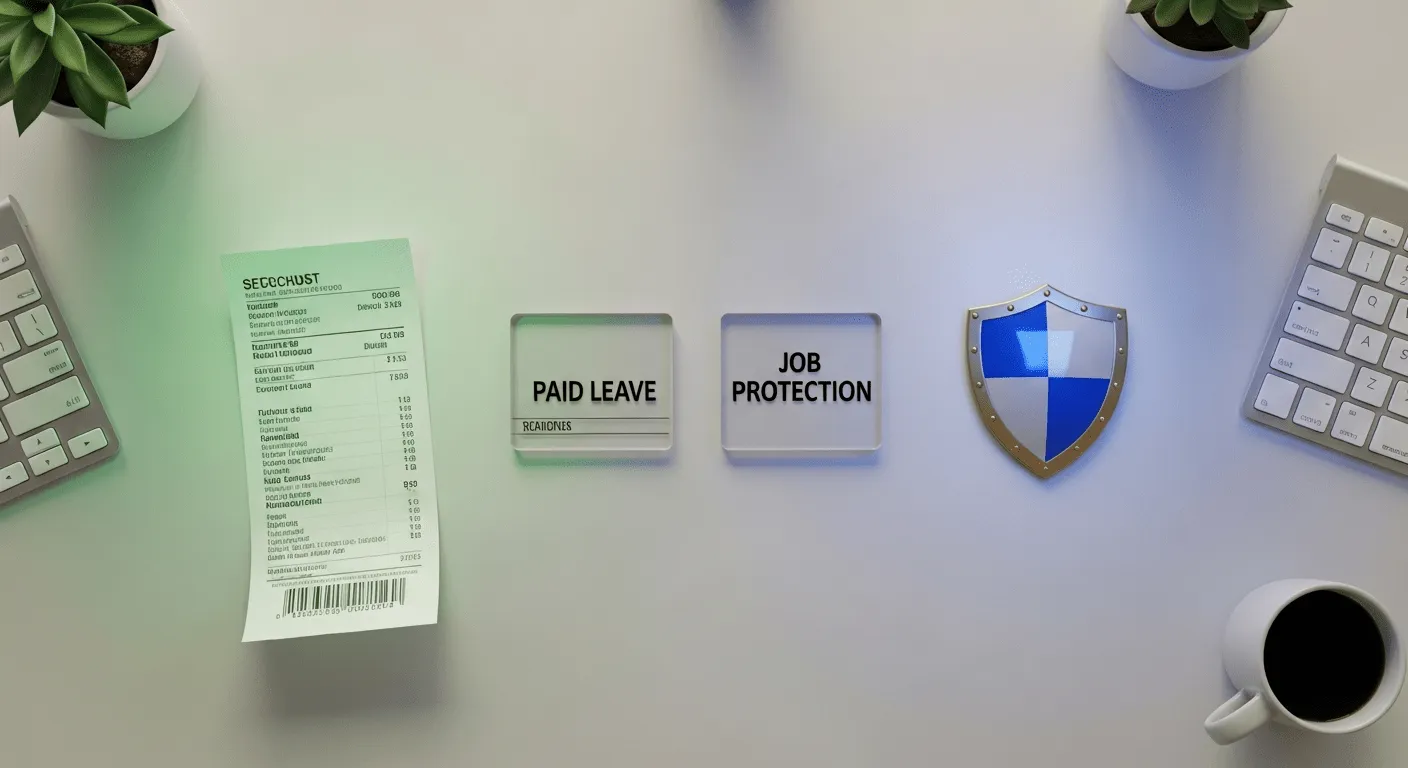
The key word in that description is “unpaid.” FMLA doesn’t put money in your pocket. What it does is guarantee that your job (or an equivalent position) will be there when you’re ready to come back. Your employer must also maintain your health insurance during your leave.
Sick leave, on the other hand, is typically a paid benefit. It might come from your employer’s policy, a union contract, or (in 18 states plus Washington D.C. as of 2025) a state law requiring employers to provide paid sick time. Sick leave is designed for shorter absences: a bad cold, a doctor’s appointment, or a day or two to recover from a stomach bug.
The critical difference? Sick leave usually doesn’t come with federal job protection. You might get paid while you’re out, but depending on your employer’s policies and your state’s laws, taking “too much” sick leave could still put your job at risk. FMLA flips that equation: you won’t get paid, but your job is protected by federal law.
| Factor | FMLA | Sick Leave |
|---|---|---|
| Legal Basis | Federal law (applies nationwide) | Employer policy or state/local law |
| Duration | Up to 12 weeks per year | Typically 3-10 days per year (varies widely) |
| Payment | Unpaid | Usually paid |
| Job Protection | Federally guaranteed | Not guaranteed (depends on policy/state) |
| Eligibility | Must meet federal requirements | Varies by employer/state |
| Qualifying Reasons | Serious health conditions, new child, family care | General illness, medical appointments |
| Health Benefits | Must be maintained during leave | Depends on employer policy |
| Employer Size | 50+ employees within 75 miles | Varies by state law |
Key Differences Between FMLA and Sick Leave
Understanding these distinctions can mean the difference between protecting your job and accidentally putting it at risk.
Federal law vs. employer discretion.
FMLA is codified in federal law under 29 U.S.C. § 2601. If you work for a covered employer and meet the eligibility requirements, your right to FMLA leave isn’t optional for your employer. Sick leave, by contrast, is only mandatory in states that have enacted paid sick leave laws. In states without such laws, your employer decides whether to offer sick leave at all, how much to provide, and under what conditions you can use it.
Job protection is the fundamental divide.
When you take FMLA leave, your employer must restore you to the same position (or an equivalent one with the same pay, benefits, and responsibilities) when you return. The Department of Labor makes clear that employers cannot retaliate against you for taking FMLA leave. Sick leave rarely comes with these protections unless your state has specific laws or your employer has particularly generous policies.
Duration reflects the intended use.
FMLA provides up to 12 workweeks of leave because it’s designed for serious, extended situations: recovering from major surgery, managing a chronic condition, or caring for a seriously ill parent. Sick leave is built for shorter absences, typically measured in days rather than weeks. Most employer policies provide somewhere between 5 and 15 paid sick days per year.
Eligibility requirements differ significantly.
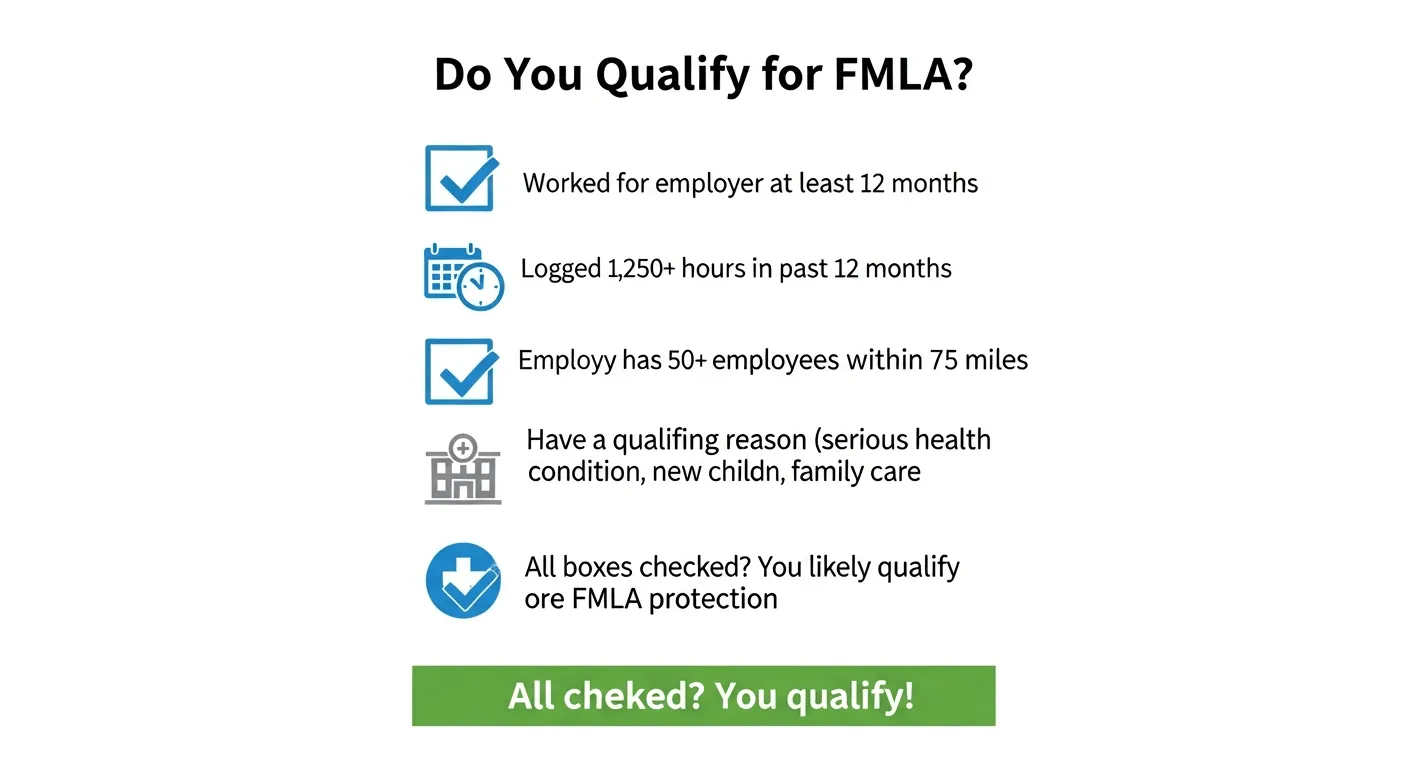
To qualify for FMLA, you must meet specific eligibility requirements: having worked for your employer for at least 12 months, logging at least 1,250 hours in the past year, and working at a location where the employer has 50 or more employees within 75 miles. Sick leave eligibility is generally simpler: if your employer offers it or your state requires it, you typically start accruing it shortly after you’re hired.
The reasons that qualify are different too.
FMLA is specifically for serious health conditions (conditions requiring inpatient care or ongoing treatment), caring for qualifying family members, or military family leave. Sick leave can usually be used for minor illnesses, preventive care, and routine medical appointments that wouldn’t meet FMLA’s threshold.
When to Use Sick Leave vs. FMLA
The simplest way to think about it: sick leave is for getting through a few rough days. FMLA is for when life throws you something bigger.
Use sick leave when:
-
You have a cold, flu, or stomach bug that’ll pass in a day or two
-
You need to attend a routine doctor’s appointment or dental cleaning
-
Your child has a fever and needs to stay home from school
-
You’re dealing with a minor injury that doesn’t require extended recovery
-
You need a mental health day to recharge
Use FMLA when:
-
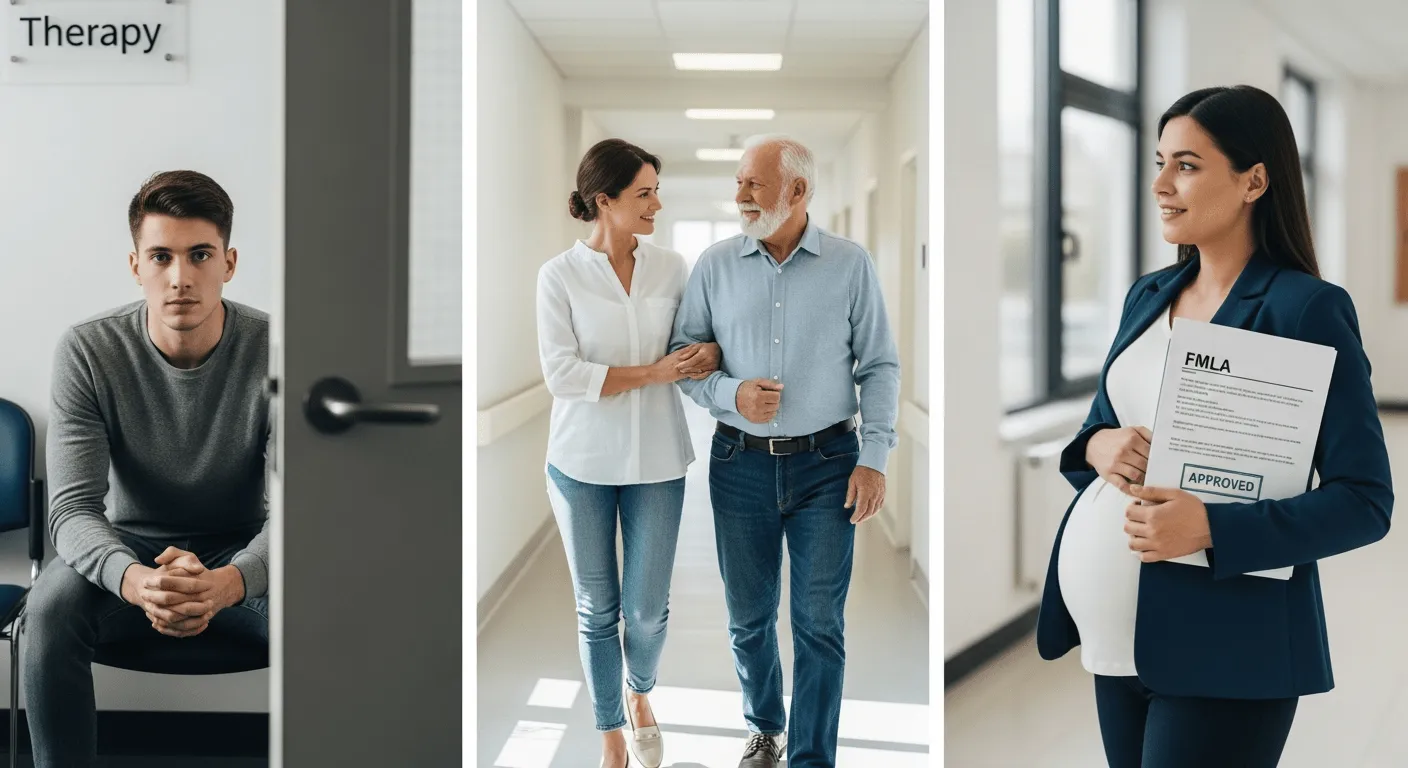
You’re facing a health condition that requires ongoing treatment (chemotherapy, physical therapy, regular dialysis)
-
You need surgery and significant recovery time
-
You’re experiencing a mental health crisis that requires intensive treatment or hospitalization
-
You need to care for a spouse, parent, or child with a serious health condition
-
You’re welcoming a new child through birth, adoption, or foster placement
-
Your chronic condition causes unpredictable flare-ups that affect your ability to work
The “serious health condition” threshold. A helpful indicator is what the FMLA regulations call incapacity for more than three consecutive days combined with ongoing treatment. If your health situation is keeping you out of work for more than a few days and involves continuing care from a healthcare provider, FMLA likely applies.

What are examples of FMLA situations?
Mental health: You’ve been managing anxiety for years, but lately the symptoms have intensified. This ongoing treatment for a chronic mental health condition qualifies for FMLA, and you can take intermittent leave for your appointments without burning through all your sick days.
Chronic illness: Your migraines have become more frequent and severe. When one hits, you’re incapacitated for the day. Rather than calling in sick each time and worrying about how it looks to your employer, intermittent FMLA protects you from discipline for these unpredictable absences.
Pregnancy: You’re expecting a baby and planning your maternity leave. Sick leave might cover a few prenatal appointments, but FMLA provides the job-protected leave you need for delivery and recovery, plus bonding time with your newborn.
Surgery: You’re scheduled for knee replacement surgery with a six-week recovery. A handful of sick days won’t cut it. FMLA ensures you can take the full recovery time you need without risking your position.
Can You Use Sick Leave and FMLA Together?
Yes, and in fact, many employers require it. This is where understanding the relationship between these two types of leave becomes valuable.
Here’s how it works: FMLA leave is unpaid, but the law allows (and employers can require) you to substitute your accrued paid leave, including sick leave, for unpaid FMLA time. When you do this, the leave runs concurrently. You’re technically on FMLA leave (with all its job protections), but you’re getting paid through your sick leave balance.
The Department of Labor’s regulations spell this out clearly: employers can require employees to use accrued sick or vacation leave to cover FMLA absences. If your employer doesn’t require it, you can choose to use your paid leave to maintain your income during FMLA.
| Scenario | What Happens |
|---|---|
| Employer requires substitution | Your sick leave runs at the same time as FMLA; you get paid while job is protected |
| Employee chooses substitution | You elect to use paid leave during FMLA; same result |
| Neither requires substitution | FMLA leave is unpaid; you keep your sick days for later |
| Sick leave exhausted during FMLA | Remaining FMLA time is unpaid |
What you cannot do:
You can’t “stack” the leaves sequentially to extend your total time off. However, your employer cannot deny FMLA leave as retaliation for exercising your rights. If you have two weeks of sick leave and 12 weeks of FMLA, you don’t get 14 weeks of protected leave. The sick leave covers the first two weeks of your FMLA period, giving you pay during that time, but your total protected leave is still 12 weeks.
State paid family leave adds another layer.
If you live in a state with a paid family and medical leave program (like California, New York, Washington, or one of the other 13 states with such programs), those benefits typically run concurrently with FMLA as well. In January 2025, the DOL clarified that when an employee is receiving pay from a state program, the employer cannot force them to also use their accrued paid leave on top of that. This protects your sick day balance when you’re already receiving state benefits.
State Paid Sick Leave Laws and FMLA
The paid leave program in America is a patchwork, and knowing what your state requires can significantly affect your options.
As of 2025, 18 states plus Washington D.C. have mandatory paid sick leave laws. Here are the details:
-
Alaska (New in 2025)
-
Arizona
-
California
-
Colorado
-
Connecticut
-
Maryland
-
Massachusetts
-
Michigan
-
Minnesota
-
Nebraska (New in 2025)
-
New Jersey
-
New Mexico
-
New York
-
Oregon
-
Rhode Island
-
Vermont
-
Washington
-
Washington D.C.
Beyond basic sick leave, 13 states and D.C. have enacted paid family and medical leave programs that provide wage replacement (not just job protection) for extended leaves. These programs operate separately from FMLA but often cover similar situations.
Why this matters for you:
If you live in a state with paid sick leave, you have a guaranteed minimum number of paid sick days regardless of your employer’s generosity. If you’re in a state with paid family and medical leave, you may be able to receive partial wage replacement during an FMLA-qualifying event, essentially turning your “unpaid” FMLA into paid leave through the state program.
If you’re in a state without these protections, your options depend entirely on your employer’s policies. This makes understanding FMLA even more critical because it may be your only source of job-protected leave for serious health situations.
The interaction between federal FMLA, state paid sick leave, and state paid family leave can get complicated. The general principle is that these programs run concurrently when they cover the same event, giving you both job protection (from FMLA) and income replacement (from paid leave) simultaneously.
How to Get FMLA Certification
To take FMLA leave, your employer can require medical certification from a healthcare provider. This isn’t about proving you “deserve” the leave; it’s about documenting that your situation meets the legal definition of a serious health condition.

What the certification covers:
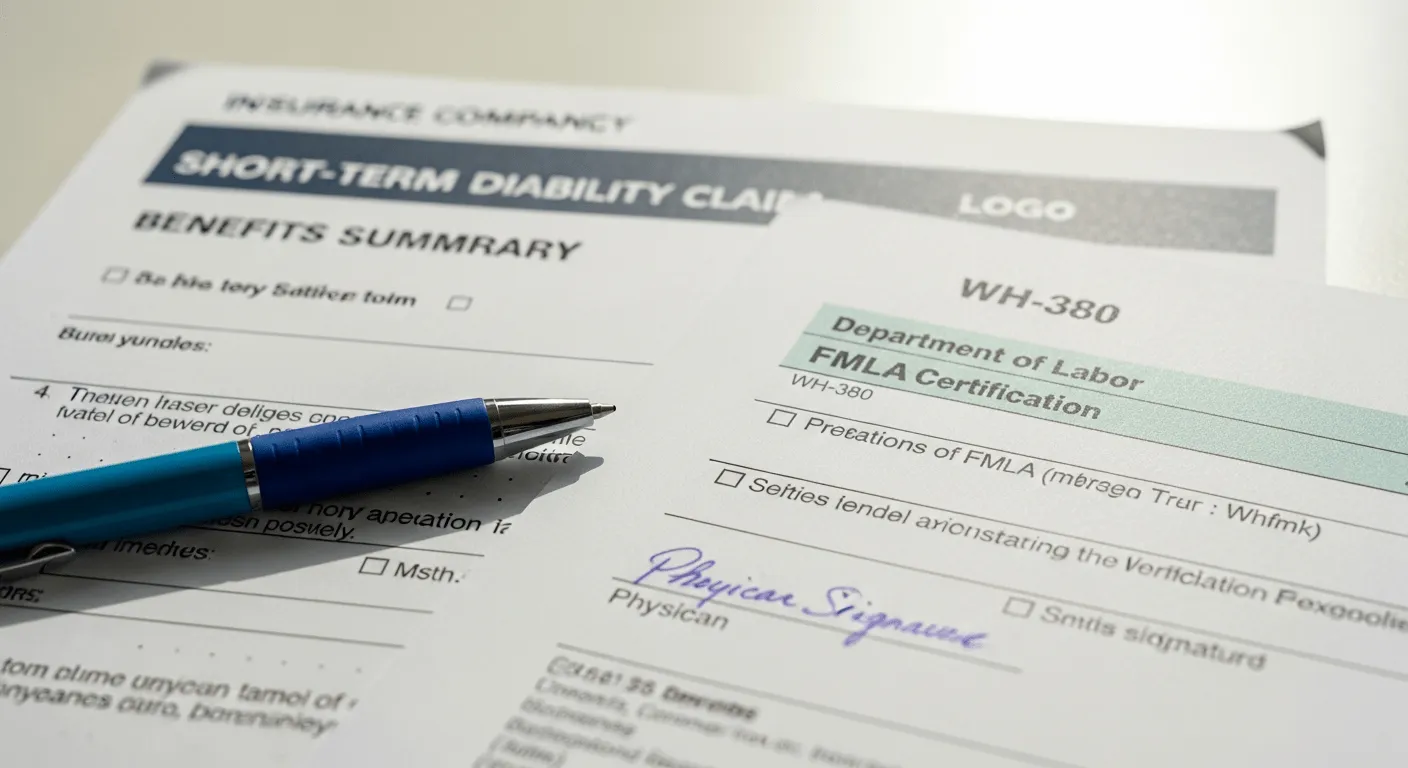
The certification form (typically the DOL’s WH-380-E for your own condition or WH-380-F for a family member’s condition) asks your healthcare provider to describe the condition, when it began, and how long it’s expected to last. For guidance on completing your FMLA forms correctly, review the specific requirements for each form type.
At FMLADocs, licensed physicians provide FMLA certification online for qualifying conditions through convenient online consultations within 24-48 hours.
What your employer cannot ask if you take FMLA:
Your employer cannot require you to disclose your specific diagnosis. The certification confirms that you have a qualifying serious health condition, but the details of that condition remain between you and your healthcare provider. Employers also cannot contact your doctor directly. If they have questions about the certification, they must designate a healthcare provider or HR representative to make contact, and your direct supervisor is prohibited from being that person.
Timeline requirements:
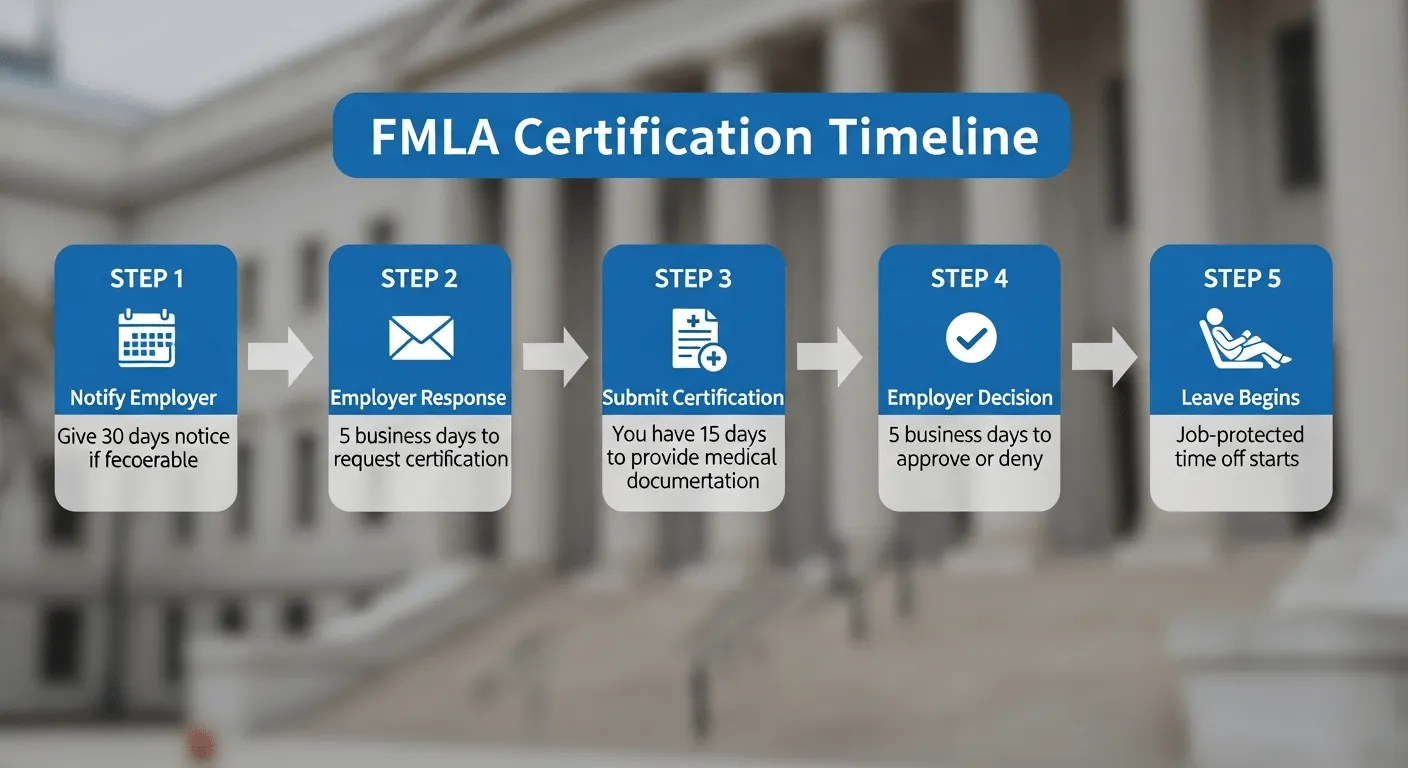
Your employer must give you at least 15 calendar days to provide the certification. If it’s incomplete, they must tell you what’s missing and give you at least seven days to fix it. Once you provide a complete certification, your employer has five business days to tell you whether your leave is approved.
Getting certified online:
You don’t have to wait weeks for a doctor’s appointment to get your FMLA paperwork completed. FMLADocs offer FMLA certification consultations with board-certified physicians who can evaluate your condition and complete the required documentation, often within 24 to 48 hours. This is particularly valuable for mental health conditions, chronic illnesses, and situations where your regular doctor’s office is backed up or charges high fees for form completion.
Wrapping Up: Protect Your Job When You Need Time Off
The difference between FMLA and sick leave comes down to this: sick leave keeps you paid for short-term absences, while FMLA guarantees your job will be waiting when you return from a serious health event. Understanding when you need federal protection versus when employer-provided sick days will suffice can make a significant difference in how confidently you navigate health challenges.
For situations involving serious health conditions, whether your own mental health, a chronic illness, pregnancy, surgery recovery, or caring for a family member, FMLA provides protections that sick leave simply cannot match. And in many cases, you can use both together to maintain your income while securing your position.
Frequently Asked Questions
Why use FMLA instead of sick time?
FMLA provides federal job protection that sick leave doesn't offer. Your employer must hold your position (or an equivalent one) for up to 12 weeks and maintain your health insurance during FMLA leave.
Do I have to take FMLA if I have sick leave?
No, FMLA is optional. However, your employer can require you to use accrued sick leave concurrently with FMLA, meaning both run at the same time rather than separately.
What excuses can you use FMLA for?
FMLA covers your own serious health condition, caring for a spouse/parent/child with a serious health condition, bonding with a new child (birth, adoption, foster), and qualifying military family leave.
What is not covered by FMLA?
FMLA does not cover minor illnesses (colds, flu, routine checkups), caring for non-immediate family members (siblings, grandparents, in-laws), or employees who don't meet eligibility requirements (12 months employed, 1,250 hours worked, 50+ employees).
When to use FMLA vs sick leave?
Use sick leave for short-term illnesses lasting a few days. Use FMLA when you need extended time off (weeks, not days) for serious health conditions, ongoing treatment, surgery recovery, or caring for a seriously ill family member.
Meet the author
Alisha Shabbir
Alisha is a health content specialist with 7 years of experience writing about employee benefits, medical leave, and healthcare access. With a background in healthcare communications, she breaks down complex regulations and medical topics into practical, actionable guidelines. From workplace wellness to preventive health, she helps readers navigate the healthcare system with confidence. When she's not working, she enjoys long walks, baking, and spending time with her pets.
Get Your FMLA Certification Online in Minutes