

FMLA Explained: Secure Leave, Keep Your Job.
 by Nida Hammad
 Last updated:
Introduction to the Family and Medical Leave Act FMLA Explained
No one expects to need FMLA leave. It often starts with a diagnosis, a parent being hospitalized, a complicated pregnancy, or a sudden family emergency. Before you know it, you are trying to understand your FMLA rights and wondering whether your job will still be there when you return. This guide is designed to answer the practical questions that come up when you need FMLA leave, starting with what it means for you right now.
At its core, the Family and Medical Leave Act (FMLA) gives eligible employees up to 12 weeks of job-protected leave for qualifying medical and family reasons. Your employer must generally continue your group health insurance under the same terms while you are on leave, and you cannot be punished for exercising your FMLA rights. However, FMLA has specific eligibility rules, employer coverage requirements, notice obligations, and medical certification deadlines. Missing an important requirement can delay or complicate your leave request.
This guide explains FMLA in practical terms, including what the law covers, who qualifies, how paid leave may work alongside FMLA, and how to request leave properly. If you are ready to start the process, explore different FMLA guides for step-by-step information on pregnancy leave, mental health leave, caregiving, and other common FMLA situations.
What is FMLA? Understanding the Basics
FMLA Definition and Purpose
The Family and Medical Leave Act (FMLA) is a federal labor law that requires covered employers to provide eligible employees with up to 12 workweeks of unpaid, job-protected leave per year for specified family and medical reasons. The law also mandates that employers maintain group health insurance coverage for employees during their FMLA leave under the same terms and conditions as if the employee had continued working.
FMLA was designed to help employees balance their work and family responsibilities by allowing them to take reasonable unpaid leave for certain family and medical reasons. It also seeks to accommodate the legitimate interests of employers while promoting equal employment opportunity for men and women.
Key FMLA Protections
When you take FMLA leave, you receive several critical protections:
- Job Protection: You must be restored to your same position or an equivalent position with equivalent pay, benefits, and working conditions
- Health Insurance Continuation: Your employer must maintain your group health insurance coverage during your leave
- No Retaliation: Your employer cannot retaliate against you for taking FMLA leave
- Return Rights: You have the right to return to your job at the end of your leave period
History and Purpose | Everything About FMLA

The Path to FMLA Legislation
The Family and Medical Leave Act was signed into law by President Bill Clinton on February 5, 1993, making it one of his first major legislative accomplishments. The law came after years of advocacy and two previous vetoes by President George H.W. Bush in 1990 and 1992.
The push for FMLA arose from significant demographic and workplace changes during the 1970s and 1980s. As more women entered the workforce and dual-income families became the norm, workers increasingly faced difficult choices between keeping their jobs and caring for family members or addressing their own serious health conditions.
Congressional Intent Behind FMLA
Congress passed the Family and Medical Leave Act with the understanding that “it is important for the development of children and the family unit that fathers and mothers be able to participate in early childrearing” and that “the lack of employment policies to accommodate working parents can force individuals to choose between job security and parenting.”
The law was also intended to provide leave protection “in a manner that accommodates the legitimate interests of employers,” recognizing that businesses need certainty and the ability to plan for employee absences.
FMLA Amendments and Updates
Since 1993, the FMLA has been amended several times to expand protections:
- 2008 Military Family Leave Provisions: Added qualifying exigency leave, and military caregiver leave for families of servicemembers
- 2009 Airline Flight Crew Technical Corrections: Established special eligibility and leave calculation rules for airline flight crew employees
- 2015 Same-Sex Marriage Recognition: Updated the definition of “spouse” following the Supreme Court’s decision in United States v. Windsor
- 2019 Federal Employee Paid Leave Act: Granted federal employees up to 12 weeks of paid parental leave (effective October 2020)
Who is Eligible for FMLA Leave?
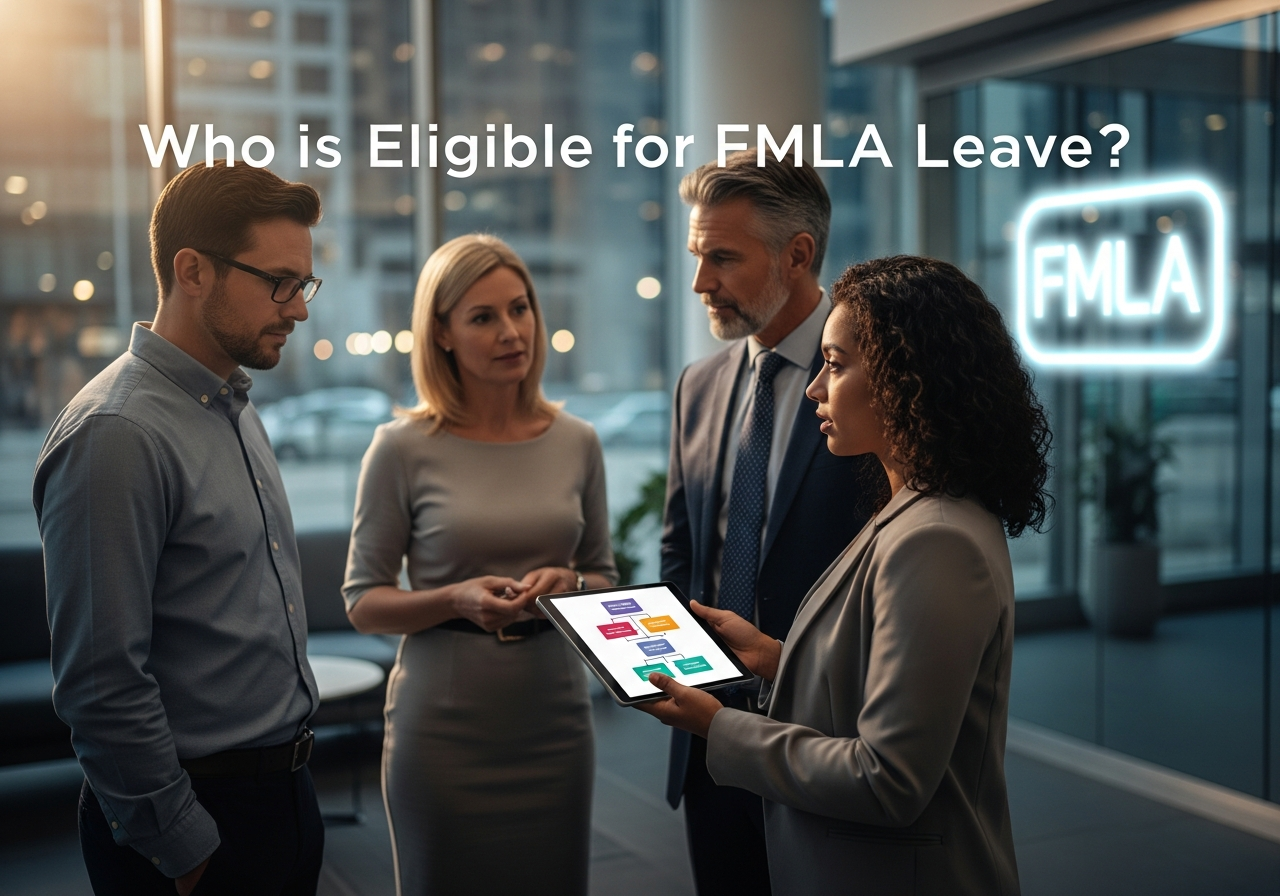
FMLA Eligibility Requirements Explained
Not all employees qualify for FMLA protections. To be eligible for FMLA leave, you must meet four key criteria:
1. Work for a Covered Employer
Your employer must be covered by FMLA, which includes:
- Private sector employers with 50 or more employees within 75 miles for at least 20 workweeks in the current or preceding calendar year
- All public agencies (federal, state, and local government), regardless of the number of employees
- All public and private elementary and secondary schools, regardless of the number of employees
2. Have Worked 1,250 Hours in the Past 12 Months
You must have worked at least 1,250 hours during the 12-month period immediately before your leave begins. This averages to approximately 24 hours per week over the year. Note that paid leave time (vacation, sick leave) and unpaid leave do not count toward this requirement.
Special rules apply to airline flight crew members, who must have worked or been paid for at least 60% of their applicable monthly guarantee and at least 504 hours during the previous 12 months.
3. Have Worked for Your Employer for 12 Months
You must have been employed by your employer for at least 12 months. The 12 months do not need to be consecutive. In general, only employment within the past seven years counts, unless the break in service was due to:
- Fulfillment of military obligations, or
- An agreement covered by a collective bargaining agreement or other written agreement
4. Work at a Location With 50+ Employees Within 75 Miles
You must work at a location where your employer has at least 50 employees within a 75-mile radius. The 75 miles is measured using surface roads or waterways (not “as the crow flies”).
Who Is NOT Eligible for FMLA?

Certain categories of employees are excluded from FMLA coverage:
- Employees at small businesses: Workers at companies with fewer than 50 employees (except public agencies and schools)
- Part-time workers who don’t meet the hours requirement: Those who haven’t worked 1,250 hours in the past year
- New employees: Those who haven’t worked for their employer for 12 months
- Workers at isolated locations: Employees at worksites with fewer than 50 employees within 75 miles
- Elected officials: Certain high-level elected officials
- Independent contractors: Individuals who are not employees
FMLA Guide to Leave Types
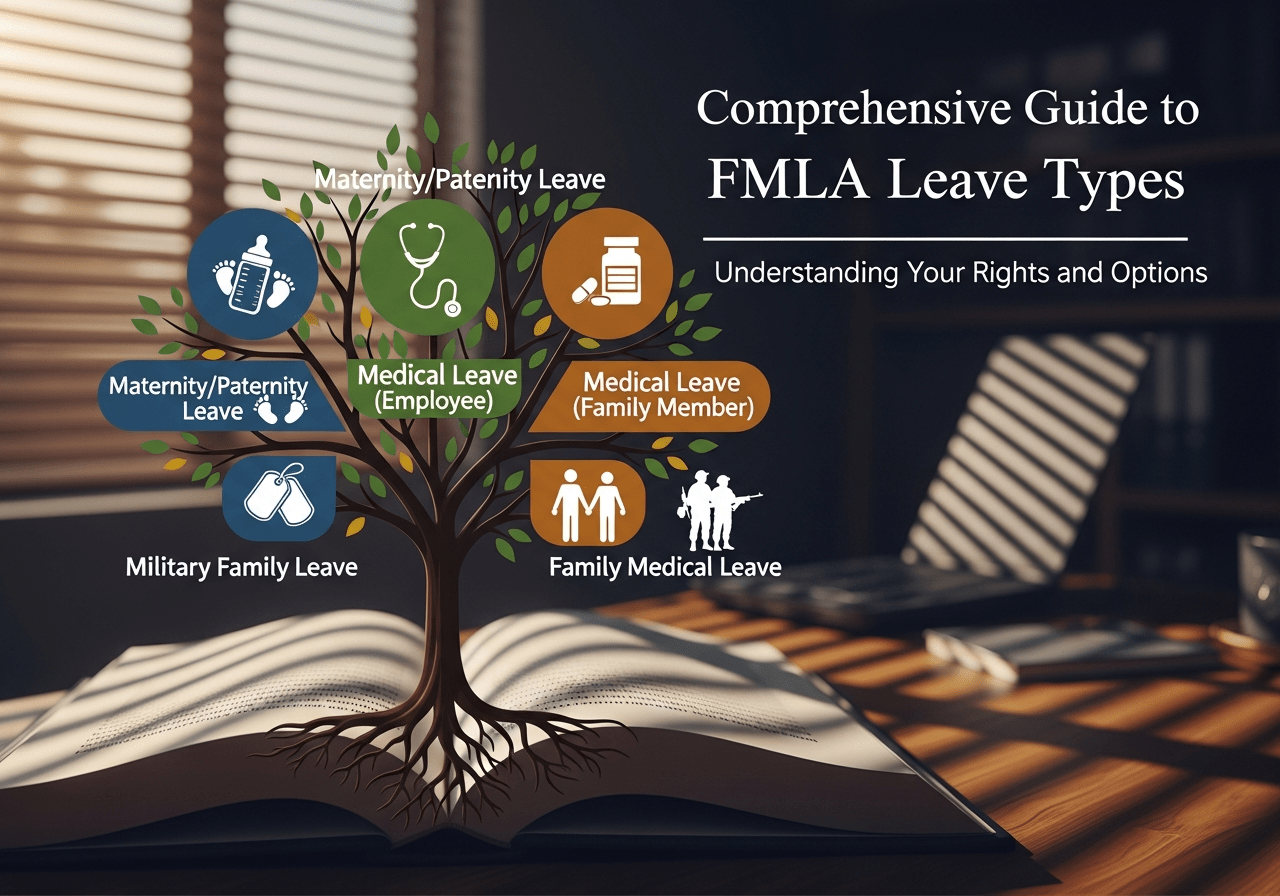
1. Birth and Bonding Leave
Parents may take FMLA leave when their child is born to bond with the newborn during the 12 months beginning on the date of birth.
Who Qualifies:
- All parents, regardless of sex or gender
- Biological parents
- Parents through surrogacy
Duration:
- Up to 12 workweeks within 12 months of birth
- Must be taken within one year of the child’s birth
How Leave Can Be Taken:
- All at once
- Intermittently or reduced schedule (only if employer agrees)
Important Notes:
- Both parents have equal rights to bonding leave
- Leave must end within 12 months of the birth date
- No medical certification required
Example Scenarios
Example 1: Dolores’ spouse gives birth in March. Dolores takes 10 weeks of FMLA leave beginning in June to bond with the newborn while traveling to visit family.
Example 2: Ian takes 12 weeks of FMLA leave for bonding after a surrogate gives birth to his child.
2. Adoption and Foster Care Placement Leave

Employees may use FMLA leave when a child is first placed with them for adoption or foster care and to bond with their newly placed child.
Who Qualifies:
- Adoptive parents
- Foster parents
Duration:
- Up to 12 workweeks
- Entitlement ends 12 months after placement date
How Leave Can Be Taken:
- All at once
- Intermittently or reduced schedule (only if employer agrees)
Pre-Placement Activities:
Employees may also use FMLA leave before actual placement for:
- Attending counseling sessions
- Appearing in court
- Consulting with attorneys or doctors representing the birth parent
- Submitting to physical examinations
- Traveling to another country to complete adoption
Example Scenario
Example: Jun takes FMLA leave to travel to the child’s birth country, consult with attorneys, and appear in court. After the adoption, he takes additional available FMLA leave to bond with the child.
3. Serious Health Condition – Employee

An employee may take FMLA leave when they have a serious health condition that makes them unable to perform the functions of their job
What Qualifies as a Serious Health Condition:
- Incapacity means the employee is unable to work, attend school, or perform regular daily activities
- Condition requires a period of incapacity due to:
- The serious health condition itself
- Treatment of the condition
- Recovery from the condition
Duration:
- Up to 12 workweeks in a 12-month period
How Leave Can Be Taken:
- Continuous leave (all at once)
- Intermittent leave (separate blocks of time)
- Reduced schedule (fewer hours per day or days per week)
Medical Certification:
- Employer may require certification from health care provider
- Employee must be given at least 15 calendar days to provide certification
Types of Conditions Covered
Acute Conditions:
- Surgery and recovery
- Hospitalization
- Severe injuries
Chronic Conditions:
- Asthma
- Diabetes
- Epilepsy
- Migraine headaches
- Mental health conditions (depression, anxiety, PTSD, etc.)
Pregnancy-Related Conditions:
- Prenatal care
- Severe morning sickness
- Complications requiring bed rest
- Recovery from childbirth
Example Scenarios
Example 1: Rajinder takes FMLA leave for migraine headaches which prevent him from working.
Example 2: Trinh takes FMLA leave for an ongoing chronic illness which makes her unable to work from time to time. Her condition requires periodic visits to a nurse under the direct supervision of a health care provider.
Example 3: Chester has a serious mental health condition that sometimes affects his ability to work. He takes FMLA leave occasionally when unable to work because of his mental health, usually for one to three weeks at a time. He also takes FMLA leave for an hour or two when he has appointments with his doctor or therapist.
4. Serious Health Condition – Family Member Care

Eligible employees can take FMLA leave to care for a child, spouse, or parent who has a serious health condition.
Who You Can Care For:
-
Spouse: Husband or wife as defined/recognized in the state where married (includes same-sex and common law marriages)
-
Child:
Biological, adopted, foster, stepchild, legal ward, or in loco parentis relationship
- Under age 18, OR
- Age 18+ and incapable of self-care due to disability
-
Parent:
Biological, adoptive, step, foster parent, or person who stood in loco parentis when employee was a child
- Does NOT include parents-in-law
What “Care” Includes:
- Assistance with basic medical needs
- Assistance with hygienic needs
- Assistance with nutritional needs
- Safety assistance
- Transportation to medical appointments
- Physical care
- Psychological comfort and reassurance
Duration:
- Up to 12 workweeks in a 12-month period
How Leave Can Be Taken:
- Continuous
- Intermittent (when medically necessary)
- Reduced schedule (when medically necessary)
Medical Certification:
- Employer may require certification from family member’s health care provider
- At least 15 calendar days must be allowed to provide certification
Example Scenarios
Example 1: Hira’s son has a chronic illness that is a serious health condition. Hira takes FMLA leave once per month to transport her 14-year-old son to his specialist’s office for treatments, provide psychological comfort and reassurance, and keep him at home during recovery from the treatment’s effects.
Example 2: Shaye takes FMLA leave to care for her spouse during inpatient surgery for and recovery from gastric bypass.
Example 3: Kayden works Tuesday through Saturday. His father, Emile, has a serious health condition. Kayden and his wife take turns bringing Emile to dialysis during the week. Every other Friday evening, Kayden uses five hours of FMLA leave to help his father. He also occasionally uses five hours of FMLA leave on other evenings to help his father.
5. Military Caregiver Leave – Current Servicemember

An eligible employee may take up to 26 workweeks of FMLA leave in a single 12-month period to care for a covered servicemember with a serious injury or illness.
Who is a Covered Servicemember:
A current member of the Armed Forces (including National Guard or Reserves) who:
- Is undergoing medical treatment, recuperation, or therapy
- Is in outpatient status, OR
- Is on the temporary disability retired list
- Has a serious injury or illness incurred in the line of duty on active duty
Who Can Take Leave:
- Spouse
- Child (of any age)
- Parent
- Next of kin (nearest blood relative other than spouse, parent, or child)
What is a Serious Injury or Illness:
An injury or illness that:
- Was incurred in the line of duty on active duty in the Armed Forces, OR
- Existed before active duty and was aggravated by service
- May render the servicemember medically unfit to perform duties of their office, grade, rank, or rating
Duration:
- Up to 26 workweeks in a single 12-month period
- This is a per-servicemember, per-injury entitlement
- Combined with other FMLA leave, cannot exceed 26 weeks total in the single 12-month period
How Leave Can Be Taken:
- Continuous
- Intermittent
- Reduced schedule
Certification: Employer may require certification. Acceptable forms include:
- DOL Form WH-385 (Certification for Serious Injury or Illness of Current Servicemember)
- Invitational Travel Orders (ITOs)
- Invitational Travel Authorizations (ITAs)
Types of Care Covered
Physical Care:
- Assisting with basic medical needs
- Helping with hygiene
- Providing nutritional support
- Ensuring safety
- Transportation to medical appointments
Psychological Care:
- Providing comfort and reassurance
- Being present during treatment
- Supporting emotional well-being
Example Scenarios
Example 1: Lupe takes FMLA leave to fly overseas and meet her daughter, a current member of the armed forces, after she is seriously injured on active duty. Lupe uses FMLA leave to provide psychological support during her daughter’s inpatient care.
Example 2: After Lupe’s daughter is placed in outpatient status, Lupe uses FMLA leave to transport her daughter to extensive physical therapy treatments and to counseling for a related mental health condition.
6. Military Caregiver Leave – Veteran

An eligible employee may take up to 26 workweeks of FMLA leave in a single 12-month period to care for a covered veteran with a serious injury or illness.
Who is a Covered Veteran:
An individual who:
- Was a member of the Armed Forces (including National Guard or Reserves)
- Was discharged or released under conditions other than dishonorable
- Was discharged within five years prior to the first date the employee takes FMLA leave to care for the veteran
- Is undergoing medical treatment, recuperation, or therapy for a serious injury or illness
Important Timing Note:
- Employee must commence leave within 5 years of veteran’s discharge
- The single 12-month period may extend beyond the 5-year period once leave begins
- Special rule: Period between October 28, 2009 and March 8, 2013 does not count toward the five-year period for veterans discharged before March 8, 2013
Who Can Take Leave:
- Spouse
- Child (of any age)
- Parent
- Next of kin
What is a Serious Injury or Illness for Veterans: An injury or illness that:
- Was incurred or aggravated in the line of duty on active duty
- Manifested before or after becoming a veteran
- Is one of the following:
- A continuation of a serious injury/illness that rendered the servicemember unable to perform duties, OR
- A condition with a VA Service-Related Disability Rating (VASRD) of 50% or greater, OR
- A condition that substantially impairs the veteran’s ability to secure/follow substantially gainful occupation, OR
- An injury for which the veteran is enrolled in the VA Program of Comprehensive Assistance for Family Caregivers
Duration:
- Up to 26 workweeks in a single 12-month period
- This is a per-veteran, per-injury entitlement
How Leave Can Be Taken:
- Continuous
- Intermittent
- Reduced schedule
Certification:
- Employer may require DOL Form WH-385-V (Certification for Serious Injury or Illness of Veteran)
- Documentation showing enrollment in VA Program of Comprehensive Assistance for Family Caregivers is sufficient certification
- At least 15 calendar days must be allowed to provide certification
Example Scenario
Example: Chen’s father is a veteran who suffers from seizures related to injuries he received before his honorable discharge from the armed forces 18 months ago. Chen uses FMLA leave to transport his father to treatment.
7. Qualifying Exigency Leave
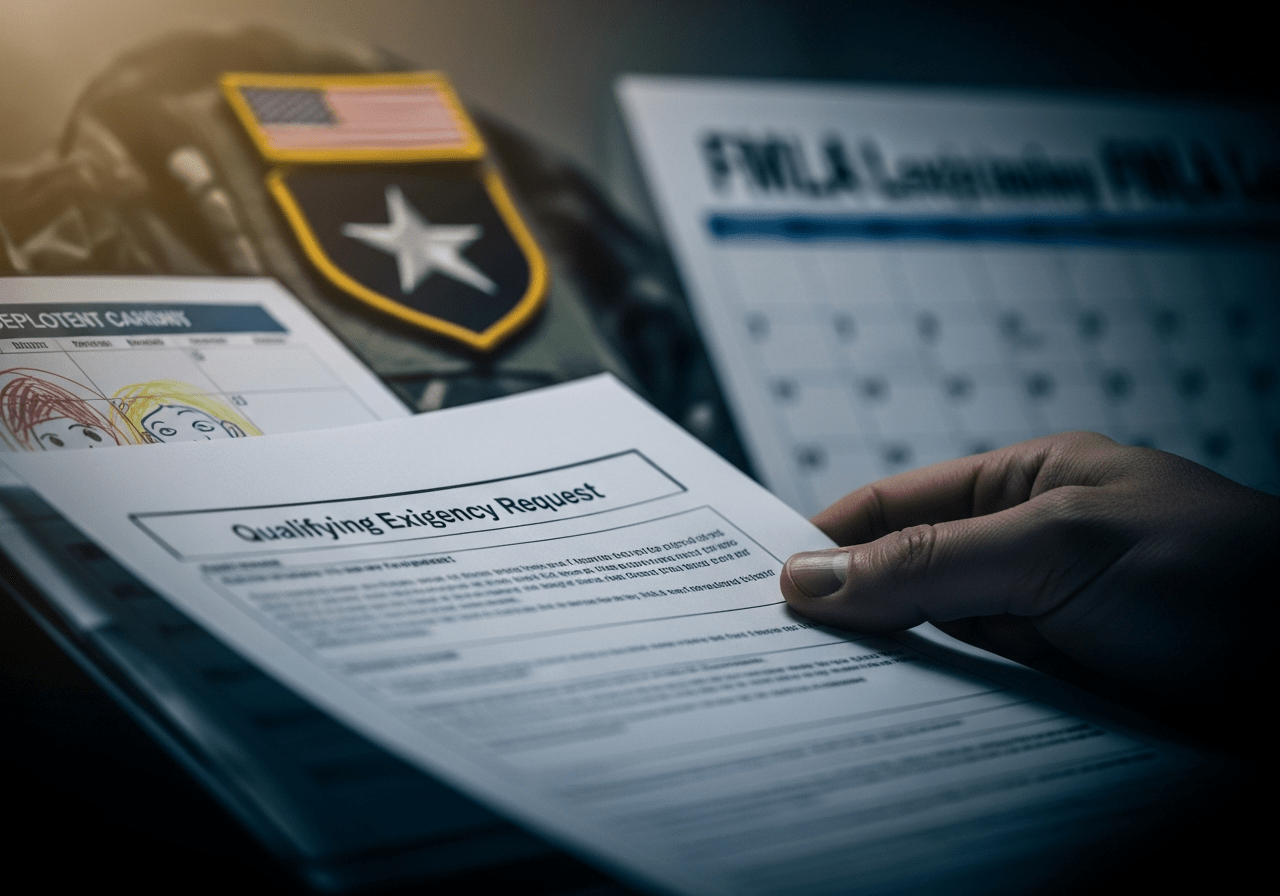
Qualifying exigencies are situations caused by the military deployment of an employee’s spouse, child, or parent to a foreign country.
Who Must Be on Covered Active Duty:
- Spouse
- Child (of any age)
- Parent
What is Covered Active Duty:
For Regular Armed Forces members:
- Deployment to a foreign country
For National Guard and Reserve members:
- Deployment to a foreign country under federal call or order in support of a contingency operation
Duration:
- Up to 12 workweeks in a 12-month period
How Leave Can Be Taken:
- All at once
- Intermittently
- Reduced schedule
Qualifying Exigency Categories
1. Short-Notice Deployment
- Leave to address issues arising from deployment on seven or fewer days’ notice
2. Military Events and Related Activities
- Attending official military ceremonies, programs, or events
- Attending family support or assistance programs
- Attending informational briefings
3. Childcare and School Activities
- Arranging alternative childcare
- Providing urgent childcare
- Enrolling a child in a new school or daycare
- Attending meetings with school or daycare staff
4. Financial and Legal Arrangements
- Making or updating financial or legal arrangements related to the military member’s absence
- Acting as the military member’s representative for financial and legal purposes
5. Counseling
- Attending counseling (for the employee, military member, or child) related to the deployment
6. Rest and Recuperation
- Spending time with the military member during R&R leave (up to 15 days per instance)
7. Post-Deployment Activities
- Attending arrival ceremonies
- Addressing issues arising from the death of a military member
- Attending reintegration briefings and events
8. Parental Care
- Arranging alternative care for a parent of the military member
- Providing urgent care for a parent
- Admitting or transferring a parent to a care facility
- Attending meetings with staff at a care facility
9. Additional Activities
- Other events agreed upon by employer and employee
Certification:
- Employer may require certification
- DOL Form WH-384 (Certification of Qualifying Exigency for Military Family Leave)
- Copy of military member’s active duty orders
- At least 15 calendar days must be allowed to provide certification
Example Scenario
Example: Lucero takes FMLA leave to enroll his granddaughter in his local school district during his son’s deployment to a foreign country for a year. Lucero will also take FMLA leave when his son visits during the son’s two weeks of Rest and Recuperation leave.
8. Mental Health Leave – Family Member Care

Employees may take FMLA leave to care for a spouse, child, or parent with a serious mental health condition. This includes providing physical care, psychological comfort, and reassurance.
Who You Can Care For:
- Spouse: Husband or wife (includes same-sex and common law marriages)
- Child: Under age 18, OR age 18+ if incapable of self-care due to disability
- Parent: Biological, adoptive, step, foster parent, or person who stood in loco parentis
What “Care” Includes for Mental Health Conditions:
- Providing psychological comfort and reassurance
- Accompanying family member to therapy or counseling appointments
- Being present during inpatient or home care
- Assisting with medication management
- Helping with basic needs during periods of incapacity
- Attending family therapy sessions
- Participating in treatment planning meetings
- Providing supervision during recovery or stabilization
Duration:
- Up to 12 workweeks in a 12-month period
How Leave Can Be Taken:
- Continuous
- Intermittent (when medically necessary)
- Reduced schedule (when medically necessary)
Caring for Children with Mental Health Conditions
Children Under 18:
All eligible employees may take leave to care for minor children with serious mental health conditions.
Common scenarios include:
- Attending after-care meetings following inpatient treatment
- Transporting child to therapy appointments
- Being present during intensive treatment programs
- Providing supervision during recovery from crisis
- Attending school meetings about treatment plans
- Staying home with child during periods of incapacity
Caring for Adult Children with Mental Health Conditions
Special Rules for Adult Children (18+):
An adult child must be incapable of self-care because of a disability.
Definition of Disability:
A mental or physical impairment that substantially limits one or more major life activities.
Mental Health Conditions That May Qualify:
According to EEOC guidance, conditions that should easily be concluded as substantially limiting include:
- Major depressive disorder
- Bipolar disorder
- Post-traumatic stress disorder (PTSD)
- Obsessive-compulsive disorder (OCD)
- Schizophrenia
Important Notes:
- Disability can be periodic (active at times, dormant at others)
- Condition is considered a disability if it substantially limits activities when active
- Disability does not have to have been diagnosed before age 18
- Disability may start at any age
Incapable of Self-Care Means:
The adult child requires active assistance or supervision to:
- Perform daily activities (bathing, dressing, eating)
- Maintain safety
- Manage basic needs
- Handle transportation
- Make informed decisions about care
Military-Related Mental Health Conditions
Military Caregiver Leave for Mental Health:
Employees may take up to 26 workweeks to care for servicemembers or veterans with serious mental health injuries or illnesses related to military service.
Common Conditions:
- Post-traumatic stress disorder (PTSD)
- Traumatic brain injury (TBI)
- Depression related to service
- Anxiety disorders from combat experiences
Key Points:
- Condition may manifest years after service ends
- May develop well after traumatic events occurred
- Can apply to current servicemembers and recent veterans (within 5 years of discharge)
Medical Certification
Employer May Require:
- Certification from family member’s health care provider
- At least 15 calendar days to obtain certification
- Additional time if circumstances beyond employee’s control
What Certification Should Include:
- That family member has serious health condition
- That employee is needed to provide care
- Estimated duration of condition
- Approximate start and end dates of leave needed
- Note: Specific diagnosis is NOT required
Example Scenarios
Example 1: Wyatt uses one day of FMLA leave to travel to an inpatient facility and attend an after-care meeting for his fifteen-year-old son who has completed a 60-day inpatient drug rehabilitation treatment program.
Example 2: Anastasia uses FMLA leave to care for her daughter, Alex. Alex is 24 years old and was recently released from several days of inpatient treatment for a mental health condition. She is unable to work or go to school and needs help with cooking, cleaning, shopping, and other daily activities as a result of the condition.
Example 3: Gordon’s spouse began to have symptoms of PTSD three years after she was honorably discharged from military service overseas. Gordon uses FMLA leave for two weeks to transport his spouse to and from outpatient treatment at a Veteran’s Administration hospital and to assist her with day-to-day needs while she is incapacitated.
Example 4: Maria’s teenage daughter is experiencing a severe depressive episode. Maria takes intermittent FMLA leave to transport her daughter to weekly therapy sessions and takes a continuous week off when her daughter is hospitalized for her safety.
Stigma Reduction and Awareness
Know Your Rights:
- Mental health conditions are protected the same as physical conditions
- You do not need to disclose specific diagnosis
- You cannot be discriminated against for taking mental health leave
- Confidentiality protections apply
Employer Responsibilities:
- Cannot ask intrusive questions about mental health diagnosis
- Must treat mental health leave requests the same as physical health requests
- Cannot retaliate or discriminate based on mental health leave usage
- Must maintain confidentiality of mental health information
Eligibility Requirements
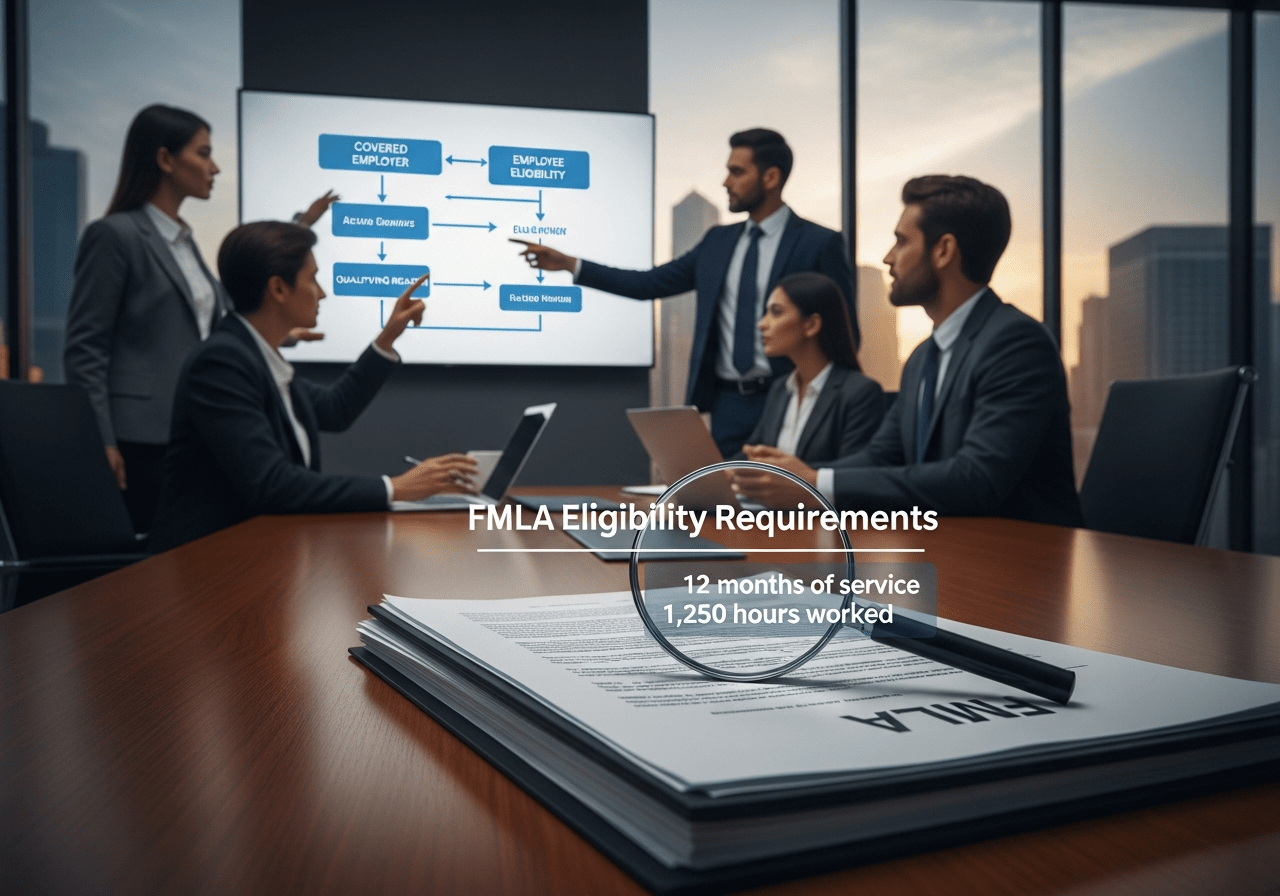
Employee Eligibility
To be eligible for FMLA leave, an employee must meet ALL of the following criteria:
1. Work for a Covered Employer
- Private-sector employer with 50+ employees
- Any public agency
- Any local educational agency
2. Have Worked for 12 Months
- Does not have to be consecutive
- Can include prior service if rehired within 7 years (with some exceptions)
3. Have Worked 1,250 Hours
- During the 12 months immediately before FMLA leave starts
- Approximately 24 hours per week
- Actual work time only (not PTO, holidays, etc.)
4. Work Location Requirement
- Must work at a location where employer has 50+ employees within 75 miles
Special Rules
Airline Flight Crew Employees:
- Different hours of service calculation
- Must have worked or been paid for 60% of applicable monthly guarantee
- Must have worked or been paid for at least 504 hours during the 12-month period
Returning Servicemembers (USERRA):
- Time in military service counts toward 12-month and hours requirements
Key Protections and Benefits
The Family and Medical Leave Act (FMLA) provides job-protected leave from work for family and medical reasons. This guide explains the Employee Protections of employees during FMLA leave and when they return to work from FMLA leave.
Job Protection
Restoration Rights:
- Same position or equivalent position upon return
- Same pay, benefits, and employment terms
- Same or equivalent shift, schedule, and location
What Employers CANNOT Do:
- Reduce shifts or hours
- Transfer to a less desirable location
- Deny bonuses earned before FMLA leave
- Count FMLA leave against attendance policies
- Threaten, discriminate, punish, suspend, or fire for taking FMLA leave
- Retaliate for requesting FMLA leave
- Deny promotions due to FMLA leave usage
Health Insurance Continuation
During FMLA Leave:
- Employer must maintain group health insurance
- Same terms and conditions as before leave
- Same coverage for family members
- Employee continues to pay their share of premiums
If Employee Doesn’t Return:
- Employer may recover premiums paid (in some circumstances)
- Cannot recover if employee doesn’t return due to a serious health condition or circumstances beyond their control
Using Paid Leave
Employee Rights:
- May request to use accrued paid leave concurrently with FMLA
- FMLA leave may be unpaid if no paid leave is available or if the employee chooses not to use it
Employer Rights:
- May require the employee to use paid leave concurrently with FMLA
- Must follow the paid leave policy
Important Note:
- Paid leave and FMLA leave run concurrently
- Does not extend total leave time
Notice Requirements
Employee’s Responsibility to Provide Notice:
Foreseeable Leave (Known in Advance):
- Provide notice as soon as practicable
- Generally, 30 days in advance when possible
- If less than 30 days’ notice, notify as soon as practicable
- Makea reasonable effort to schedule medical treatment to minimize disruption
Unforeseeable Leave (Emergency/Unexpected):
- Notify employer as soon as practicable
- Generally same or next business day
- Can have someone else notify on employee’s behalf
What to Say:
- Don’t need to mention “FMLA” specifically
- Provide enough information so employer knows leave may be FMLA-qualifying
- Examples: “I need time off for surgery,” “My father had a heart attack,” “My wife is having a baby”
Employer’s Notice Obligations
General Notice:
- Must post FMLA poster in workplace
- Provide FMLA information in employee handbook or provide general notice
Eligibility Notice:
- Within 5 business days of employee requesting leave
- Inform if eligible or not
- If not eligible, provide at least one reason why
Rights and Responsibilities Notice:
- Within 5 business days of learning leave may be FMLA-qualifying
- Explain employee’s rights and responsibilities
- Information about certification requirements
- Employee’s right to substitute paid leave
- Requirement to pay health insurance premiums
Designation Notice:
- Within 5 business days of having sufficient information
- Inform the employee if leave is FMLA-designated
- Amount of leave counted against entitlement
Intermittent and Reduced Schedule Leave
When Allowed:
-
Always allowed (when medically necessary):
- Employee’s own serious health condition
- Caring for a family member’s serious health condition
- Military caregiver leave
- Qualifying exigency leave
-
Only with employer agreement:
- Birth and bonding
- Adoption/foster care and bonding
How It’s Tracked:
- Counted in the smallest increment employer uses for other leave
- Cannot be more than 1 hour
- Physical impossibility rule: If impossible to work, charged full day
Certification Requirements
When Employer May Require:
- Employee’s serious health condition
- Family member’s serious health condition
- Military caregiver leave
- Qualifying exigency leave
When Employer CANNOT Require:
- Birth and bonding
- Adoption/foster care and bonding
Timing:
- Employer must give at least 15 calendar days to provide certification
- Additional time if circumstances beyond employee’s control
Forms:
- DOL optional forms available (WH-380-E, WH-380-F, WH-385, WH-385-V, WH-384)
- Employer may use own form if it requests only permitted information
Recertification:
- May request in connection with absence if reasonable doubt about reason
- May request every 30 days if minimum duration not specified
- May request every 6 months for conditions lasting more than 30 days
Spouses Working for the Same Employer
Combined Limit (12 weeks total for both spouses):
- Birth and bonding with child
- Adoption/foster placement and bonding
- Care for parent with serious health condition
Separate Entitlements (each spouse gets 12 weeks):
- Employee’s own serious health condition
- Care for child with serious health condition
- Care for spouse with serious health condition
- Qualifying exigency leave
Military Caregiver Leave:
- Combined limit of 26 weeks if caring for same servicemember
- Each entitled to separate 26 weeks if caring for different servicemembers
Special Situations
Teachers and School Employees:
- Special rules for intermittent or reduced schedule leave
- May be required to take leave in blocks or transfer to alternative position
- Special rules for leave near end of school term
Key Employees:
- Highest-paid 10% of employees within 75 miles
- May be denied job restoration if it would cause substantial economic injury
- Employee must be notified of key employee status
- Still entitled to take leave
Enforcement and Violations

The FMLA regulations prohibit the following actions:
Employee Rights
If Rights Are Violated:
- File complaint with Wage and Hour Division
- File private lawsuit in court
- No retaliation allowed for filing complaint
Examples of Violations:
- Denying eligible leave
- Failing to restore to same/equivalent position
- Interfering with FMLA rights
- Retaliating for using FMLA leave
- Discriminating due to FMLA usage
- Failing to maintain health benefits
- Requiring more certification than allowed
Employer Responsibilities
Required Actions:
- Post FMLA notice
- Provide general notice to employees
- Provide specific notices when leave requested
- Maintain group health benefits during leave
- Restore employee to same/equivalent position
- Keep medical information confidential
Record Retention:
- Must keep FMLA records for 3 years
- Records of leave requests, dates, hours
- Medical certifications (separate and confidential)
- Documents related to premium payments
What is a Serious FMLA Health Condition?
Defining Serious Health Conditions Under FMLA
Not every illness or injury qualifies as a “serious health condition” under FMLA. The law defines it specifically to ensure the leave is reserved for significant medical situations.
Conditions Requiring Inpatient Care
Any condition that requires an overnight stay in a hospital, hospice, or residential medical care facility automatically qualifies as a serious health condition. This includes the period of incapacity (inability to work, attend school, or perform regular daily activities) and any subsequent treatment connected with that inpatient care.
Conditions Requiring Continuing Treatment
A serious health condition can also involve continuing treatment by a healthcare provider, which includes:
Incapacity Plus Treatment: A period of incapacity of more than three consecutive full calendar days, plus:
- Treatment two or more times by a healthcare provider within 30 days of the first day of incapacity, OR
- Treatment by a healthcare provider at least once, plus a regimen of continuing treatment (such as prescription medication)
Pregnancy: Any period of incapacity due to pregnancy or for prenatal care, even without overnight hospitalization.
Chronic Conditions: Any chronic serious health condition that:
- Requires periodic visits (at least twice a year) for treatment by a healthcare provider
- Continues over an extended period of time
- May cause episodic periods of incapacity
Examples include asthma, diabetes, epilepsy, severe migraine headaches, and mental health conditions like major depression, anxiety disorders, or PTSD.
Permanent or Long-Term Conditions: A period of incapacity that is permanent or long-term due to a condition for which treatment may not be effective, but which requires continuing supervision by a healthcare provider. Examples include Alzheimer’s disease, severe stroke, or terminal cancer.
Multiple Treatments: Absences for multiple treatments by a healthcare provider for:
- Restorative surgery after an accident or injury, or
- A condition that would likely result in incapacity of more than three consecutive days if not treated
Examples include chemotherapy, radiation therapy, kidney dialysis, or physical therapy.
What Does NOT Qualify as a Serious Health Condition
The following are generally NOT considered serious health conditions under FMLA:
- Routine physical examinations, eye examinations, or dental examinations
- Common cold, flu, earaches, upset stomach, minor ulcers, or headaches (other than migraines)
- Routine dental problems or orthodontia
- Cosmetic treatments that are not medically necessary
- Short-term conditions for which treatment and recovery are very brief
However, complications from these conditions could qualify if they result in periods of incapacity meeting the standards described above.
How to Apply for FMLA Leave
Step 1: Understand Your Employer’s FMLA Policy
Before requesting leave, review your employer’s FMLA policy, which should be included in your employee handbook or available from your HR department. Your employer is required to post FMLA information in the workplace.
Step 2: Provide Notice to Your Employer
When Leave is Foreseeable: If you can anticipate your need for FMLA leave (such as for a planned surgery, the birth of a child, or scheduled medical treatments), you must provide your employer with at least 30 days’ notice. If 30 days’ notice is not possible, you must provide notice as soon as practicable.
When Leave is Unforeseeable: When you cannot predict your need for leave (such as a medical emergency or unexpected hospitalization), you must notify your employer as soon as practicable. This typically means the same day or the next business day.
You don’t need to specifically mention “FMLA” or cite the law when requesting leave for the first time. You simply need to provide enough information for your employer to understand that your absence may be for an FMLA-qualifying reason.
Example: “I need to take time off because I’m having surgery next month” or “My mother was hospitalized and I need to care for her.”
Step 3: Complete Required Forms and Documentation
Employer Responsibilities: When you request leave or your employer learns you may need FMLA leave, they must:
- Determine your eligibility within 5 business days
- Provide you with your rights and responsibilities under FMLA
- Request medical certification if applicable
- Designate the leave as FMLA-protected
Employee Responsibilities: You may be required to provide:
- Completed medical certification form (Form WH-380-E for your own condition, Form WH-380-F for a family member’s condition)
- Additional documentation for military family leave
- Periodic recertification if your leave extends over time
Step 4: Medical Certification Requirements
Your employer may require you to submit medical certification to support your leave request. The certification must come from a healthcare provider and include:
- Date the condition began
- Probable duration of the condition
- Appropriate medical facts about the condition
- For your own condition: a statement that you cannot perform essential job functions
- For a family member’s condition: a statement that the family member needs care and an estimate of the amount of time needed
Timeline for Providing Certification: You must provide the medical certification within 15 calendar days of your employer’s request. If it’s not feasible to do so despite your diligent efforts, you have up to 30 days.
Second and Third Opinions: If your employer doubts the validity of your medical certification, they may require a second opinion from a healthcare provider of their choice (at their expense). If the second opinion conflicts with the first, a third opinion from a mutually agreed-upon provider is final and binding. The employer pays for both second and third opinions.
Step 5: Designation of Leave
Once your employer has enough information to determine that your leave qualifies under FMLA, they must notify you (usually within 5 business days) that your leave has been designated as FMLA-protected. This designation notice should specify:
- Whether paid leave will be substituted for unpaid FMLA leave
- Whether you’ll need to provide fitness-for-duty certification before returning
- The amount of leave that will count against your 12-week entitlement
Step 6: Maintaining Communication During Leave
While on leave, stay in contact with your employer as required by their policy. This may include:
- Periodic updates on your status and expected return date
- Providing recertification if your leave extends beyond the initially expected period
- Notifying them of any changes in your situation
Employer Obligations Under FMLA

The following are the employer obligations under FMLA
Required FMLA Notices and Postings
General Notice Posting: Every FMLA-covered employer must display an FMLA poster in a conspicuous place where employees and applicants can see it. The poster explains FMLA provisions and how to file complaints. Willful violation of this posting requirement can result in civil money penalties up to $250 for each separate offense.
Employers must also include FMLA information in employee handbooks or distribute a general notice to all new employees at the time of hiring.
Eligibility Notice: Within 5 business days of an employee requesting FMLA leave (or the employer learning that leave may be FMLA-qualifying), the employer must notify the employee whether they are eligible for FMLA leave.
Rights and Responsibilities Notice: Simultaneously with the eligibility notice, employers must provide employees with detailed information about their specific rights and responsibilities under FMLA, including:
- Whether medical certification will be required
- The employee’s right to substitute paid leave
- Key terms and conditions for leave usage
- The employee’s obligation to make health insurance premium payments
- The consequences of failing to meet obligations
Designation Notice: When the employer has sufficient information to determine that leave qualifies under FMLA, they must notify the employee within 5 business days that the leave has been designated as FMLA leave.
Maintaining Health Insurance Coverage
Employers must maintain employees’ group health insurance coverage during FMLA leave on the same terms as if the employee continued working. This means:
- The employer must continue to pay their share of premiums
- The employee must continue to pay their share of premiums (if any)
- Coverage cannot be reduced or modified during FMLA leave
If an employee fails to pay their share of the premium during FMLA leave, the employer must provide at least 15 days’ notice before coverage can be dropped.
Job Restoration Requirements
When an employee returns from FMLA leave, the employer must restore them to:
- The same position they held before leave, OR
- An equivalent position with equivalent pay, benefits, and other employment terms and conditions
What “Equivalent Position” Means: An equivalent position must have:
- Equivalent pay (including raises that occurred during leave)
- Equivalent benefits (health insurance, retirement, etc.)
- Same or substantially similar duties and responsibilities
- Same shift or substantially similar schedule
- Same or geographically proximate work location
- Equivalent status, including promotional opportunities
Prohibited Actions
Employers are strictly prohibited from:
Interference:
- Denying an employee’s exercise of FMLA rights
- Discouraging employees from using FMLA leave
- Manipulating schedules to prevent employees from qualifying for FMLA
- Failing to maintain health benefits during FMLA leave
- Refusing to restore an employee to the same or equivalent position
Retaliation:
- Discriminating or retaliating against employees who use or attempt to use FMLA leave
- Counting FMLA leave under “no-fault” attendance policies
- Using FMLA leave as a negative factor in hiring, promotions, or other employment decisions
- Disciplining employees for taking FMLA leave
Example of Prohibited Retaliation: An employer cannot include FMLA absences when calculating points under an attendance policy. If an employee would receive disciplinary action for accumulating a certain number of points, FMLA-protected absences cannot count toward that total.
Record-Keeping Requirements
Employers must maintain records of:
- Basic payroll and identifying employee information
- Dates of FMLA leave is taken by employees
- Hours of leave taken (if leave is taken in increments of less than a full day)
- Copies of employee notices of leave are provided to the employer
- Copies of all eligibility, rights, and responsibilities, and designation notices given to employees
- Any documents describing employee benefits or employer policies and practices regarding leave
- Premium payments for employee benefits
- Records of any disputes regarding FMLA designation
These records must be kept for at least three years.
Employee Rights Under FMLA

The Right to Take Leave
Your fundamental right under FMLA is to take up to 12 workweeks of unpaid, job-protected leave in 12 months for qualifying reasons without fear of losing your job. This right includes:
Intermittent Leave: You have the right to take FMLA leave intermittently (in separate blocks of time) or on a reduced leave schedule when medically necessary for:
- Your own serious health condition
- A family member’s serious health condition
- Military caregiver leave
- Qualifying military exigencies
For birth or adoption bonding, intermittent leave requires your employer’s approval.
Flexibility in Leave Use: You don’t have to use all 12 weeks at once. You can use FMLA leave as needed throughout the year, as long as it’s for qualifying reasons.
Protection Against Retaliation
You have the right to be free from retaliation for:
- Using or attempting to use FMLA leave
- Filing an FMLA complaint
- Participating in an FMLA investigation or proceeding
- Opposing practices that you believe violate FMLA
What Retaliation Looks Like:
- Being fired, demoted, or denied a promotion because you took FMLA leave
- Having your hours reduced or being moved to a less desirable shift after FMLA leave
- Being subjected to increased scrutiny or criticism following FMLA leave
- Being given a poor performance review that’s related to your FMLA leave usage
The Right to Maintain Benefits
During your FMLA leave, you have the right to:
- Continue your group health insurance coverage under the same terms as if you were actively working
- Maintain other employment benefits you accrued before taking leave
- Receive any unconditional pay increases or benefits improvements that occur during your leave
The Right to Return to Your Job
Upon returning from FMLA leave, you have the right to be restored to:
- Your original position, OR
- An equivalent position with equivalent pay, benefits, status, and other employment terms
Exception for Highly Compensated Employees: The only exception is for “key employees” – those in the highest-paid 10% at their location. Employers may deny job restoration to key employees if restoration would cause substantial and grievous economic injury to the employer’s operations. However, even in these cases, employers must provide notice and follow specific procedures.
The Right to Choose Paid Leave Substitution
You have the right to choose whether to substitute your accrued paid leave (sick leave, vacation, personal days) for unpaid FMLA leave. Your employer cannot force you to use paid leave unless your company policy requires it.
Important note: If you substitute paid leave for FMLA leave, you’re still using your FMLA entitlement – the time runs concurrently. You’re simply receiving pay while taking FMLA-protected leave.
Privacy and Confidentiality Rights
You have the right to have your medical information kept confidential. Your employer must:
- Maintain medical certifications and related documents in separate files from regular personnel files
- Comply with the Americans with Disabilities Act (ADA) and Health Insurance Portability and Accountability Act (HIPAA) confidentiality requirements
- Limit who has access to your medical information
Your supervisor may be informed that you need leave and any necessary work restrictions, but detailed medical information should be kept confidential.
State FMLA Laws vs. Federal FMLA

How State and Federal Laws Interact
The federal FMLA sets minimum standards for family and medical leave nationwide. However, many states have enacted their own family and medical leave laws that provide greater protections than the federal FMLA. When state and federal laws differ, employees are entitled to the most generous provisions of each law.
This means you may have rights under state law that exceed your federal FMLA rights, such as:
- More weeks of leave per year
- Coverage by smaller employers
- Additional qualifying reasons for leave
- Expanded definitions of family members
- Paid family leave benefits
States With Paid Family Leave Programs
As of 2025, the following states and jurisdictions have paid family leave programs:
California
- Up to 8 weeks of paid family leave
- Covers bonding with a new child and caring for seriously ill family members
- Benefits provided through State Disability Insurance (SDI)
New York
- Up to 12 weeks of paid family leave
- Covers bonding, military exigencies, and family care
- Provides up to 67% of average weekly wage
New Jersey
- Up to 12 weeks of paid leave
- Funded through Temporary Disability Insurance and Family Leave Insurance
- Covers bonding and caring for seriously ill family members
Rhode Island
- Up to 6 weeks of paid leave through Temporary Caregiver Insurance
- Covers bonding and family care
Massachusetts
- Up to 26 weeks of paid leave (20 weeks for medical leave, 12 weeks for family leave, can overlap)
- Phased in from 2021-2023
- Covers wide range of qualifying reasons
Washington
- Up to 12 weeks of paid leave for medical or family reasons
- Up to 16 weeks combined
- Started January 2020
Connecticut
- Up to 12 weeks of paid leave under CT Paid Leave
- Covers bonding, family care, military exigencies, and safe leave
- Started January 2022
Oregon
- Up to 12 weeks of paid leave under Paid Leave Oregon
- Started September 2023
Colorado
- Up to 12 weeks under FAMLI (Family and Medical Leave Insurance)
- Started January 2024
Delaware
- Up to 12 weeks of paid leave starting January 2026
Maryland
- Paid leave starting 2026 under Time to Care Act
- Will provide up to 12 weeks
District of Columbia
- Up to 12 weeks of Paid Family Leave
- Covers bonding, family care, and prenatal medical care
Minnesota
- Paid Family and Medical Leave program approved, starting 2026
States With Additional FMLA Protections
Many states provide FMLA-type protections beyond what federal law requires:
Lower Employee Thresholds: Some states cover smaller employers:
- Maine: 15+ employees (private), 25+ (public)
- Vermont: 10+ employees (parental leave), 15+ (family/medical leave)
- Oregon: 25+ employees
- Minnesota: 21+ employees (parental leave only)
- District of Columbia: 20+ employees
Expanded Family Definitions: Several states allow leave for additional family relationships:
- California: Domestic partners and their children
- Connecticut: Civil union partners, parents-in-law
- Hawaii: Grandparents, grandparents-in-law, reciprocal beneficiaries
- Maine: Domestic partners, siblings
- Oregon: Domestic partners, grandparents, grandchildren, parents-in-law
Additional Qualifying Reasons: Some states include leave for:
- School activities: California, DC, Massachusetts, Minnesota, Rhode Island, Vermont
- Routine medical appointments: Massachusetts, Vermont
- Domestic violence situations: Colorado, Florida, Hawaii, Illinois, and many others
- Organ or bone marrow donation: Connecticut, Maine, Maryland, Oregon
Understanding Your State-Specific Rights
To fully understand your leave rights:
- Check federal FMLA eligibility first: Determine if you meet the basic federal requirements
- Research your state’s laws: Visit your state’s labor department website
- Compare the laws: Identify which law provides better protection for your situation
- Consult your employer: Ask HR about both federal and state leave policies
- Seek legal advice if needed: Employment attorneys can help clarify complex situations
Remember: You’re entitled to whichever law provides the most favorable terms for your specific situation.
Common FMLA Myths Debunked

Following are the Common FMLA Myths Debunked
Myth #1: “FMLA Only Covers Large Companies”
The Truth: While private employers must have 50+ employees to be covered, ALL public agencies (federal, state, local government) and ALL elementary and secondary schools are covered regardless of size.
Myth #2: “You Can’t Be Fired While on FMLA Leave”
The Truth: FMLA provides job protection, but it doesn’t make you immune from legitimate business decisions. You can still be:
- Laid off if your position is eliminated as part of a restructuring that would have occurred whether or not you were on leave
- Disciplined for conduct that occurred before your leave began
- Held to the same performance standards as other employees
However, your employer cannot fire you because you took FMLA leave or use your leave as a negative factor in employment decisions.
Myth #3: “FMLA Leave Must Be Taken in Full-Day Increments”
The Truth: When medically necessary, FMLA leave can be taken in increments as small as the shortest period of time your employer’s payroll system uses, provided it’s not more than one hour.
For example, if you need to attend regular physical therapy appointments that last 2 hours, you can take 2 hours of FMLA leave for each appointment rather than a full day.
Myth #4: “You Have to Use All Your Paid Time Off Before Taking FMLA”
The Truth: You have the choice whether to substitute paid leave for unpaid FMLA leave. Your employer can require you to use paid leave under certain circumstances, but only if they have a policy requiring it.
Myth #5: “FMLA Only Covers Traditional Families”
The Truth: FMLA’s definition of family is broader than many realize:
- Same-sex spouses are covered
- Stepchildren and stepparents are covered
- Foster children and foster parents are covered
- Anyone who stood “in loco parentis” (in place of a parent) to you as a child counts as a parent
- Anyone to whom you stand in loco parentis counts as your child, regardless of biological or legal relationship
Myth #6: “Mental Health Conditions Don’t Qualify for FMLA”
The Truth: Mental health conditions absolutely qualify for FMLA when they meet the definition of a serious health condition. This includes:
- Major depression
- Anxiety disorders
- PTSD
- Bipolar disorder
- Schizophrenia
- Eating disorders
- Substance abuse disorders (when under treatment)
Myth #7: “You Need to Provide a Medical Diagnosis”
The Truth: Medical certification forms do not require a specific diagnosis. Your healthcare provider needs to describe your symptoms and explain why you need leave, but they don’t have to disclose your exact diagnosis to your employer.
Myth #8: “FMLA Means Paid Leave”
The Truth: Federal FMLA provides unpaid leave only. However:
- You can substitute accrued paid leave (vacation, sick days)
- Some states offer paid family leave programs
- Federal employees may be eligible for paid parental leave
- Your employer may offer paid leave as part of their benefits package
Myth #9: “You Can Only Take FMLA Leave Once Per Year”
The Truth: You have 12 weeks of FMLA leave entitlement per year, but you can use it for multiple qualifying events. For example, you could take:
- 3 weeks for surgery in January
- 2 weeks for bonding with your adopted child in June
- 4 weeks for caring for your ill parent in October
- 3 weeks for your own serious health condition in November
As long as you don’t exceed 12 weeks total in the 12-month period, you can use FMLA leave as many times as needed for qualifying reasons.
Myth #10: “FMLA Claims Go on Your Permanent Employment Record”
The Truth: While employers must maintain FMLA records for three years, taking FMLA leave should not negatively affect your employment record. It cannot be used as a negative factor in:
- Performance evaluations
- Promotion decisions
- Hiring decisions (at other employers)
- Compensation decisions
Frequently Asked Questions
What qualifies as FMLA leave and how much time can I take off work?
FMLA leave provides eligible employees with up to 12 weeks of unpaid, job-protected leave per year for qualifying reasons including birth and bonding with a new child, your own serious health condition (including mental health conditions), caring for a family member with a serious health condition, and military family leave for qualifying exigencies. For military caregiver leave, you can take up to 26 weeks to care for a servicemember or veteran with a serious injury or illness.
Can I take FMLA leave for mental health issues like anxiety or depression?
Yes. FMLA leave for mental health conditions is fully protected. You can take leave for your own mental health conditions (like depression, anxiety, PTSD, bipolar disorder, or panic attacks) or to care for a family member with a mental health condition. Mental health conditions qualify when they require inpatient care or continuing treatment by a psychiatrist, psychologist, or clinical social worker. You can use FMLA intermittently for therapy appointments, mental health crises, or medication management, and your employer must keep all mental health information confidential.
What are FMLA leave requirements and am I eligible?
To be eligible you must work for a covered employer (50+ employees for private employers, or any government agency), have worked 12 months for your employer (not necessarily consecutive), have worked 1,250 hours in the past 12 months (about 24 hours/week), and work at a location with 50+ employees within 75 miles. FMLA does not require you to be full-time — part-time employees who meet the hours requirement are eligible, and both hourly and salaried employees can qualify.
Do I get paid during FMLA leave and what are my job protections?
FMLA leave is unpaid, but you can use accrued PTO, sick leave, or vacation time during it, and many employers require you to use paid leave concurrently. Job protections include guaranteed restoration to the same or equivalent position, continued health insurance during leave, protection from retaliation, and no penalties for attendance or performance reviews. Your employer cannot fire you, demote you, or reduce your pay because you took FMLA leave.
How do I request FMLA leave and what documentation do I need?
First, notify your employer as soon as possible (30 days for planned leave, same/next day for emergencies) — you don't need to say "FMLA," just explain the reason, and verbal or written notice is acceptable. Next, complete any required forms; your employer will provide eligibility and rights notices. If required, submit medical certification using DOL forms WH-380-E (your condition) or WH-380-F (family member's condition); you have at least 15 calendar days, and a diagnosis is not required. For mental health leave, your therapist, psychiatrist, or clinical social worker can complete certification, and your employer must keep all medical information confidential.
What is FMLA in simple terms?
The Family and Medical Leave Act (FMLA) is a federal law that gives eligible employees up to 12 weeks of unpaid, job-protected leave for certain health and family reasons. You may use FMLA for your own serious health condition, to care for an eligible family member, or for other qualifying circumstances. During FMLA leave, your employer must generally maintain your group health insurance under the same terms as if you were still working. When you return, you are generally entitled to the same or an equivalent position.
How much leave does FMLA provide?
Most eligible employees can take up to 12 workweeks of FMLA leave during a 12-month period. Eligible employees who need to care for a covered servicemember with a serious injury or illness may qualify for up to 26 workweeks of military caregiver leave in a single 12-month period. FMLA leave does not always have to be taken all at once. Depending on the circumstances, it may be used as continuous leave, intermittent leave, or a reduced work schedule.
Is FMLA paid or unpaid leave?
FMLA leave is generally unpaid under federal law. However, you may still receive income during your leave if you use available paid time off, such as vacation or sick leave, or qualify for a state paid family leave program or short-term disability benefits. Whether these benefits can be used alongside FMLA depends on your circumstances and applicable policies or laws. FMLA primarily provides job protection rather than a paycheck.
Who is eligible for FMLA?
FMLA eligibility depends on several requirements. Generally, you must have worked for your employer for at least 12 months, worked at least 1,250 hours during the 12 months before your leave begins, and work at a location where your employer has at least 50 employees within 75 miles. Public agencies and public and private elementary and secondary schools are covered employers regardless of the number of employees. Being a full-time employee is not, by itself, an FMLA eligibility requirement.
What conditions qualify for FMLA?
FMLA can cover a wide range of serious health and family-related circumstances. Qualifying situations may include surgery, cancer treatment, pregnancy, childbirth and recovery, chronic health conditions, and certain mental health conditions. You may also use FMLA to care for a spouse, child, or parent with a serious health condition or for qualifying military family leave. Minor illnesses, routine medical appointments, and common short-term conditions generally do not meet the definition of a serious health condition.
How do I start the FMLA process?
Notify your employer as soon as you know you need leave. For foreseeable leave, such as planned surgery, you generally should provide at least 30 days' notice when possible. For unexpected leave, notify your employer as soon as practicable. You do not necessarily have to use the words 'FMLA' when requesting leave. Once you provide enough information to indicate that your leave may qualify, your employer must follow the required FMLA notice and certification process. If medical certification is requested, an eligible healthcare provider may need to complete the appropriate FMLA form.
What happens if my employer denies or interferes with my FMLA leave?
If you meet the FMLA eligibility requirements and your leave qualifies, your employer generally cannot deny protected FMLA leave simply because it is inconvenient. Employers also cannot interfere with your FMLA rights or retaliate against you for requesting or using protected leave. If you believe your FMLA rights have been violated, keep copies of your leave request, medical certification, employer communications, and any related records. You may contact the U.S. Department of Labor's Wage and Hour Division or speak with an employment attorney to understand your options.
Meet the author
Nida Hammad
I am a professional writer with over five years of experience creating clear, engaging, and well-researched content. I specialize in healthcare topics, helping readers understand complex information in simple wording. Currently, I write for FMLA DOC, where I focus on producing accurate and trusted guides for people seeking support with FMLA and medical needs.
Get Your FMLA Certification Online in Minutes