
Can I Use FMLA One Day at a Time? What the Law Allows
 by Areeba Imran
 Last updated:
Can I use FMLA one day at a time? Yes. Federal law lets you take intermittent FMLA leave in separate blocks. You don’t need six straight weeks off. If you manage migraines, anxiety, diabetes flare-ups, or ongoing treatments, you can use FMLA protection for single-day absences or even partial days. Most employees don’t know this option exists. They push through painful episodes without protection or skip doctor visits because they can’t afford long absences. Others request intermittent leave incorrectly and get denied.
This guide shows you precisely when single-day FMLA absences are allowed and what your medical certification must include. You’ll learn how employers count your time, what documentation you need for each absence, and the biggest mistakes that lead to denial or discipline. We cover certification requirements, employer tracking methods, investigation rights, and common errors that cost employees their protection. By the end, you’ll know how to properly use FMLA one day at a time while protecting your job.
Can You Use FMLA One Day at a Time?
Yes, you can use FMLA one day at a time through intermittent leave. Federal law allows you to take FMLA-protected time in separate blocks. These blocks can range from a few hours to multiple days.
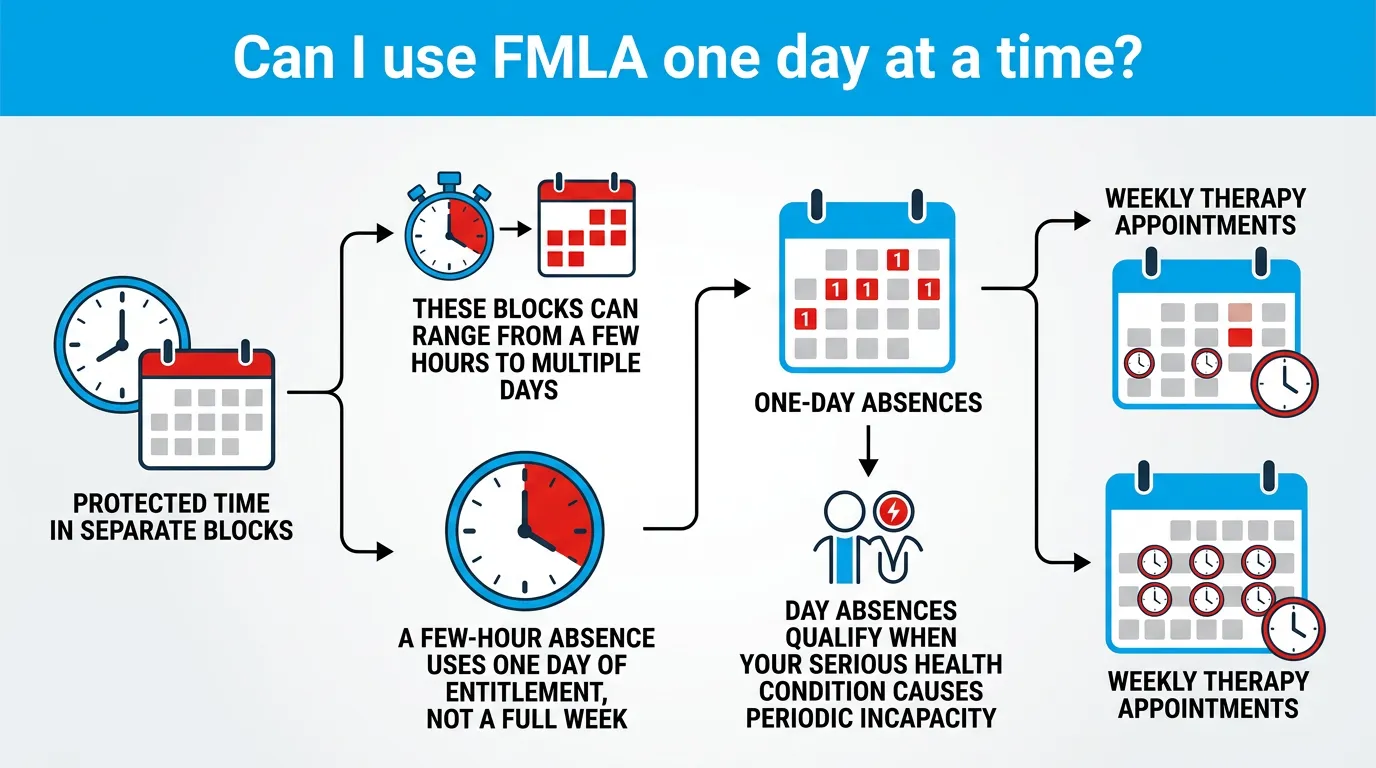
You still get 12 weeks total per year. But you only use time for actual hours absent. A single 8-hour absence uses one day of entitlement, not a full week.
How Intermittent FMLA Covers Single-Day Absences
Your 12 weeks can stretch across an entire year when used intermittently. This provides ongoing protection for chronic health issues. Single-day absences qualify when your serious health condition causes periodic incapacity.
They also qualify when continuing treatment prevents you from working that specific day. Common qualifying uses include:
-
Weekly therapy appointments
-
Monthly infusion treatments
-
Unpredictable migraine episodes
-
Mental health flare-ups
-
Chronic condition episodes like Crohn’s disease or fibromyalgia
Working with FMLADocs helps you get proper certification for intermittent leave. Our physicians understand how to document episodic conditions correctly.
When Single-Day Leave May Not Qualify
Single-day leave may not qualify if your condition doesn’t meet the ‘serious health condition’ definition. Routine preventive care rather than treatment of an active condition typically doesn’t qualify.

Employers can set minimum increments like one-hour blocks. But they can’t require you to take full days if your condition only requires partial days. Proper FMLA Paperwork must specify your need for intermittent leave and estimated frequency.
When Is Single-Day FMLA Leave Allowed?
When Is Single-Day FMLA Leave Allowed? Overview
You can use FMLA one day at a time when you have a serious health condition causing episodic incapacity. This means your condition periodically prevents you from performing job functions. Not every illness qualifies just because you miss work.
The condition must be documented by a healthcare provider. It must meet federal definitions for serious health conditions. Chronic conditions requiring at least two healthcare provider visits per year qualify. These conditions must cause periodic flare-ups that make work impossible.
Common qualifying conditions include migraines, rheumatoid arthritis, endometriosis, and diabetes complications. Mental health conditions like depression, anxiety disorders, PTSD, and bipolar disorder also qualify. When symptoms periodically prevent you from working, even if episodes last just one day, you’re protected.
Key Considerations
Ongoing treatments qualify regardless of whether they cause full-day incapacity. Chemotherapy, dialysis, physical therapy, and prenatal care appointments all count. You can take single-day leave for these appointments without losing job protection.
Pregnancy-related complications causing periodic absences qualify too. Severe morning sickness, gestational diabetes management, and high-risk pregnancy monitoring all meet the criteria. Many employees don’t realize these conditions qualify for FMLA Certification until they’re already struggling with attendance.
Your healthcare provider must document the frequency and duration of episodes. They need to explain how your condition affects your ability to work. Without this documentation, employers can deny your request. Review the full list of FMLA Conditions to see if your situation qualifies before submitting paperwork.
Does Your Medical Certification Need to Support Single-Day Leave?
Your medical certification must explicitly support intermittent FMLA leave by documenting the frequency and duration of episodes that cause you to miss work. Without this detail, your employer can reject the request before you ever take a single day off.
What Your Healthcare Provider Must Include
Providers must complete DOL Form WH-380-E for their own condition or WH-380-F for family member care. These forms require specific information about episode patterns that many doctors overlook.

Required details include:
-
Estimated frequency of episodes, like “2-4 times monthly”
-
Expected duration of each episode, like “4-8 hours” or “1 day”
-
Whether episodes are predictable or unpredictable
-
Why intermittent leave is medically necessary
Vague certifications stating “as needed” or “ongoing” without specific frequency estimates get rejected. Employers need to know what usage pattern to expect. According to the Federal Rule, the certification must explain how your condition causes episodic incapacity. That means it periodically prevents you from performing your job, not just causes discomfort.
Why Episodic Conditions Matter
For mental health conditions, providers should describe how episodes manifest. Panic attacks, depressive episodes, and anxiety flare-ups need typical duration estimates. A certification might note panic episodes occur three times weekly, last 30-60 minutes, and make concentration impossible.
Working with providers experienced in FMLA certification prevents the back-and-forth that burns through your 15-day deadline. FMLADocs connects you with board-certified physicians who complete intermittent leave certifications daily with all required details. This speeds up approval and protects your job from day one.
How Employers Count Single-Day FMLA Leave
When you use FMLA one day at a time, your employer tracks each absence in the smallest increment their payroll system uses. Most companies track in one-hour increments. This means they deduct only the actual time you miss from your 12-week entitlement.
For example, if you miss 8 hours for a migraine, that’s 8 hours deducted from your 480-hour annual entitlement (12 weeks × 40 hours). You don’t lose a full week. This precise tracking helps your leave last longer when you need intermittent FMLA leave for chronic conditions.
Minimum Leave Increments Under the FMLA
Federal regulations allow employers to set minimum increments of up to one hour. They can’t require you to use full-day increments if your condition only needs partial days. This protects employees who need to leave work early or arrive late for treatment.
Here’s what this means in practice:
-
You can take 2 hours for a doctor’s appointment without burning a full day.
-
Leaving 3 hours early for a therapy session only uses 3 hours of leave.
-
Missing 4 hours for a migraine episode deducts just those 4 hours
Your employer must track these hours accurately. They can’t round up to full days or weeks. This precision matters when managing single-day FMLA absences throughout the year.
Employer Policies vs. FMLA Requirements
Some employers have policies requiring employees to use PTO concurrently with FMLA. This means your single-day absence might be both FMLA-protected and paid through accrued leave. The job protection comes from FMLA, while payment comes from your PTO bank.
Your employer must provide written notice showing how much FMLA time you’ve used and how much remains. Keep these records to track your own usage. Differences between State Vs Federal FMLA laws can affect how your employer administers leave, so check both sets of rules.
If you exceed the frequency stated in your certification, your employer can request recertification. They can also deny protection for additional absences beyond what was approved. This is why accurate frequency estimates matter when you apply.
Employer attendance policies can’t penalize you for FMLA-protected absences. Even if you’re using leave frequently, disciplining employees for approved intermittent leave violates federal law. Your job protection remains intact as long as you stay within your certified limits.
What Documentation Is Needed for Single-Day FMLA Absences?
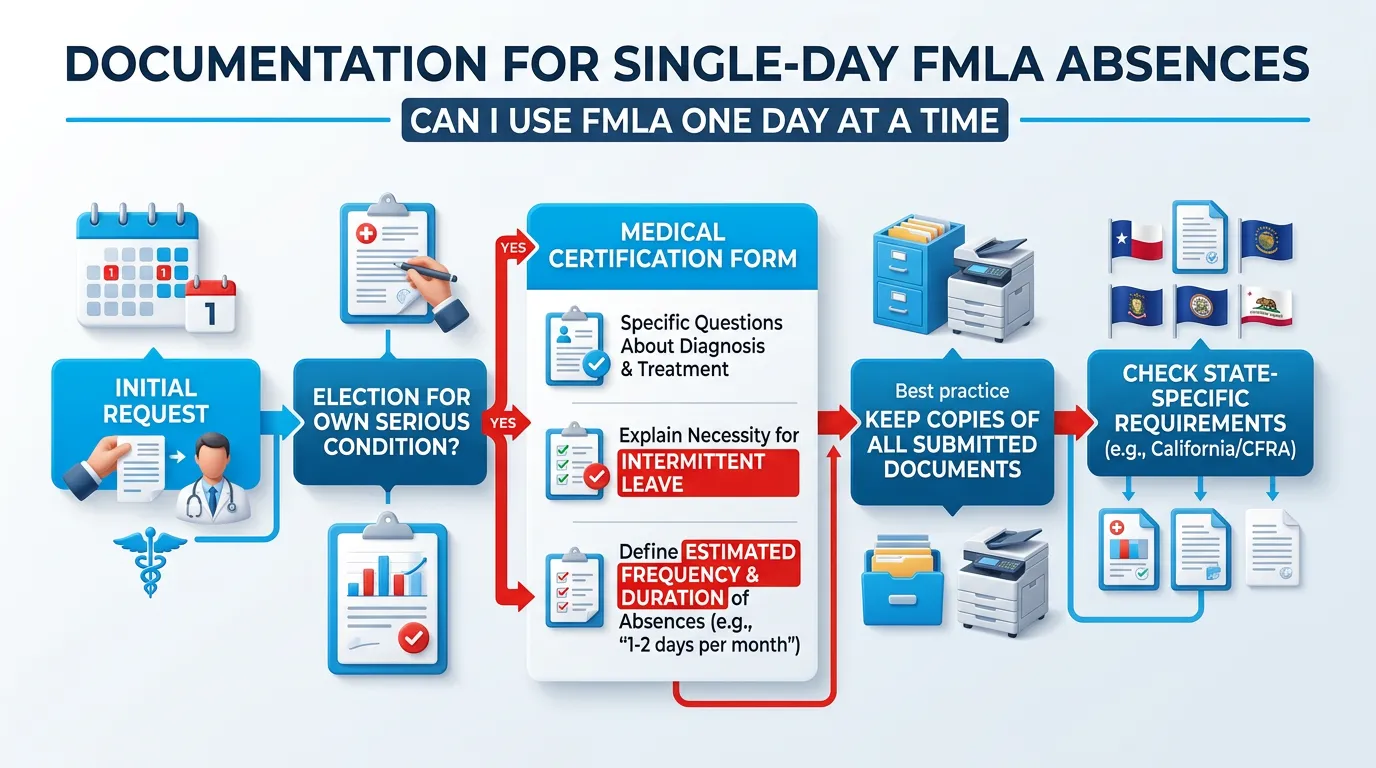
Before you can use FMLA one day at a time, you need proper documentation. The process starts with medical certification on official DOL forms. You can’t apply FMLA protection after the fact. Absences that happen before certification don’t get job protection.
Medical Certification
Your doctor must complete Form WH-380-E for your own condition. This form asks specific questions about your diagnosis and treatment. It must explain why you need intermittent leave and how often.
The certification should include the estimated frequency of absences. For example, two to four times per month. It should also state the expected duration of each episode. This might be four to eight hours or one to two days.
Some employers require recertification every 30 days for certain conditions. This confirms your continued need for single-day absences. Keep copies of all certification documents you submit. States like California may have additional requirements for medical documentation.
Following Your Employer’s Call-In Procedures
FMLA doesn’t exempt you from normal notification rules. You must follow your employer’s standard call-in procedures for each absence. This applies to all employees, not just those on FMLA.
When you call in, identify your absence as FMLA-related. Your employer needs to track usage against your 12-week entitlement. Don’t assume they’ll automatically apply FMLA protection. If you don’t specify, the absence may count as unprotected under attendance policies.
For predictable absences like therapy appointments, give advance notice. Even though intermittent leave doesn’t require 30 days’ notice, more warning helps. Keep your own records of dates, hours used, and reasons for each absence. This protects you if disputes arise about whether you’ve exceeded your approved frequency.
Can an Employer Question or Investigate Frequent Single-Day FMLA Leave?
Yes, employers can question or investigate frequent single-day FMLA absences. They have legal grounds to request additional documentation when patterns raise concerns. However, they must follow strict federal procedures and cannot retaliate against you for using approved leave.

When Employers Can Request Recertification
Employers can request recertification if they doubt the validity of your intermittent FMLA leave. They can also ask for updated documentation if you exceed the frequency stated in your original certification.
Federal regulations allow recertification every 30 days for certain conditions. For chronic conditions, employers can request updates every six months. But they need legitimate reasons, not just suspicion.
Common triggers for recertification requests include:
-
Absences that exceed the frequency your doctor certified
-
Patterns that suggest non-medical reasons for time off
-
Significant changes in your absence frequency or duration
-
Gaps between your certified condition and actual absence patterns
If your condition worsens and you need to leave more often than certified, request recertification right away. Don’t exceed your approved frequency and risk losing protection. According to Texas workforce guidelines, proactive communication protects your rights better than reactive explanations.
Avoiding FMLA Abuse While Protecting Your Rights
Employers can investigate if your absence patterns suggest potential abuse. Consistently missing Mondays or Fridays raises red flags. So do absences that coincide with denied vacation requests or major events.
Investigations might include requesting additional medical documentation. Some employers conduct surveillance, which is legal in most states. They can also require fitness-for-duty certifications before you return to work.
To protect yourself, follow these practices:
-
Use leave only when medically necessary for your certified condition.
-
Follow all call-in procedures consistently, even during emergencies.
-
Provide accurate frequency estimates on your initial certification.
-
Keep documentation of your condition’s episodic nature and treatment
Employers cannot retaliate against you for using approved FMLA leave. Even if they suspect abuse, they must follow proper procedures and document concerns. Firing you or cutting your hours because you took protected leave violates federal law.
Common Mistakes Employees Make When Using One-Day FMLA Leave
Using FMLA one day at a time protects you from attendance discipline. But many employees make errors that cost them this protection. These mistakes turn approved leave into unprotected absences.
Common Mistakes Employees Make When Using One-Day FMLA Leave Overview
The biggest mistake is underestimating the frequency of your certification. You might request leave for two days per month to avoid seeming too sick. Then you need three days in one month. Those extra absences lose FMLA protection because they exceed your certified frequency.
Another common error is waiting too long to request intermittent FMLA leave. Many employees only apply after absences become a performance issue. By then, your employer suspects abuse. Proactive requests before problems arise get approved more easily.
Not following call-in procedures causes problems, too. Even with approved FMLA, you must notify your supervisor according to company policy for each absence. Missing this step can result in discipline despite your protection.
Failing to specify that absences are FMLA-related when calling in is another trap. Your employer might count them as unprotected under attendance policies. Always state you’re using approved FMLA leave when you call out.
Key Considerations
Using leave for reasons not covered by your certification jeopardizes everything. If you’re certified only for physical therapy appointments, taking a mental health day isn’t protected. According to New York State guidance, your absences must match your certification exactly.
Not keeping personal records leaves you vulnerable. Track dates, hours, and reasons for each absence. If disputes arise about usage or frequency, you need proof of what actually happened.
The final mistake is assuming protection applies retroactively. You need a proper medical certification approved before taking intermittent FMLA leave. Protection only starts after approval, not before.
Conclusion
You can use FMLA one day at a time when you have proper medical certification supporting intermittent leave. The critical element is getting your healthcare provider to document the frequency and duration of your episodes before your first absence. Then you follow your employer’s call-in procedures each time you need to leave.
Most problems happen because of incomplete certifications or exceeding approved frequencies. Your doctor needs to understand what employers require for single-day FMLA absences. Without detailed documentation, you risk denial or delays that put your job at risk.
Track your usage carefully to stay within your 12-week annual limit. Each day counts against your total entitlement. Missing this detail causes confusion when you need additional leave later in the year.
If your provider isn’t familiar with intermittent FMLA leave certification requirements, FMLADocs connects you with board-certified physicians who complete these forms daily. Our doctors provide detailed, complete certifications within 24-48 hours, so you get the job protection you need while managing your health condition.
Need FMLA documentation for your leave? Start your request with FMLADocs today!
Frequently Asked Questions
Can I use FMLA one day at a time instead of taking weeks off?
Yes, you can use FMLA one day at a time through intermittent leave. Federal law lets you take FMLA-protected time in separate blocks ranging from a few hours to multiple days. You still get 12 weeks total per year, but you only use time for actual hours absent. A single 8-hour absence uses one day of entitlement, not a full week. This option works well for chronic conditions like migraines, anxiety, diabetes flare-ups, or ongoing treatments that cause periodic absences.
What medical conditions qualify for single-day FMLA absences?
Chronic conditions requiring at least two healthcare provider visits per year qualify for single-day FMLA. Common qualifying conditions include migraines, rheumatoid arthritis, endometriosis, and diabetes complications. Mental health conditions like depression, anxiety disorders, PTSD, and bipolar disorder also qualify when symptoms periodically prevent you from working. Your condition must cause episodic incapacity that makes work impossible on specific days. Ongoing treatments like chemotherapy, dialysis, physical therapy, and prenatal care appointments also qualify for single-day leave.
How does my employer count time when I use FMLA one day at a time?
Your employer counts only actual hours absent against your 12-week entitlement. When you use FMLA intermittently, your 12 weeks can stretch across an entire year. A single 8-hour absence uses one day of your total entitlement. Employers can set minimum increments like one-hour blocks for tracking purposes. However, they can't require you to take full days if your condition only requires partial days. This tracking method provides ongoing protection for chronic health issues throughout the year.
What documentation do I need for each single-day FMLA absence?
Your medical certification must specify your need for intermittent leave and estimated frequency of absences. The condition must be documented by a healthcare provider and meet federal definitions for serious health conditions. Your certification should explain how your condition causes periodic incapacity that prevents you from performing job functions. Proper paperwork must show your condition periodically prevents you from working, even if episodes last just one day. Working with qualified physicians who understand how to document episodic conditions correctly helps avoid denial.
When does single-day FMLA leave not qualify for protection?
Single-day leave may not qualify if your condition doesn't meet the serious health condition definition under federal law. Routine preventive care rather than treatment of an active condition typically doesn't qualify for FMLA protection. Not every illness qualifies just because you miss work. The condition must cause episodic incapacity documented by a healthcare provider. Without proper medical certification showing periodic flare-ups that make work impossible, your employer can deny your request or discipline you for absences.
How do weekly therapy appointments or monthly treatments qualify for FMLA?
Ongoing treatments qualify for single-day FMLA regardless of whether they cause full-day incapacity. Weekly therapy appointments, monthly infusion treatments, chemotherapy, dialysis, physical therapy, and prenatal care appointments all count as qualifying uses. You can take single-day leave for these appointments without losing job protection. Your medical certification should document the treatment schedule and explain why these appointments are medically necessary. This protection covers both the appointment time and any recovery time needed afterward when you can't work.

Meet the author
Areeba Imran
I am a healthcare professional and seasoned medical writer with 13+ years of experience across health, wellness, and clinical content. My work focuses on delivering trustworthy, evidence-based information that empowers readers to make informed decisions. With a keen interest in innovation and evolving areas of patient care, I bring a modern perspective to today's healthcare setup.
Get Your FMLA Certification Online in Minutes