
My Employer Denied My FMLA: What Are My Rights?
 by Areeba Imran
 Last updated:
My employer denied my FMLA request, and now you’re stuck wondering if they can do that. The answer depends on why they said no. Some denials are legalyou didn’t meet the 12-month or 1,250-hour requirement, or your paperwork was incomplete. Others violate federal law, especially when employers ignore DOL response deadlines or reject valid medical certifications.
This guide breaks down valid versus invalid fmla denial reasons, the DOL’s strict 5-day response windows employers must follow, and how to document everything properly. You’ll learn when to file a dol wage and hour complaint, how to talk to HR about your denial, and when you need an attorney. We’ll show you precisely how to challenge fmla denial decisions that don’t hold up under federal law.
If your employer denied your FMLA leave, you have options. Let’s start with what makes a denial legaland what doesn’t.
Valid Denial Reasons vs Invalid Denial Reasons
When Employers Can Legally Deny FMLA
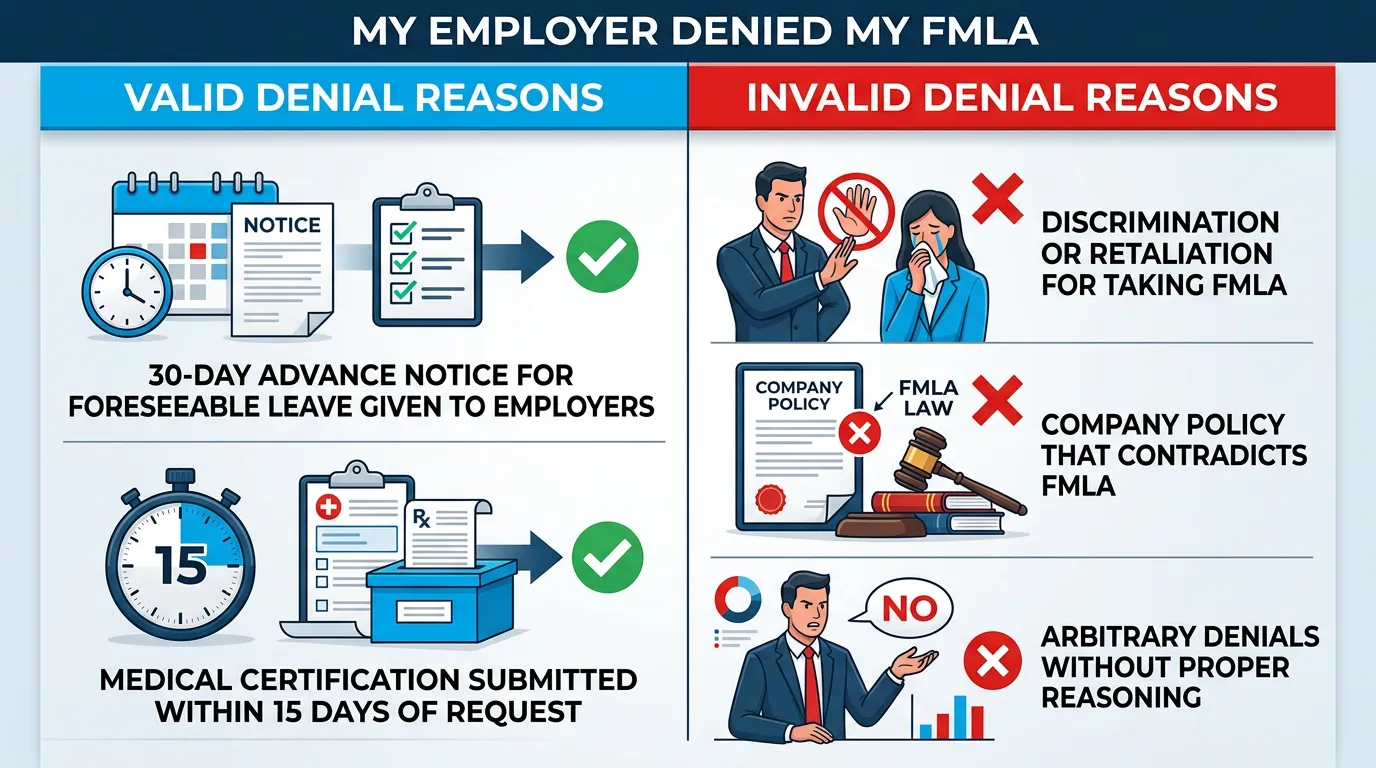
Your employer can deny FMLA if you haven’t worked 12 months or logged 1,250 hours in the past year. Companies with fewer than 50 employees within 75 miles don’t have to offer FMLA.
Your condition must qualify as a serious health condition. This means inpatient care or continuing treatment. Routine colds or minor injuries don’t meet DOL standards. This is covered in detail in federal FMLA regulations.
Missing the 30-day advance notice for foreseeable leave gives employers grounds for denial. Failing to submit medical certification within 15 days also counts as valid reason.
Red Flags That Indicate Wrongful Denial
Your employer can’t reject complete certification just because they disagree with your doctor. That’s wrongful denial.
Watch for unequal treatment. If others got similar leave approved but yours was denied, that’s a red flag. Employers also can’t force you to exhaust all vacation time first.
Denials without written explanation violate federal law. You must receive written notice stating specific reasons.
The Difference Between Incomplete Certification and True Denial
Incomplete certification isn’t denial. Your employer must give you at least 7 days to fix deficiencies. Only after that window can they reject your request.
True denial means your employer formally rejected your leave with stated reasons. Incomplete paperwork just needs correction.
Understanding DOL 5-Day Response Windows
When your employer denied your FMLA request, they may have violated strict federal timelines. The Department of Labor requires employers to respond within specific windows. Missing these deadlines can strengthen your case if you need to challenge the denial.
The Eligibility Notice Requirement
Within 5 business days of your FMLA request, your employer must provide an eligibility notice. This document states whether you qualify based on three requirements. You need 12 months of employment, 1,250 hours worked in the past year, and an employer with 50+ employees within 75 miles.
This notice starts the official clock. Without it, your employer can’t legally deny leave based on eligibility. If you never received this notice, document the gap. This procedural violation strengthens your position.
The Rights and Responsibilities Notice
The Rights and Responsibilities notice must also arrive within 5 business days. This explains your obligations for certification, call-in procedures, and consequences of non-compliance. It should detail what medical documentation you need to provide.
Many employees struggle with FMLA paperwork because they never received clear instructions. If your employer skipped this notice, they can’t later penalize you for not following procedures you were never told about.
The Designation Notice Timeline
After receiving your complete medical certification, employers have 5 business days to issue a designation notice. This must approve or deny leave with specific reasons stated in writing. It should specify how much time is designated as FMLA-protected.
If your employer requests additional information or clarification, they must do so in writing. You then get at least 7 calendar days to provide corrections. For ongoing conditions, the notice must state whether you’ll need to provide recertification.
Employers who miss these 5-day windows cannot retroactively deny leave. They can’t discipline you for absences that occurred while they delayed providing required notices. This protection applies even if you later don’t qualify.
Documentation Checklist After FMLA Denial
When your employer denied your FMLA request, you need to act fast. Save every piece of evidence immediately. This documentation protects your rights if you file a DOL wage and hour complaint or challenge the decision.
What to Save Immediately
Start by saving all denial notices from HR. Screenshot portal messages before your access gets restricted. Forward work emails to your personal account right away.
Keep copies of your original FMLA request with date stamps. Save all completed WH-380 forms before you submitted them. Store any medical records or doctor’s notes that support your condition.
Also save the eligibility notice, Rights and Responsibilities notice, and designation notice your employer provided. If you never got these within the required five-day windows, document that fact. This matters for your wrongful FMLA denial case.
Creating a Timeline of Events
Build a detailed timeline with exact dates. Note when you first told your employer about your need for leave. Record when you submitted your certification forms.
Document when each notice arrived or didn’t arrive. Mark the exact date your employer denied your leave. This chronology becomes critical evidence.
If you had verbal talks with HR or your manager about the denial, send follow-up emails. Write something like: “Per our conversation today, you stated my leave was denied because…” This creates a written record of what was said.
Many employees work with FMLADocs to get proper medical certification completed quickly. This helps avoid incomplete FMLA certification issues that lead to denials.
Organizing Your Evidence for Appeal or Complaint
Photograph or scan any paper documents you have. Store digital copies in multiple locations. Use your personal email, cloud storage, and an external drive.
Create a simple spreadsheet listing each document. Include the date, who sent it, and a brief description. This organization becomes invaluable during the FMLA denial appeal process.
Sort everything chronologically so you can show the sequence of events clearly. When you file a complaint or consult an attorney, this organized evidence makes your case stronger. Don’t wait to get organized. Do it now while details are fresh.
How to Talk to HR About Your FMLA Denial
When your employer denied your FMLA request, your first step is getting clarity. Don’t accept a verbal denial without documentation. Ask HR to provide written explanation of why they rejected your application.
This written notice protects you. It creates a paper trail and forces your employer to state specific reasons for denial.
Requesting Written Explanation
Start by asking which eligibility requirement you failed to meet. Did you not work enough hours? Does your employer have fewer than 50 employees within 75 miles? Or was your medical certification incomplete?
Review the denial notice carefully. Some issues can be fixed. Others can’t.
Incomplete certification is correctable. Not enough hours worked is not. If the problem is fixable, you have options to pursue.
Asking About the Appeal Process
Ask HR about internal appeal procedures. Some companies have formal processes for challenging denials before you escalate externally.
Keep all conversations professional and factual. Avoid emotional arguments. They weaken your case and give HR ammunition to dismiss your concerns.
Follow up every discussion with written confirmation. Send summaries to your personal email, not just work email. This creates records if disputes arise later.
If HR is unresponsive or refuses to provide written explanation, document your attempts. Note the dates you tried to communicate. This pattern of non-response strengthens your case for filing a DOL complaint.
Correcting Certification Deficiencies
If certification was deemed incomplete, ask exactly what information is missing. Federal law requires at least 7 days to fix deficiencies.
Contact your healthcare provider within 24-48 hours. Address any certification gaps immediately. Time is critical here.
Or use FMLADocs to get properly completed forms that meet every DOL requirement the first time. Our board-certified physicians understand FMLA Conditions and complete certifications with all required details.
Don’t let incomplete paperwork derail your job protection. Act fast and get it right.
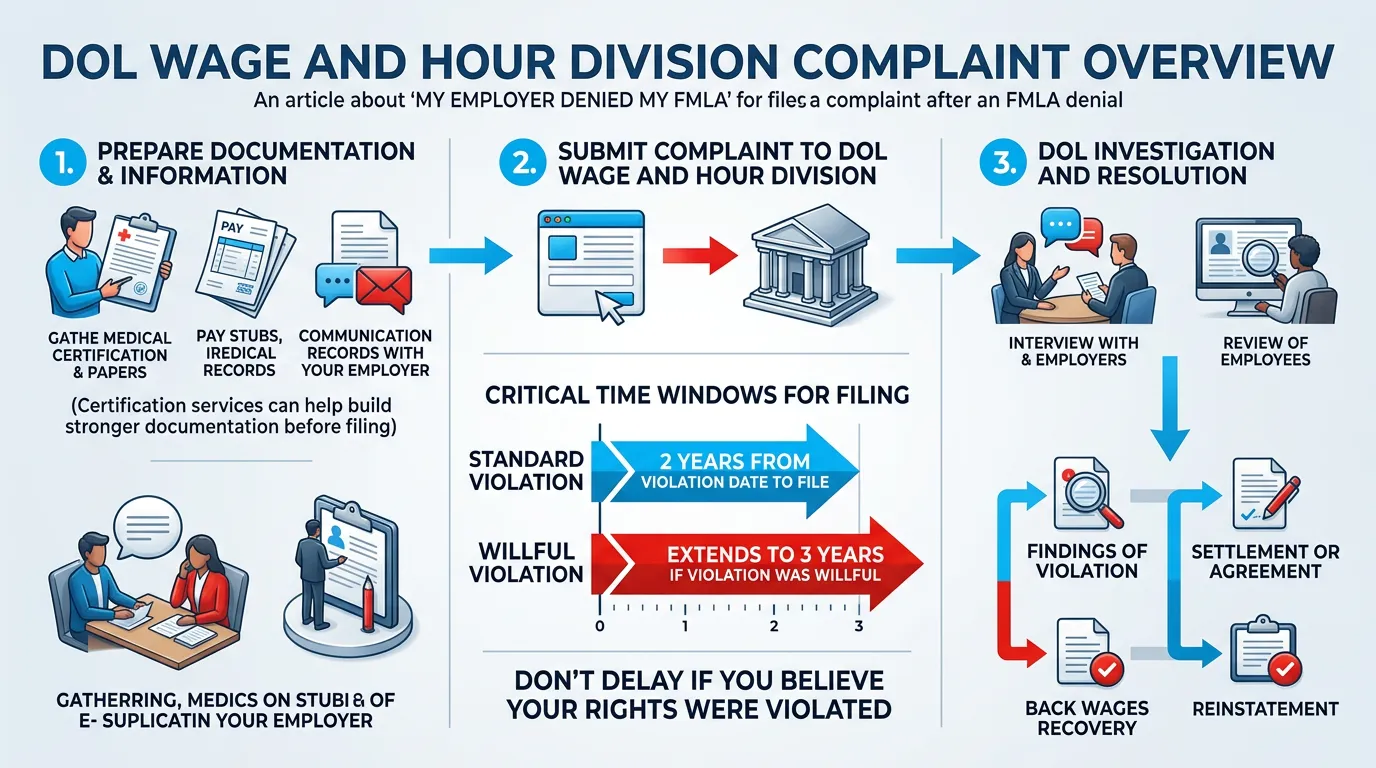
DOL Wage and Hour Division Complaint Overview
If your employer denied your FMLA request, you can file a complaint with the DOL Wage and Hour Division. This federal agency investigates violations at no cost to you. You can submit complaints online at dol.gov/agencies/whd.
When to File a WHD Complaint
File when your employer denied leave despite clear eligibility. Also file if they rejected complete medical certification without valid reason. Retaliation for requesting leave is another ground for filing.
You should also file if your employer failed to provide required notices within 5-day windows. You have two years from the violation date to file. That extends to three years if the violation was willful. Don’t delay if you believe your rights were violated.
What the Investigation Process Looks Like
The WHD investigates employer compliance with FMLA regulations. They review your documentation and employer records. Then they determine whether violations occurred.
Investigations typically take several months to complete. The WHD will contact your employer to request records and explanations. Your employer cannot retaliate against you for filing a complaint. This protection applies throughout the entire investigation process.
Working with licensed healthcare professionals through FMLA Certification services can help you build stronger documentation before filing.
What Remedies the DOL Can Order
The DOL can order your employer to grant leave retroactively. They can also restore your job if you were terminated. Back pay for lost wages during unlawful denial is another remedy.
Your employer may be required to maintain your health insurance coverage. If the WHD finds violations, they may negotiate a settlement. This settlement requires your employer to correct the violation and compensate you. They may refer the case for litigation if your employer refuses to comply.
When to Seek Employment Counsel
If your employer denied your FMLA request, you might need legal help. Some situations go beyond what the DOL can fix. An attorney becomes necessary when your case involves complex issues or serious consequences.
Situations That Require Legal Expertise
Consider consulting an employment attorney if your employer terminated you after denying your leave. Retaliation through demotion or schedule changes also warrants legal review. If the DOL investigation doesn’t resolve your situation, an attorney can pursue other options.
You need legal counsel when your case combines discrimination claims with FMLA violations. Employers with sophisticated legal teams require you to have equal representation. Settlement negotiations often need expertise to protect your interests.
Attorneys also help if your employer pressures you to resign. They can intervene when settlement offers seem inadequate. A hostile work environment after requesting leave signals you need professional guidance. Understanding State Vs Federal FMLA Rules can help you determine which protections apply to your case.
What Employment Attorneys Can Do That DOL Cannot
Attorneys file lawsuits seeking damages beyond DOL orders. They can pursue compensatory damages for emotional distress. Liquidated damages mean double back pay for willful violations. Attorney fees get added to your recovery in successful cases.
The DOL investigates and can order reinstatement. But they can’t sue for emotional harm or punitive damages. Only private attorneys can take your case to court for full compensation.
Understanding Legal Costs and Contingency Arrangements
Many employment attorneys work on contingency for FMLA cases. They only get paid if you win. Initial consultations are often free. You can evaluate your case without upfront costs.
Legal action has strict deadlines. You must file a lawsuit within two years of the violation. The deadline extends to three years if the violation was willful. Consult an attorney promptly if you’re considering this route.
This information is educational only and doesn’t constitute legal advice. If you believe your FMLA rights were violated, consult a licensed employment attorney in your state. They can provide guidance specific to your situation.
Conclusion
Not every FMLA denial is legal. You now know the difference between valid rejections and wrongful FMLA denial. Employers must follow strict DOL response windows. Missing these deadlines weakens their case against you.
Start by requesting written explanation from HR. Document everything. If your employer denied FMLA leave improperly, file a DOL wage and hour complaint. Don’t wait. Federal timelines matter.
Incomplete FMLA certification is a common problem. It’s also fixable. FMLADocs connects you with board-certified physicians who specialize in FMLA cases. They complete certification forms correctly the first time. This protects your job and gets you the leave you need.
If my employer denied my fmla request, you have options. Take action now to challenge FMLA denial and protect your rights under federal law.
Frequently Asked Questions
Can my employer deny FMLA if I haven't worked there for a full year?
Yes, your employer can legally deny FMLA if you haven't worked 12 months or logged 1,250 hours in the past year. These are federal eligibility requirements. Companies with fewer than 50 employees within 75 miles don't have to offer FMLA at all. This is one of the valid reasons for denial. If you don't meet these thresholds, the denial is legal under federal law. Track your hours and employment dates to know if you qualify.
What should I do if my employer denied my FMLA request without giving me written reasons?
Denials without written explanation violate federal law. You must receive written notice stating specific reasons for the denial. If your employer didn't provide this, document the gap immediately. Write down when you requested leave and when you received the denial. This procedural violation strengthens your case if you need to challenge the decision. You can file a DOL wage and hour complaint or talk to HR about the missing documentation. Keep copies of all communication.
How long does my employer have to respond to my FMLA request?
Your employer must respond within 5 business days of your FMLA request. They need to provide an eligibility notice stating whether you qualify. After receiving your complete medical certification, they have another 5 business days to issue a designation notice. Missing these deadlines can strengthen your case if you challenge the denial. If you never received these notices, document the gap. This procedural violation shows your employer didn't follow federal requirements.
Can my employer reject my FMLA certification just because they disagree with my doctor?
No, your employer can't reject complete certification just because they disagree with your doctor. That's wrongful denial. Your condition must qualify as a serious health condition, which means inpatient care or continuing treatment. Routine colds or minor injuries don't meet DOL standards. But if your doctor certifies a serious condition, your employer must accept it. Watch for unequal treatment. If others got similar leave approved but yours was denied, that's a red flag.
What's the difference between incomplete certification and a true FMLA denial?
Incomplete certification isn't denial. Your employer must give you at least 7 days to fix deficiencies in your paperwork. Only after that window can they reject your request. True denial means your employer formally rejected your leave with stated reasons. If your certification is missing information, you get a chance to correct it. Don't confuse the two. Incomplete paperwork just needs correction. A true denial requires written explanation and specific reasons under federal law.
What are my rights if my employer denied FMLA but approved similar leave for other employees?
Unequal treatment is a red flag for wrongful denial. If others got similar leave approved but yours was denied, your employer may have violated federal law. Document who received approval and when. Note the similarities between their situations and yours. This pattern suggests discrimination or retaliation. You can file a DOL wage and hour complaint or consult an attorney. Employers can't pick and choose who gets FMLA based on favoritism. Federal law requires consistent application of eligibility standards.

Meet the author
Areeba Imran
I am a healthcare professional and seasoned medical writer with 13+ years of experience across health, wellness, and clinical content. My work focuses on delivering trustworthy, evidence-based information that empowers readers to make informed decisions. With a keen interest in innovation and evolving areas of patient care, I bring a modern perspective to today's healthcare setup.
Get Your FMLA Certification Online in Minutes