

Delaware PFML: 80% Wages up to $900 Per Week
 by Anam Moin
Last updated:
Delaware PFML launched on January 1, 2026, bringing paid leave to workers statewide. The program replaces up to 80% of your wages when you need time off for family or medical reasons. You can take up to 12 weeks of paid leave without draining your savings or returning to work before you’re ready.
Most Delaware workers face tough choices when serious health issues or family needs arise. Federal FMLA offers job protection but no pay. That forces families to choose between financial stability and caring for loved ones. Delaware paid family and medical leave solves this problem by providing both income replacement and job protection.
This guide covers everything you need to know about the program. You’ll learn who qualifies for Delaware PFML, what reasons are covered, how much you’ll receive, and how to apply.
We’ll also explain employer requirements and the protections you have as an employee. Whether you’re planning leave or managing compliance, you’ll get the practical details needed to handle Delaware’s paid leave program successfully.
Understanding Delaware PFML Coverage and Eligibility
Delaware PFML launched on January 1, 2026, bringing paid family and medical leave to most workers across the state. The program covers private sector employees, state workers, and many local government employees. It marks a shift in how Delaware supports workers during life’s critical moments.
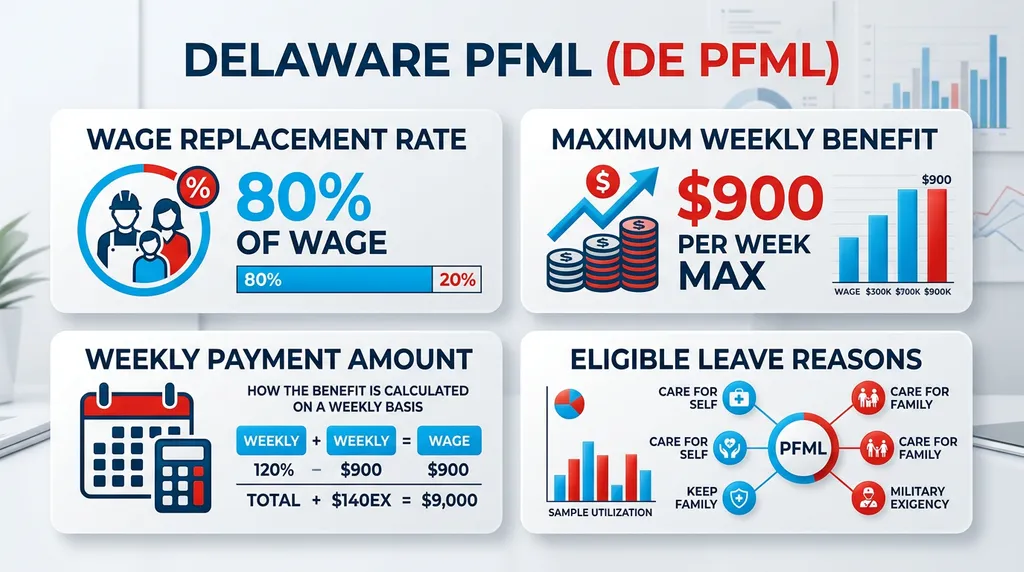
Most employees working in Delaware now have access to this benefit. The program provides up to 12 weeks of paid leave per year. Workers can use this time for their own serious health conditions, to care for family members, or to bond with a new child.
Who Is Covered Under Delaware Paid Leave
According to the Delaware Department of Labor, the program covers most private sector employers and their employees. State government workers also qualify for benefits. Some local government employees receive coverage depending on their municipality’s participation.
Self-employed individuals can opt into the program voluntarily. Independent contractors have the same option. Both groups must actively enroll and pay premiums to receive benefits.
Federal employees don’t qualify for Delaware PFML. Railroad workers fall under separate federal programs. Some small employers with fewer than 10 employees may be exempt from participation requirements.
Employee Eligibility Requirements
Workers must meet a simple wage threshold to qualify. You need at least $2,500 in covered wages during your base period. This typically means the first four of the last five completed calendar quarters before you file.

No minimum hours worked requirement exists. Part-time workers qualify if they meet the wage threshold. This makes the program accessible to workers with varied schedules.
Workers with multiple jobs can combine wages from different covered employers. This helps people who work part-time for several companies reach the $2,500 threshold. All wages from covered employers count toward eligibility.
Understanding FMLA for new parents and bonding leave helps you see how federal and state protections work together. Delaware PFML provides wage replacement while FMLA offers job protection.
Covered vs. Exempt Employers
Most private businesses operating in Delaware must participate in the program. Employers with one or more employees typically fall under coverage requirements. State agencies participate as covered employers for their workforce.
Small employers with fewer than 10 employees may qualify for exemptions. These businesses can choose whether to participate. Federal agencies and railroad companies remain outside the program’s scope.
Local government participation varies by jurisdiction. Some municipalities opted in while others remained outside the program. Workers should check with their specific local government employer to confirm coverage status.
Qualifying Reasons for Delaware Paid Family and Medical Leave
Delaware PFML covers several life events that require time away from work. The program splits into three main categories. Each addresses different needs while protecting your job and income.
Family Leave Qualifying Events
You can take Delaware paid family and medical leave to care for a family member with a serious health condition. Covered relationships include your spouse, domestic partner, child, parent, grandparent, sibling, or parent-in-law.
The program also covers qualifying military exigencies.
This applies when a family member is deployed or called to active duty. Safe leave is available too. You qualify if you or a family member are victims of domestic violence, sexual assault, or stalking.
Medical Leave Qualifying Events
Your own serious health condition qualifies when it makes you unable to perform job functions. A serious health condition means an illness, injury, impairment, or physical or mental condition. It requires either inpatient care or continuing treatment by a healthcare provider.
This definition aligns with what qualifies for FMLA leave under federal law, though Delaware’s program adds paid benefits. Mental health conditions often meet this standard. Understanding when FMLA for mental health applies helps you recognize qualifying situations.
Parental Leave for Birth and Adoption
Bonding with a new child qualifies within 12 months of birth, adoption, or foster care placement. Both parents can take parental leave simultaneously or consecutively for the same child. This flexibility lets families decide what works best for their situation.
The 12-month window gives you time to plan. You don’t need to take all leave immediately after the child arrives.
Delaware PFML Benefit Amounts and Duration
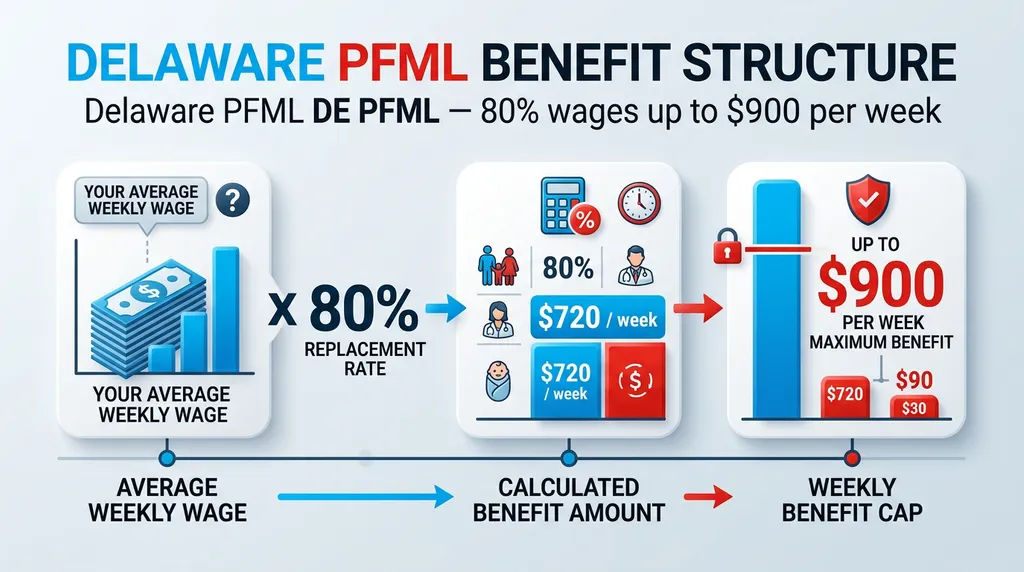
Delaware PFML replaces 80% of your average weekly wage. The maximum benefit is $900 per week in 2026. This rate applies to all qualifying leave reasons.
How Much You’ll Receive in Weekly Benefits
Your weekly benefit equals 80% of your average weekly wage. If you earn $1,000 per week, you’ll receive $800. If you earn $1,200 per week, you’ll still receive the $900 maximum.
Benefits are subject to state and federal income tax. They’re not subject to Social Security or Medicare taxes. You’ll receive a 1099-G form for tax reporting.
There’s no waiting period before benefits begin. You start receiving payments immediately after approval. This differs from some state programs that require elimination periods.
Maximum Leave Duration by Reason
According to Symetra’s Delaware PFML overview, employees can take up to 12 weeks of paid leave in a 24-month period. This applies to most qualifying reasons.
Parental leave for bonding with a new child is limited to 12 weeks. You must take this leave within 12 months of the child’s arrival. This includes birth, adoption, or foster care placement.
If multiple qualifying events occur, the total leave cannot exceed 12 weeks in any 24-month period. You can’t stack leave for different reasons beyond this limit.
Calculating Your Average Weekly Wage
Your average weekly wage uses covered wages from your base period. The base period is typically the first four of the last five completed calendar quarters. This calculation method mirrors standard unemployment insurance practices.
Understanding how to get paid during FMLA helps you plan your finances during leave. Delaware PFML provides more generous wage replacement than unpaid federal FMLA.
How to Apply for Delaware Paid Leave Benefits
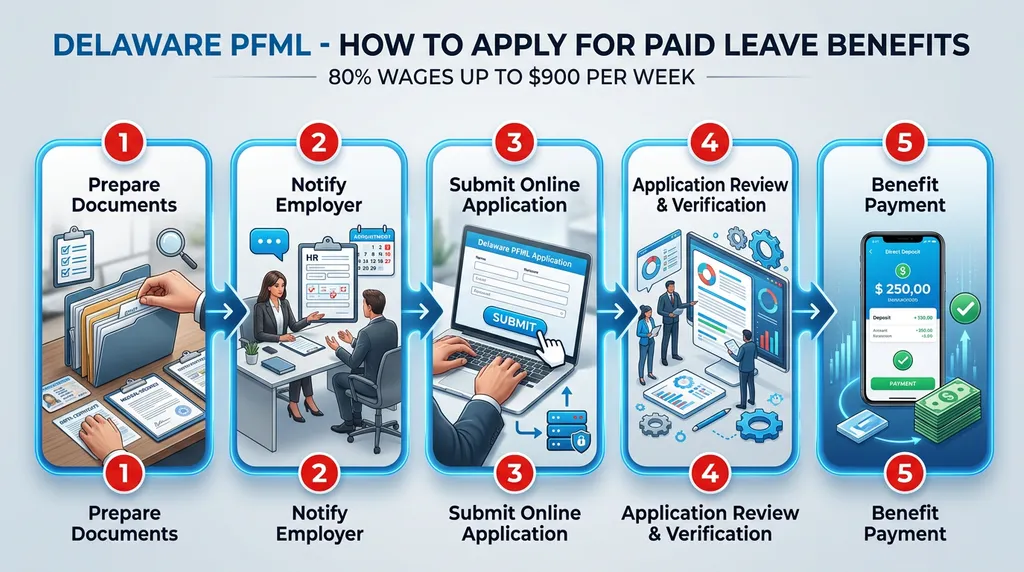
Delaware PFML applications go through the Delaware Division of Unemployment Insurance. You can file online through their portal or call their phone line. Both methods work equally well.
Application Process and Required Documentation
The type of leave you need determines what documents you must submit. For medical leave or family care leave, you need medical certification from a healthcare provider. This form confirms the condition and care requirements.
Parental leave requires different paperwork. You’ll submit documentation of the birth, adoption, or foster care placement. Birth certificates or placement orders work for this purpose.
Safe leave has its own documentation rules. You need papers from law enforcement, courts, healthcare providers, or victim advocates. These verify the qualifying event that makes you eligible.
Understanding how to apply for FMLA step by step can help you prepare similar documentation for state programs. The process shares many common elements.
Timeline for Filing Your Claim
File at least 30 days before your planned leave start date when you know about the need in advance. This gives the Division time to review your claim and request any missing information.
For unforeseeable leave, file as soon as possible after the need arises. Don’t wait. Quick filing prevents payment delays and protects your rights.
What Happens After You Apply
The Division has 10 business days to approve or deny your claim once they receive complete documentation. They’ll notify you of their decision in writing.
Approved claims receive payment within two weeks of approval for the first payment period. After that, you must certify your continued eligibility every two weeks. This ongoing certification keeps your benefits flowing.
According to Sun Life’s Delaware PFML, the program covers qualifying family and medical events including bonding with a new child and caring for family members with serious health conditions.
Employer Obligations and Employee Protections Under Delaware PFML
Delaware PFML creates clear duties for covered employers and strong protections for workers. Both sides need to understand these rules to avoid compliance issues and ensure smooth leave administration.
What Employers Must Do
Covered employers must register with the Delaware Division of Unemployment Insurance. This registration happens before the program takes effect. Once registered, employers report employee wages quarterly through standard unemployment insurance filings.
Employers and employees share program costs equally. The total contribution rate is 0.8% of wages. Each party pays 0.4%. Employers withhold the employee portion from paychecks and remit both shares to the state.
Workplace posting requirements are mandatory. Employers must display Delaware PFML notices where employees can easily see them. According to employer compliance obligations outlined by payroll platforms, new hires must receive written notice about their Delaware paid leave rights within 30 days of starting work.
These notices explain:
-
How to apply for benefits
-
Eligibility requirements
-
Job protection rights
-
How to file complaints
Employers who skip posting or notification steps face penalties. The state monitors compliance through audits and employee complaints.
Job Protection and Benefit Continuation
Employees taking Delaware PFML have job protection rights. When leave ends, workers must return to the same position they held before. If that exact role isn’t available, employers must offer an equivalent position with the same pay, benefits, and working conditions.
Small employers with fewer than 10 employees get partial relief. They don’t have to provide job protection. However, their employees still receive wage replacement benefits through the state program.
Health insurance coverage continues during paid leave. Employers must maintain group health benefits on the same terms as if the employee kept working. This means:
-
Same coverage level
-
Same employer contribution amount
-
Same employee premium responsibility
Employees must keep paying their share of premiums. Employers can arrange payment methods that work for both parties. If an employee stops paying premiums for more than 30 days, coverage may end after proper notice.
Retaliation is strictly forbidden. Employers can’t punish workers for requesting or taking Delaware paid leave. This includes firing, demotion, reduced hours, or any adverse action tied to leave usage.
Coordination with Other Leave Policies
Delaware PFML runs concurrently with federal FMLA when both apply. The same leave period counts toward both entitlements. An employee taking 8 weeks for childbirth uses 8 weeks of both Delaware PFML and FMLA simultaneously.
This concurrent running prevents double-dipping. Workers can’t stack 12 weeks of FMLA on top of 12 weeks of Delaware PFML for the same reason. The leave periods overlap completely.
Employees can supplement state benefits with accrued paid time off if employer policy allows. Some companies let workers use vacation or sick days to bridge the gap between Delaware’s wage replacement rate and full pay. Others require employees to exhaust paid leave first.
Employers should review existing leave policies for conflicts. Delaware PFML sets minimum standards. Company policies can be more generous but can’t reduce state-mandated protections. Clear written policies help both employers and employees understand how different leave types interact.
Conclusion
Delaware PFML gives workers access to paid time off when they need it most. The program covers bonding with a new child, caring for sick family members, recovering from your own health issues, and dealing with domestic violence situations.
You get up to 12 weeks at 80% of your wages, with a $900 weekly cap.
Start by checking your eligibility with your HR department or the Delaware Division of Unemployment Insurance. Gather your medical certifications early since they take time to get. File your claim at least 30 days before you plan to take leave. This gives the state time to process your application and approve your benefits.
If your situation also qualifies for federal FMLA protection, you need proper medical documentation. FMLADocs connects you with licensed healthcare professionals who understand both ’
Delaware paid family and medical leave and FMLA requirements. They complete your certifications remotely so you can focus on what matters.
Don’t wait until the last minute to get your paperwork in order.
Frequently Asked Questions
What is the wage threshold to qualify for Delaware PFML benefits?
You need at least $2,500 in covered wages during your base period. The base period is typically the first four of the last five completed calendar quarters before you file. No minimum hours worked requirement exists. Part-time workers qualify if they meet the $2,500 threshold. Workers with multiple jobs can combine wages from different covered employers to reach this amount.
How much does Delaware PFML pay when you take leave?
The program replaces up to 80% of your wages when you take leave. You can receive this income replacement for up to 12 weeks per year. The benefit provides financial support so you don't have to drain your savings or return to work before you're ready. This wage replacement works alongside job protection to help families handle serious health issues or family needs.
When did Delaware PFML start providing benefits to workers?
Delaware PFML launched on January 1, 2026. The program brought paid family and medical leave to most workers across the state. It covers private sector employees, state workers, and many local government employees. This marked a shift in how Delaware supports workers during life's critical moments by providing both income replacement and job protection.
Can self-employed workers get Delaware PFML benefits?
Yes, self-employed individuals can opt into the program voluntarily. Independent contractors have the same option to enroll. Both groups must actively enroll and pay premiums to receive benefits. Once enrolled, they get the same coverage as traditional employees. This means they can access up to 12 weeks of paid leave per year at up to 80% wage replacement.
Do federal employees qualify for Delaware paid leave?
No, federal employees don't qualify for Delaware PFML. Railroad workers also fall under separate federal programs and aren't covered. The program covers most private sector employers and their employees, state government workers, and some local government employees. Federal agencies remain outside the program's scope because they have their own leave systems.
What reasons can you use Delaware PFML for?
You can use paid leave for your own serious health conditions. The program also covers time to care for family members with serious health issues. Bonding with a new child is another covered reason. Workers can take up to 12 weeks per year for these qualifying events. The program provides both wage replacement and job protection during your leave.
Do small businesses have to participate in Delaware PFML?
Small employers with fewer than 10 employees may qualify for exemptions. These businesses can choose whether to participate in the program. Most private businesses operating in Delaware with one or more employees typically fall under coverage requirements. State agencies participate as covered employers. Local government participation varies by jurisdiction, so workers should check with their specific employer.
How does Delaware PFML work with federal FMLA protection?
Federal FMLA offers job protection but no pay. Delaware PFML provides wage replacement up to 80% of your earnings. The two programs work together to give you both income and job security. Before Delaware PFML, workers faced tough choices between financial stability and caring for loved ones. Now you get both protections when you need time off for family or medical reasons.
Meet the author
Anam Moin
I'm Anam Moin, and my work at FMLADocs focuses on workplace leave and FMLA education. I cover certification, documentation, employee rights, and leave-related questions to provide readers with useful information when they need it most.
Get Your FMLA Certification Online in Minutes