

FMLA Abuse Consequences: What Employees Should Know
 by Nida Hammad
 Last updated:
FMLA abuse consequences can include discipline, termination, and even legal action. Most employees don’t know this fact. Honest intermittent use is not abuse. Frequent use doesn’t make it abuse. You risk problems when you don’t know what counts as misuse. You also risk problems when you don’t document your condition. Many workers face wrong charges. Their employers don’t know chronic conditions.
This guide shows what counts as FMLA misuse. It explains how employers run investigations. You’ll learn what termination risks you face. You’ll learn why honest intermittent leave gets protection. You’ll see what records keep your rights safe. You’ll find mistakes that start investigations. We explain what counts as protected intermittent use. We show what counts as actual abuse. We cover how employers run investigations. We show what records keep you safe.
You use intermittent FMLA now or face leave questions. Understanding fmla abuse consequences protects your rights. Don’t wait until you’re facing an investigation to prove your intermittent leave was legitimate. Start your FMLA certification today and get the documentation that keeps your leave protected from day one.
What Actually Counts as FMLA Misuse and fmla abuse consequences
FMLA misuse means you give false facts on purpose. You do this to get leave you don’t earn. It’s not simply using intermittent leave frequently. Many employees worry their legitimate absences will be labeled as abuse. That fear keeps them from using protections they’ve earned.
The line between honest use and misuse is clear. Most employers don’t see it that way.
Legal Definition vs. Employer Perception
According to DOL guidance on FMLA, misuse involves deliberate fraud. Working another job during medical leave crosses that line. So does attending activities inconsistent with claimed restrictions. Submitting falsified medical certifications is fraud, not a paperwork mistake.
Providing fraudulent documentation is misuse. Lying about the reason for leave is misuse. Exaggerating symptoms to obtain certification crosses into fraud territory.
But employers often confuse legitimate patterns with abuse. They see frequent absences and assume dishonesty. This perception gap creates wrongful investigations that target employees with genuine chronic conditions.
Clear-Cut Misuse Scenarios
Real misuse is intentional deception. You claim back pain prevents work but post videos of yourself rock climbing. You say migraines keep you home but work a second job those same days. You alter medical forms to extend leave beyond what your doctor approved.
These scenarios involve provable dishonesty. They’re not judgment calls about symptom severity. They’re cases where evidence directly contradicts your stated limitations.
The key element is intent to deceive. Honest mistakes on paperwork aren’t misuse. Genuine symptom fluctuations aren’t misuse. Deliberate fraud is.
What Isn’t Misuse (Common Employer Misconceptions)
Your condition may worsen over time. Using more leave then is not misuse. Chronic conditions fluctuate. Episodes can increase without warning. That’s why understanding how intermittent FMLA leave protections work matters for employees with unpredictable symptoms.
Taking intermittent leave on Mondays and Fridays isn’t automatically suspicious. Your chronic condition causes unpredictable episodes. They fall on those days. That’s legitimate. Migraines don’t check the calendar. Anxiety attacks don’t avoid weekends.
Employers often target employees who document frequent migraine episodes for FMLA protection as if frequency alone proves fraud. It doesn’t. Conditions like migraines, anxiety, and Crohn’s disease cause frequent but genuine incapacity. That’s exactly what intermittent FMLA protects.
The pattern isn’t proof of abuse. The medical certification establishes your condition’s unpredictable nature. Your employer’s suspicion doesn’t override your doctor’s professional assessment.
How Employers Investigate Suspected FMLA Misuse
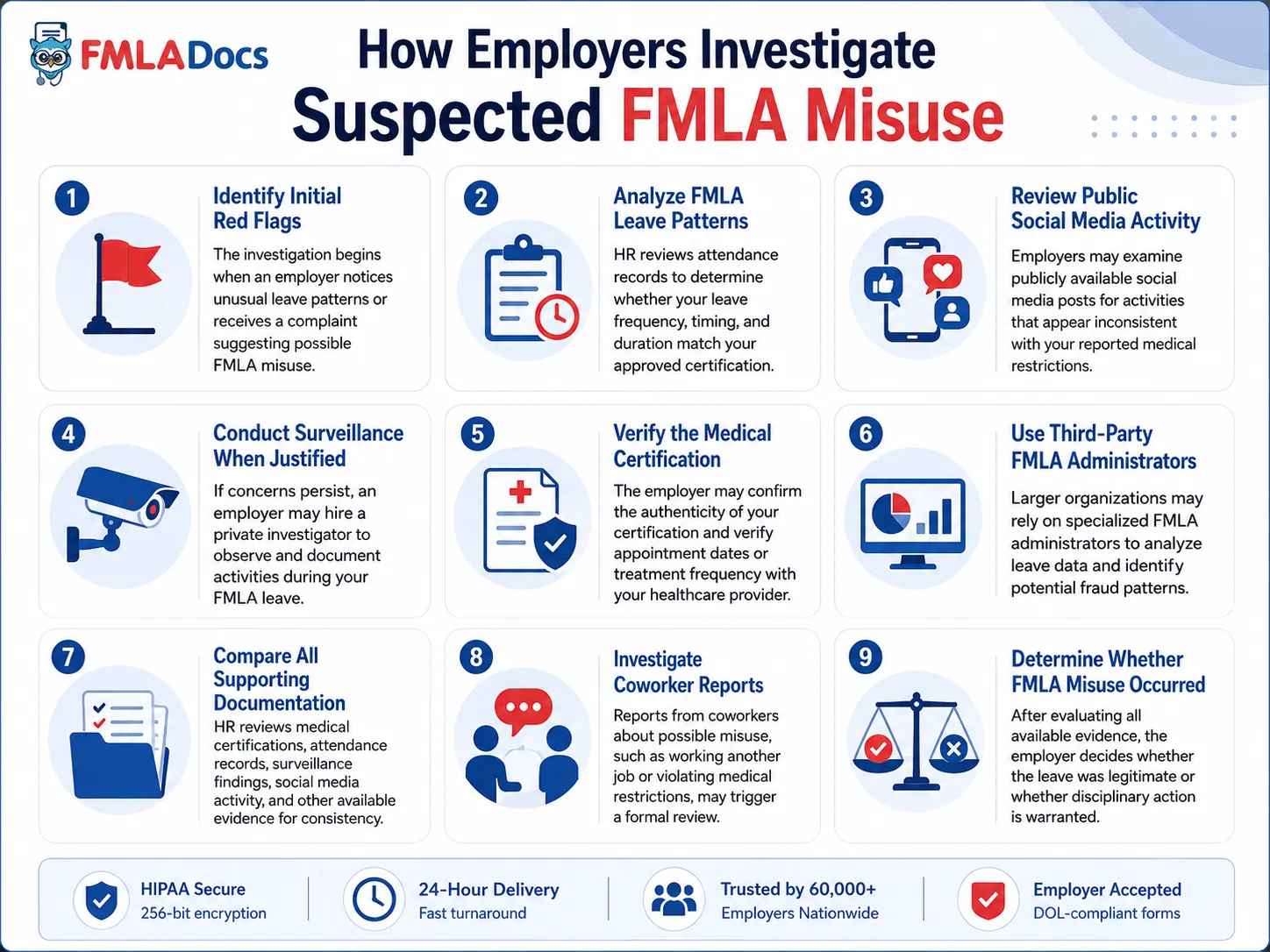
When employers suspect FMLA abuse, they use multiple methods to verify claims. These investigations can range from simple pattern analysis to hiring private investigators. Understanding these tactics helps you stay compliant and avoid false accusations.
Surveillance and Social Media Monitoring
Some employers hire private investigators to conduct video surveillance. This happens most often with intermittent leave cases. Investigators document activities that appear inconsistent with medical restrictions.
Social media posts create major problems during investigations. Photos of physical activities get flagged during claimed incapacity. Travel or event photos also trigger investigation flags. Posts visible to coworkers often trigger the initial reports that start investigations.
What you post online can contradict your medical certification. A photo of you hiking while on leave for back pain raises red flags. A vacation post during claimed medical incapacity invites scrutiny.
Medical Certification Verification
Employers can contact healthcare providers directly to verify information. They confirm that appointments occurred and that certification details are accurate. However, providers can only confirm what’s already documented in your file.
According to employer investigation rights and limits, companies must follow strict protocols when verifying medical information. They can’t ask for diagnosis details beyond what’s on the certification form. But they can verify dates, appointment attendance, and treatment frequency.
Third-party FMLA administrators help large companies detect fraud patterns. These specialists use data analytics across employee populations to spot suspicious trends. They flag cases that deviate from typical medical leave patterns.
Pattern Analysis and Documentation Review
HR departments analyze leave patterns looking for suspicious timing. Frequent Monday or Friday absences raise concerns. Leave immediately after denied vacation requests gets noticed. Absences during particularly busy periods trigger reviews.
The Society for Human Resource Management provides detailed guidance on documentation review procedures. Employers track whether your absences match the frequency and duration on your certification. Significant deviations prompt further investigation.
Coworker reports trigger most investigations. Employees seen working second jobs during medical leave get reported. Coworkers who spot you engaging in activities inconsistent with restrictions often notify HR. These reports start formal review processes. Employers can fire you if they prove abuse.
Understanding Discipline and Termination Risk
FMLA abuse consequences can be severe. Employers can fire you for proven misuse. This happens even when you have protected leave. The protection doesn’t extend to fraudulent use.
When Termination Is Legally Permitted
Employers can fire you if they prove you misused FMLA leave. Working another job during medical leave counts as misuse. Attending social events while claiming you can’t work counts. Falsifying medical documents also counts as misuse. Your job protection vanishes when fraud is established.
Many employees don’t realize that when an employer denies FMLA requests, they often cite suspected abuse. Documentation becomes critical in these disputes.
The ‘Honest Belief’ Standard
According to Ogletree Deakins, employers can terminate based on a good-faith belief that misuse occurred. This applies even if later proven wrong. The investigation just needs to be reasonable.
This standard protects employers who act on credible evidence. Your employer can fire you based on circumstantial evidence. This happens if they had an honest belief. The investigation must have been thorough.
Impact on Unemployment and Future Employment
For-cause termination typically disqualifies you from unemployment benefits in most states. The termination reason may appear on employment verification. This creates immediate financial hardship.
Termination for fraud can damage your professional reputation permanently. Industries requiring licenses or security clearances scrutinize these records closely. Some employers report FMLA fraud to industry databases or professional licensing boards.
Your employer may give you written warnings for suspected misuse. They can require recertification or limit your leave options. Performance plans may also result from this discipline. These actions create a documented trail that follows you.
Why Honest Intermittent Use Is Protected (Even When Frequent)
Intermittent FMLA exists because chronic conditions cause unpredictable episodes. These episodes don’t follow convenient schedules. Frequent use is often medically necessary and legally protected.
Many employees worry their pattern looks suspicious. Taking leave on Mondays or Fridays seems questionable. But DOL regulations explicitly protect this when it’s medically legitimate.
How Chronic Conditions Actually Work
Chronic conditions cause periods of lost work time. These periods may happen two to four times each month. Each episode is a legitimate use of approved leave. Conditions like migraines, panic disorder, Crohn’s disease, and fibromyalgia don’t respect work schedules.
Some chronic conditions worsen with stress accumulation during the work week. Others improve with weekend rest. This creates predictable weekly patterns that aren’t evidence of abuse.
Frequency Changes and Recertification
Your condition may worsen and require more leave. You must submit new medical proof to your employer. However, increased frequency alone isn’t evidence of misuse. Your employer may request recertification every 30 days for certain conditions.
Avoiding common FMLA mistakes during recertification protects your rights. Documentation must reflect your current condition accurately.
Unpredictable Episode Patterns
Your employer cannot force you to plan leave ahead. This applies when your condition causes unpredictable episodes. You must follow normal call-in procedures each time. But advance scheduling isn’t required for conditions like migraines or panic attacks.
According to Amundsen Davis Law, employees with chronic conditions have clear protections for unpredictable leave patterns. The law recognizes that episodic incapacity can’t always be predicted or controlled.
Documentation Habits That Protect Your Rights
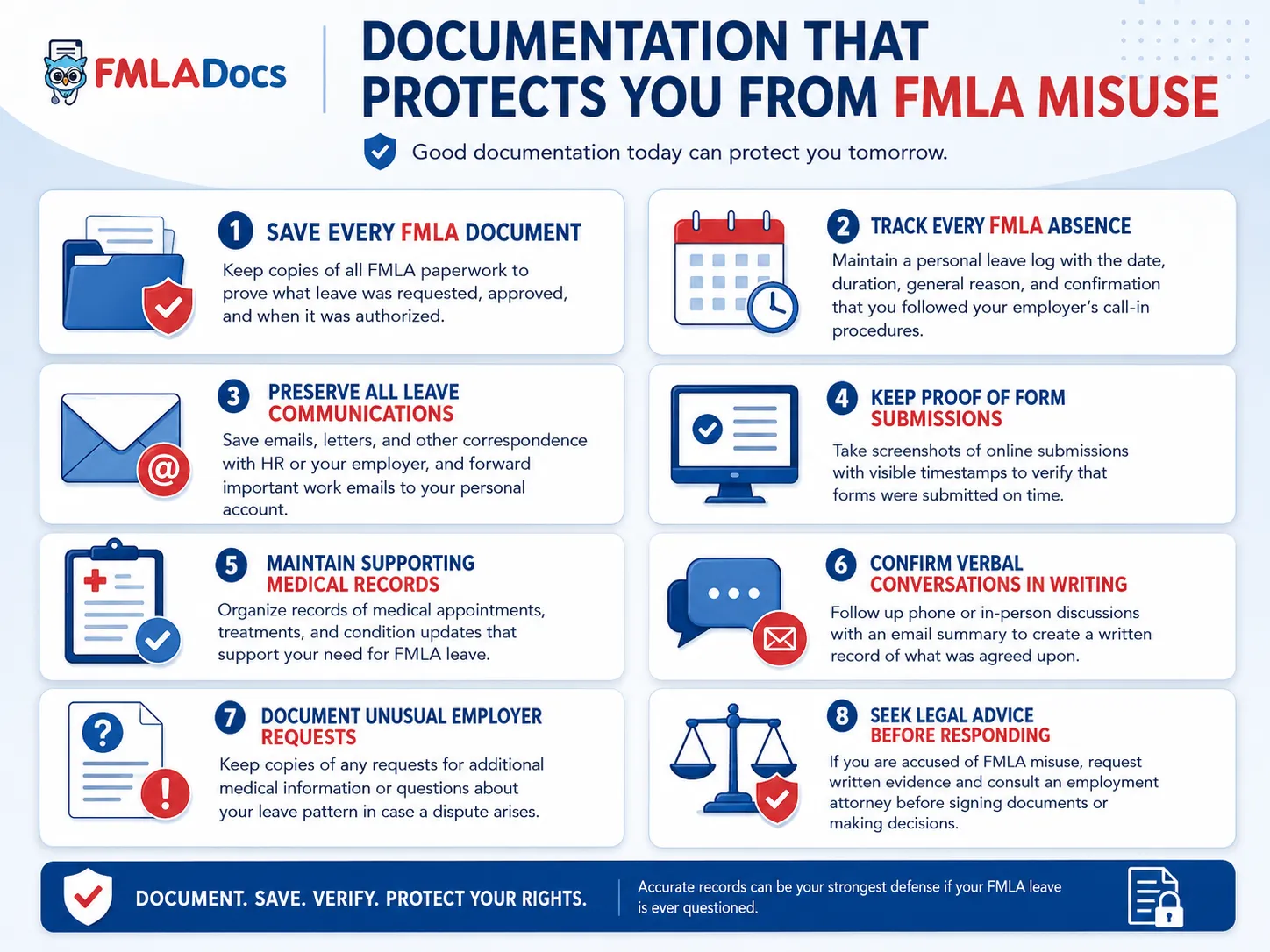
Good records protect you from employer questions. They also guard against FMLA abuse claims. Save copies of all completed medical certifications before submitting them. Keep recertification documents, eligibility notices, and designation notices from your employer. These records prove what was approved and when.
What to Keep and How to Organize It
Record every absence with specific details. Write down the date, duration, and general reason. Use “migraine episode” instead of detailed symptoms. Confirm you followed call-in procedures each time. Save emails to a personal account, not just work email. You may lose access if terminated.
Take screenshots of portal submissions with timestamps. According to EEOC guidance on FMLA protections, maintaining thorough records helps employees prove they followed proper procedures. Keep records of medical appointments and treatment dates. Track condition changes that affect your leave needs.
Communication Best Practices
Document all HR communications in writing. Follow up phone conversations with email summaries. Write “Per our conversation today, you confirmed…” to create written records. This practice protects you if verbal agreements are later disputed.
When to Seek Legal Guidance
Your employer may question your leave pattern. They may ask for info beyond recertification. Write down what they request. Consult an employment attorney before responding. The federal FMLA regulations outline specific limits on what employers can request. If you’re accused of misuse, don’t resign under pressure. Request specific evidence in writing. Talk to a lawyer before you decide or sign.
Conclusion
Understanding fmla abuse consequences protects both your job and your rights. Real misuse means lying about your condition or fabricating symptoms. Frequent intermittent leave backed by proper medical certification is completely legal. Employers can investigate suspicious patterns through surveillance and documentation reviews. Proven fraud leads to termination and lost benefits.
Honesty and documentation set FMLA misuse apart from valid leave. Be truthful about your health needs and keep records. Keep detailed records of every absence and all medical appointments. Save every email exchange with HR. Update your certification when your condition changes. These habits shield you from false accusations.
If you face questions about your leave pattern, don’t panic or resign. Request specific evidence in writing. Consult an employment attorney if needed. Your rights remain protected as long as your medical documentation supports your absences.
FMLADocs connects you with licensed physicians who complete accurate certifications within 24-48 hours. Our doctors understand exactly what fmla documentation requirements employers need. Start your certification process today and protect your leave rights from the beginning.
Frequently Asked Questions
What legally counts as FMLA misuse that can lead to consequences?
FMLA misuse means intentionally providing false information to obtain leave you don't qualify for. Working another job during medical leave crosses that line. So does attending activities inconsistent with claimed restrictions. Submitting falsified medical certifications is fraud. Lying about the reason for leave is misuse. Exaggerating symptoms to obtain certification crosses into fraud territory. The key element is intent to deceive. Honest mistakes on paperwork aren't misuse. Genuine symptom fluctuations aren't misuse. Deliberate fraud is.
Can I be fired for using intermittent FMLA leave frequently?
No, frequent intermittent use isn't abuse when it's honest. Chronic conditions fluctuate and episodes can increase without warning. Using leave more frequently than originally estimated is not misuse if your condition genuinely worsened. Taking intermittent leave on Mondays and Fridays isn't automatically suspicious if your chronic condition causes unpredictable episodes that happen to fall on those days. Migraines don't check the calendar. Anxiety attacks don't avoid weekends. Frequency alone doesn't prove fraud or justify termination.
What activities during FMLA leave can trigger abuse investigations?
Attending activities inconsistent with your claimed restrictions triggers investigations. You claim back pain prevents work but post videos of yourself rock climbing. You say migraines keep you home but work a second job those same days. These scenarios involve provable dishonesty where evidence directly contradicts your stated limitations. Employers often use surveillance or social media monitoring during investigations. The key is whether your activities match the restrictions your doctor certified. Honest recovery activities that align with your limitations aren't grounds for investigation.
How do employers investigate suspected FMLA abuse?
Employers use specific investigation methods to verify leave legitimacy. They may conduct surveillance to document your activities during leave periods. Social media monitoring helps them find posts that contradict claimed restrictions. They review patterns in your leave requests looking for suspicious timing. Employers compare your stated limitations against observed activities. They may request additional medical certifications or recertifications. Some hire private investigators to follow employees during leave. The investigation focuses on finding evidence that directly contradicts your medical documentation or stated condition.
Why do employers wrongfully accuse employees of FMLA abuse?
Many employers don't understand how chronic conditions work. They see frequent absences and assume dishonesty. This perception gap creates wrongful investigations that target employees with genuine chronic conditions. Employers often confuse legitimate patterns with abuse. They target employees who document frequent episodes as if frequency alone proves fraud. It doesn't. Conditions like migraines, anxiety, and Crohn's disease cause frequent but genuine episodes. Employers mistake honest intermittent use for misuse simply because they don't grasp unpredictable symptom patterns.
What documentation protects me from false FMLA abuse accusations?
Proper medical documentation is your primary protection against wrongful accusations. Keep detailed records of your condition and how it affects your ability to work. Ensure your doctor's certification accurately describes your symptoms and their unpredictable nature. Document each episode that requires leave with notes about symptoms and timing. Save all communication with your employer about leave requests. Keep copies of medical appointments and treatment records. This paper trail proves your leave is legitimate and based on genuine medical need, not fraud.
What's the difference between FMLA abuse and FMLA fraud?
FMLA abuse generally refers to using approved leave in a way that's excessive or inconsistent with the certified reason, without necessarily involving dishonesty. FMLA fraud is more serious. It involves intentionally providing false information, such as falsifying a medical certification, to obtain leave you're not entitled to. Employees found to have committed fraud can lose FMLA protections and job restoration rights, while abuse allegations that don't involve fraud may still leave you eligible for reinstatement.
Can my employer use my social media posts as evidence of FMLA abuse?
Employers can consider publicly available information, including social media activity, when investigating suspected abuse. However, a photo or post alone doesn't automatically prove abuse. It typically needs to contradict your certified restrictions in a way that undermines your stated reason for leave. Courts have generally sided with employers who acted on a genuine, reasonably investigated belief that leave was being misused, so it's worth being mindful of what you post while on leave.
Meet the author
Nida Hammad
I am a professional writer with over five years of experience creating clear, engaging, and well-researched content. I specialize in healthcare topics, helping readers understand complex information in simple wording. Currently, I write for FMLA DOC, where I focus on producing accurate and trusted guides for people seeking support with FMLA and medical needs.
Get Your FMLA Certification Online in Minutes