
Can Employer Track FMLA Leave? What They Can or cannot Track
 by Nida Hammad
 Last updated:
Yes, your employer can track FMLA leave. But federal law sets strict limits on what they can monitor and what they can ask. Employers must track your leave hours and dates to stay compliant. They can’t demand detailed medical updates or monitor your personal activities. Many workers skip protected leave due to surveillance fears. This difference matters for FMLA rights.
This guide shows you exactly what tracking is legal and where privacy protections kick in. You’ll learn which attendance rules apply during intermittent leave. You’ll see how medical forms differ from invasive questions. You’ll find which employer requests break the law. We cover the data employers must track for compliance. We show the call-in rules you need to follow. We point out red flags when employers overstep.
Understanding these boundaries helps you use your FMLA rights without unnecessary worry. Let’s break down what can employer track FMLA leave means in practice and where your privacy protections begin. Start your certification and know your rights before your employer does
Can Employers Track FMLA Leave? What They Must Track for Compliance
When you ask can employer track FMLA leave, the answer is yes. Employers must track specific data to stay compliant with federal regulations. This tracking protects both your rights and the company’s legal standing. The Department of Labor sets clear requirements for what gets documented and how long records must be kept.
Leave Duration and Hours Used
Employers must track total FMLA hours used against your 12-week annual entitlement. That’s 480 hours per year. They monitor this to make sure you don’t exceed your allotment.
For intermittent leave, tracking gets more detailed. Each absence date gets recorded. Duration in hours gets logged. A reason code identifies FMLA usage without disclosing your diagnosis.
This system protects your privacy while keeping accurate records. You might take four hours for a doctor visit. Or you might leave early due to a migraine. Each instance counts against your 480-hour bank.
Certification and Recertification Deadlines
Documentation of certification submission dates is mandatory. According to the Department of Labor, employers must track when you submit medical certification. They also monitor recertification schedules to maintain compliance with DOL regulations.
You have 15 calendar days to return completed certification forms. Employers track this deadline strictly. For ongoing conditions, recertification may be required every 30 days. Missing these deadlines can jeopardize your leave protection.
Understanding employer FMLA obligations and tracking requirements helps you stay ahead of deadlines. Employers must document every submission date and follow-up request.
Employee Eligibility Verification
Records must show you worked 1,250 hours in the past 12 months. They must also confirm you’ve been employed for 12 months with the company. This verification happens before leave approval.
Tracking systems must distinguish FMLA-protected absences from other leave types. PTO, sick leave, and unexcused absences get separate codes. This separation prevents confusion during audits.
All FMLA records must be maintained for three years per Department of Labor regulations. These files stay confidential in separate folders from your personnel records. This protects your medical privacy while ensuring compliance.
Attendance Policies and Intermittent FMLA Call-In Rules
Your employer can track FMLA leave, but they can’t ignore your right to job protection. Even when you’re out on approved leave, you still need to follow normal call-in procedures. This means calling the attendance line, notifying your supervisor, or using the absence reporting system.
Many employees assume FMLA exempts them from these rules. It doesn’t. You must report each absence according to company policy, even if your condition is unpredictable.
Normal Call-In Procedures Still Apply
Your employer can require you to follow the same notification process as any other employee. If your company requires a call two hours before your shift, that rule applies to FMLA absences too. If you use an online portal to report absences, you need to use it for FMLA time.
According to FMLA Insights, employers can discipline you for failing to follow call-in procedures, even when the absence itself is protected. The key is that you properly reported the absence within company guidelines.
What Employers Can Require for Intermittent Leave
For intermittent leave, you must call in each time you need to use FMLA time. This applies even when your condition is unpredictable and you can’t provide advance notice. Your employer checks your absences against your approved certification. They verify the absences fall within certified limits.
Leave management systems track patterns, frequency, and duration. Your cert approves two days per month. You take five days instead. Your employer can ask for new cert info. Understanding how intermittent FMLA leave works helps you stay within approved limits.
Reason Codes vs. Medical Details
Your employer can require you to provide a reason code that identifies the absence as FMLA-related. This doesn’t mean disclosing your specific diagnosis or medical details. A simple code like “FMLA” or “medical leave” is sufficient.
You don’t have to explain symptoms or treatment details when calling in. The certification on file already contains that information. Your employer cannot punish you for FMLA absences. You must report them and stay within your approved time.
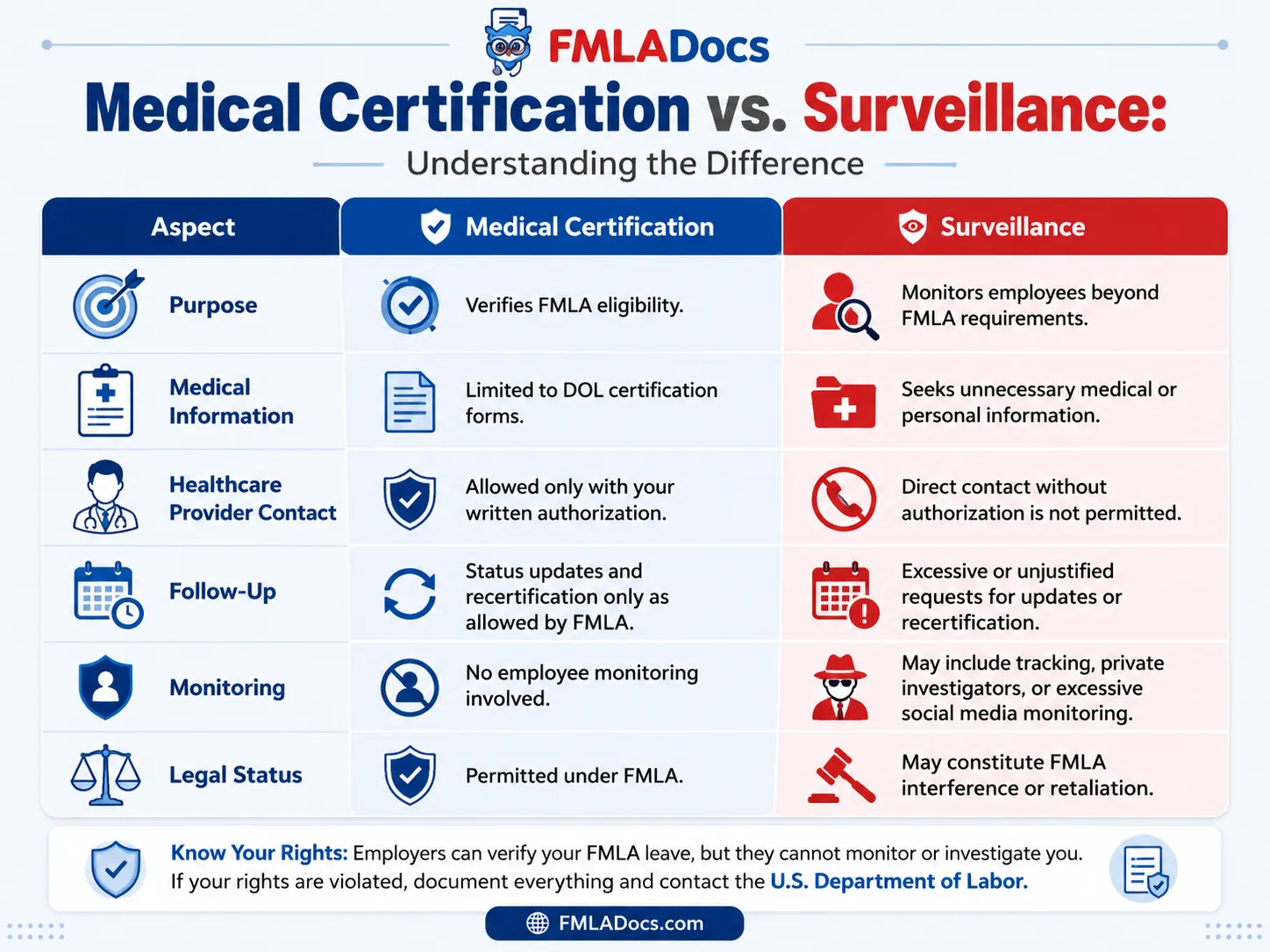
Medical Certification vs. Surveillance: Understanding the Difference
Your employer can track FMLA leave through legitimate channels. They can’t cross into surveillance territory. The line between proper documentation and overreach matters for your privacy and job protection.
What Medical Certification Requires
Medical forms give employers the facts they need. They use these facts to check your leave. You’ll submit DOL forms WH-380-E or WH-380-F. These forms document your diagnosis, treatment frequency, and functional limitations.
The certification must show how your condition affects your ability to work. It doesn’t give your employer access to your full medical history. Providers complete these forms with specific details about episode frequency and duration.
Understanding what medical documentation FMLA actually requires helps you provide the right information without oversharing. FMLADocs connects you with licensed physicians who complete these certifications correctly the first time.
Periodic Status Updates Employers Can Request
Your employer can request periodic status updates during your leave. These updates focus on your intent to return and whether your expected return date changed. They cannot demand new medical details beyond what’s in your original certification.
Fitness-for-duty certification can be required before you return from leave for your own serious health condition. This only applies if your employer has a uniformly applied policy or reasonable safety concerns exist.
Recertification follows specific rules. Employers can request it every 30 days for minimum duration conditions. For chronic conditions, they can ask every six months. They cannot request recertification more frequently without evidence your circumstances changed.
Where Certification Ends and Surveillance Begins
Employers cannot contact your healthcare provider directly without your written authorization. Even with authorization, providers aren’t required to respond. This protects your medical privacy and keeps communication channels appropriate.
Surveillance activities cross the line into potential retaliation. Hiring private investigators to follow you violates your FMLA rights. Monitoring your social media or tracking your location goes beyond legitimate certification needs. These actions may constitute interference with your protected leave.
Knowing what employers can legally ask during FMLA protects you from overreach. If your employer demands information beyond certification requirements, document everything and consider filing a complaint with the Department of Labor.
Privacy Limits: What Employers Cannot Track or Require
Federal law protects your medical privacy during FMLA leave. Your employer can’t demand complete medical records or detailed diagnosis information beyond what DOL forms request. They can’t access your patient portal or review your health insurance claims. According to FMLA confidentiality requirements, medical certification information must be kept in confidential files separate from personnel records. Only HR staff who need to know for leave administration can access these files.
Medical Information Privacy Protections
Your employer can’t require you to share more than what’s on the certification form. They can’t ask for your complete diagnosis or treatment details. They can’t contact your doctor directly without your written permission. The certification form provides all the medical information they legally need. Read the full breakdown in FMLA confidentiality requirements.
Activities During Leave Time
Your employer can’t dictate what you do during FMLA leave. You can go grocery shopping, attend social events, exercise, or travel. These activities are all permitted as long as they don’t contradict your medical certification. Your employer can’t require you to work, respond to emails, or attend meetings during leave periods. Occasional status updates about return dates are permitted, but that’s the limit.
Location Tracking and Physical Surveillance Restrictions
Your employer can’t track your physical location using GPS on personal devices or vehicles. They can’t require you to stay home during leave or monitor where you go during time off. Social media monitoring of publicly visible posts is legal. However, employers can’t use what they see to deny legitimate leave or claim your condition isn’t serious if posts show normal activities that don’t contradict your certification. They also can’t use leave tracking data to retaliate against you through demotion, schedule changes, or performance reviews that reference FMLA usage.
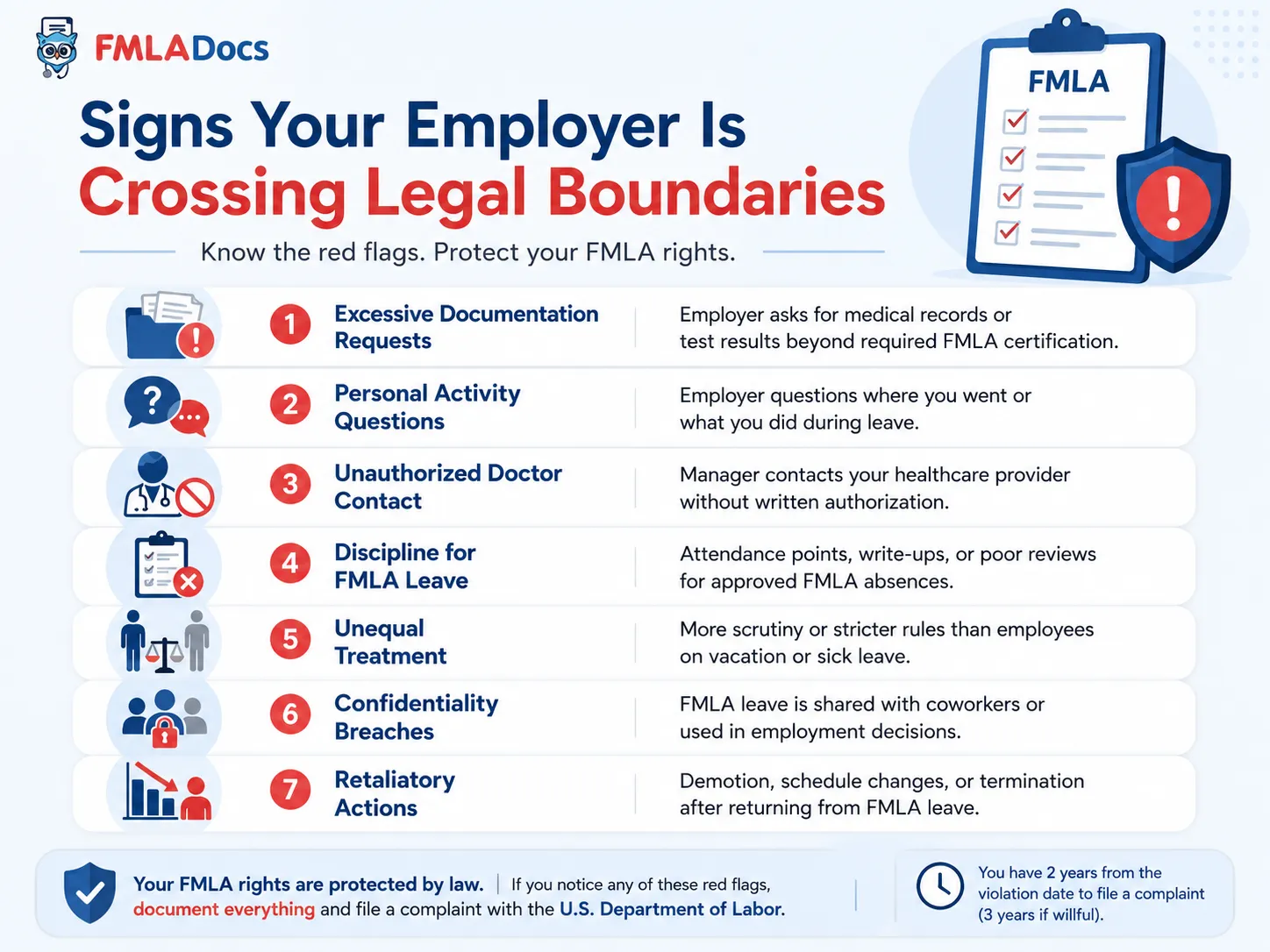
Red Flags: Signs Your Employer Is Crossing Legal Boundaries
When you take FMLA leave, your employer can track fmla leave within legal limits. But some cross the line. Knowing these red flags protects your rights and helps you document violations before they escalate.
Excessive Documentation Requests
Your employer can request medical certification on DOL forms. They cannot demand your complete medical records, test results, or detailed treatment notes. If HR asks for more than the WH-380 forms require, that’s overreach.
Being questioned about specific activities during leave raises concerns too. Where you went on weekends, who you saw, or what you did outside medical appointments doesn’t affect your job functions. These questions violate fmla privacy rights employees are entitled to under federal law.
Discovering your manager contacted your doctor without written authorization is a serious violation. Providers should only communicate with employers through official certification forms, not direct calls or pressure for information beyond what’s required.
Retaliation Indicators
Receiving discipline or negative performance reviews for properly reported FMLA absences signals retaliation. If your absences fell within approved certification limits, attendance points or write-ups are illegal.
Being treated differently than employees on vacation or sick leave shows discrimination. Facing more scrutiny, documentation requirements, or restrictions that don’t apply to other types of leave violates intermittent leave dos and don’ts established by federal regulations.
Finding your FMLA usage discussed with coworkers who don’t need to know breaches confidentiality. Your leave shouldn’t appear in performance evaluations or justify denying promotions or raises.
When to Document and Report Violations
Face demotion, schedule changes, or termination shortly after returning from leave? Document everything immediately. Save emails, take notes after conversations with dates and times, and record who said what.
If you notice these red flags, file a complaint with the DOL Wage and Hour Division. You have two years from the violation date to file, or three years if the violation was willful. Strong documentation makes your case stronger and protects your job-protected rights.
Conclusion
Yes, your employer can track FMLA leave. They must verify eligibility and ensure compliance with federal regulations. But that tracking has clear legal boundaries you need to understand.
Your employer can monitor attendance and require proper medical certification. They can ask for periodic status updates during your leave. They cannot surveil your activities or demand excessive medical details beyond DOL forms. They cannot track your location or use leave data to retaliate against you.
Understanding these boundaries protects you from overreach. It also ensures you meet your legitimate obligations under FMLA leave tracking requirements. If you notice red flags that suggest retaliation, document everything. Consider consulting with an employment attorney or filing a complaint with the Department of Labor.
The key is knowing what’s legal when you ask can employer track FMLA leave. Knowledge protects your rights while you focus on what matters mostyour health or family.
If you need help getting proper medical certification completed quickly, FMLADocs connects you with licensed physicians who understand exactly what employers require for FMLA approval. Our doctors complete certifications typically within 24-48 hours, so you don’t miss critical deadlines.
Frequently Asked Questions
Can my employer track how many FMLA hours I've used throughout the year?
Yes, your employer must track total FMLA hours used against your 12-week annual entitlement. That's 480 hours per year. They monitor this to make sure you don't exceed your allotment. For intermittent leave, tracking gets more detailed. Each absence date gets recorded. Duration in hours gets logged. A reason code identifies FMLA usage without disclosing your diagnosis. This system protects your privacy while keeping accurate records.
How long do I have to submit my FMLA medical certification forms?
You have 15 calendar days to return completed certification forms. Employers track this deadline strictly. For ongoing conditions, recertification may be required every 30 days. Missing these deadlines can jeopardize your leave protection. Employers must document every submission date and follow-up request. Documentation of certification submission dates is mandatory under Department of Labor regulations. Staying ahead of these deadlines helps you maintain your FMLA protections.
Do I still need to call in when I'm out on approved FMLA leave?
Yes, you must follow normal call-in procedures even when you're out on approved FMLA leave. This means calling the attendance line, notifying your supervisor, or using the absence reporting system. Many employees assume FMLA exempts them from these rules. It doesn't. You must report each absence according to company policy. Your employer can track FMLA leave, but they can't ignore your right to job protection. Following call-in rules protects both you and your employer.
What records must my employer keep to verify my FMLA eligibility?
Records must show you worked 1,250 hours in the past 12 months. They must also confirm you've been employed for 12 months with the company. This verification happens before leave approval. All FMLA records must be maintained for three years per Department of Labor regulations. These files stay confidential in separate folders from your personnel records. This protects your medical privacy while ensuring compliance. Tracking systems must distinguish FMLA-protected absences from other leave types.
Can my employer demand detailed medical updates while I'm on FMLA leave?
No, your employer can't demand detailed medical updates or monitor your personal activities. Federal law sets strict limits on what they can monitor and what they can ask. Employers must track your leave hours and dates to stay compliant. But they can't request invasive medical information beyond what's required for certification. The difference matters because many workers avoid taking protected leave due to fears about employer surveillance. Understanding these boundaries helps you use your FMLA rights without unnecessary worry.
How does my employer separate FMLA absences from other types of leave in their tracking system?
Tracking systems must distinguish FMLA-protected absences from other leave types. PTO, sick leave, and unexcused absences get separate codes. This separation prevents confusion during audits. Each FMLA absence gets a reason code that identifies FMLA usage without disclosing your diagnosis. This protects your privacy while keeping accurate records. All FMLA records stay confidential in separate folders from your personnel records. This system ensures compliance while maintaining medical privacy protections required by federal law.
What happens if I use up all my FMLA hours before I'm ready to return to work?
Once you exhaust your 12-week FMLA entitlement (or 26 weeks for military caregiver leave), your job protection under the FMLA ends. At that point, your employer may allow additional unpaid leave as a courtesy, or may require you to return or separate from employment, depending on company policy and other laws like the ADA that might apply to your situation.
Can my employer count partial-day absences against my FMLA leave balance?
Yes. If you leave early or arrive late for an FMLA-qualifying reason, such as a therapy appointment, that time can be deducted from your leave balance. Employers must track this in the same smallest increment of time (no more than one hour) that they use for other types of leave, so even short absences should be recorded accurately.
Meet the author
Nida Hammad
I am a professional writer with over five years of experience creating clear, engaging, and well-researched content. I specialize in healthcare topics, helping readers understand complex information in simple wording. Currently, I write for FMLA DOC, where I focus on producing accurate and trusted guides for people seeking support with FMLA and medical needs.
Get Your FMLA Certification Online in Minutes