
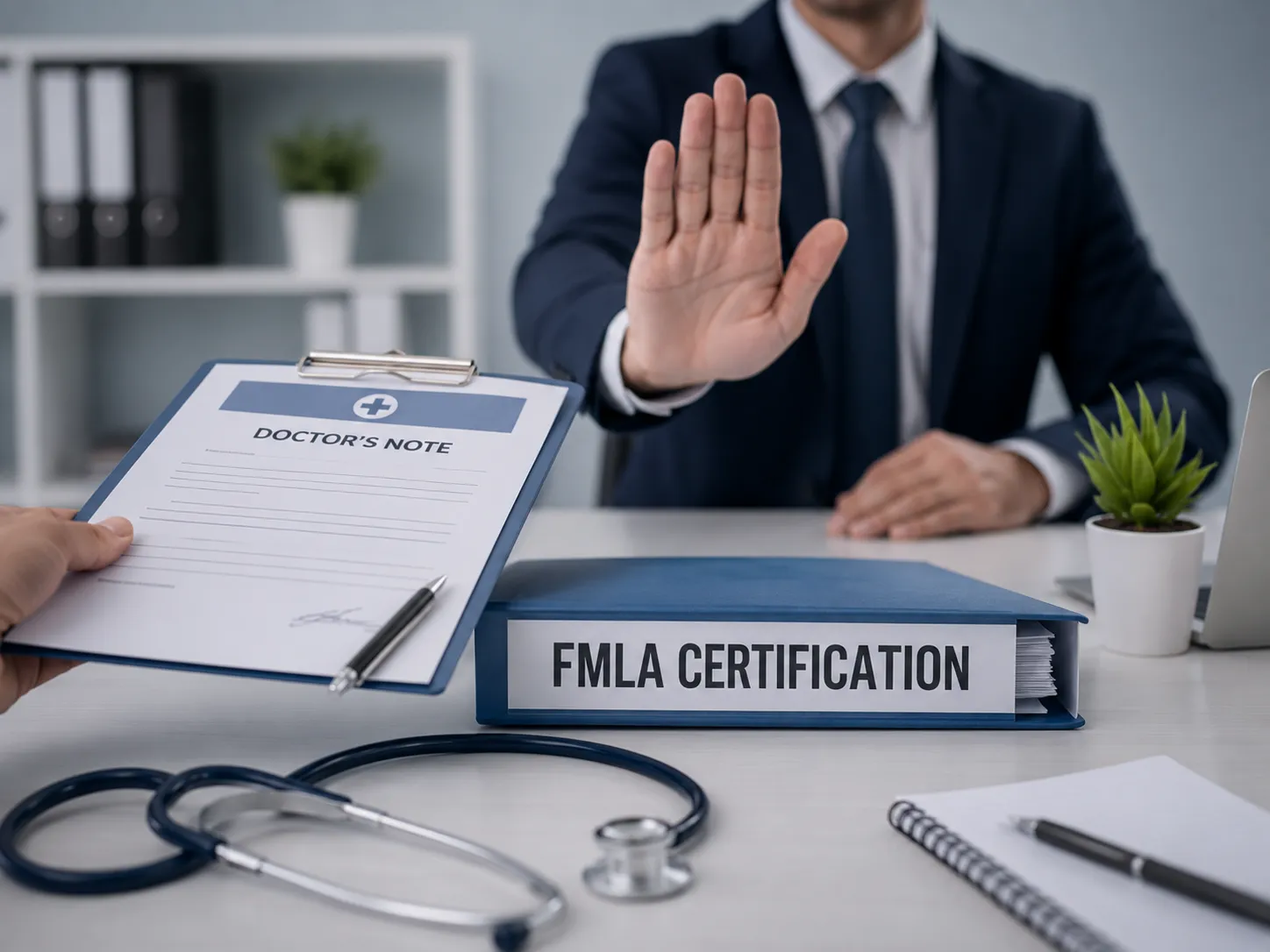
Can Employer Deny FMLA with Doctor Note After Certification?
 by Nida Hammad
 Last updated:
Can employer deny FMLA with doctor note? Yes, they can. Employers legally reject FMLA requests even when you submit medical documentation if your paperwork is incomplete, deadlines are missed, or you don’t meet eligibility requirements. This surprises thousands of employees who assume a doctor’s note guarantees job-protected leave.
The truth is more complex. A standard doctor’s note doesn’t equal valid FMLA certification. Federal law requires specific medical details, strict timing windows, and complete forms that meet Department of Labor standards. Missing any of these elements gives your employer legal grounds for denial, even when your medical condition is legitimate.
This guide shows you exactly when employer rejected FMLA certification is legal versus illegal. You’ll learn what makes documentation legally sufficient, how the DOL 5-day certification window protects you, common illegal denial reasons that violate your rights, what to document from day one, and your next steps including filing a complaint with the DOL Wage and Hour Division. Understanding these rules protects your job when you genuinely need medical leave.
Let’s start with the timing requirements that catch most employees off guard.
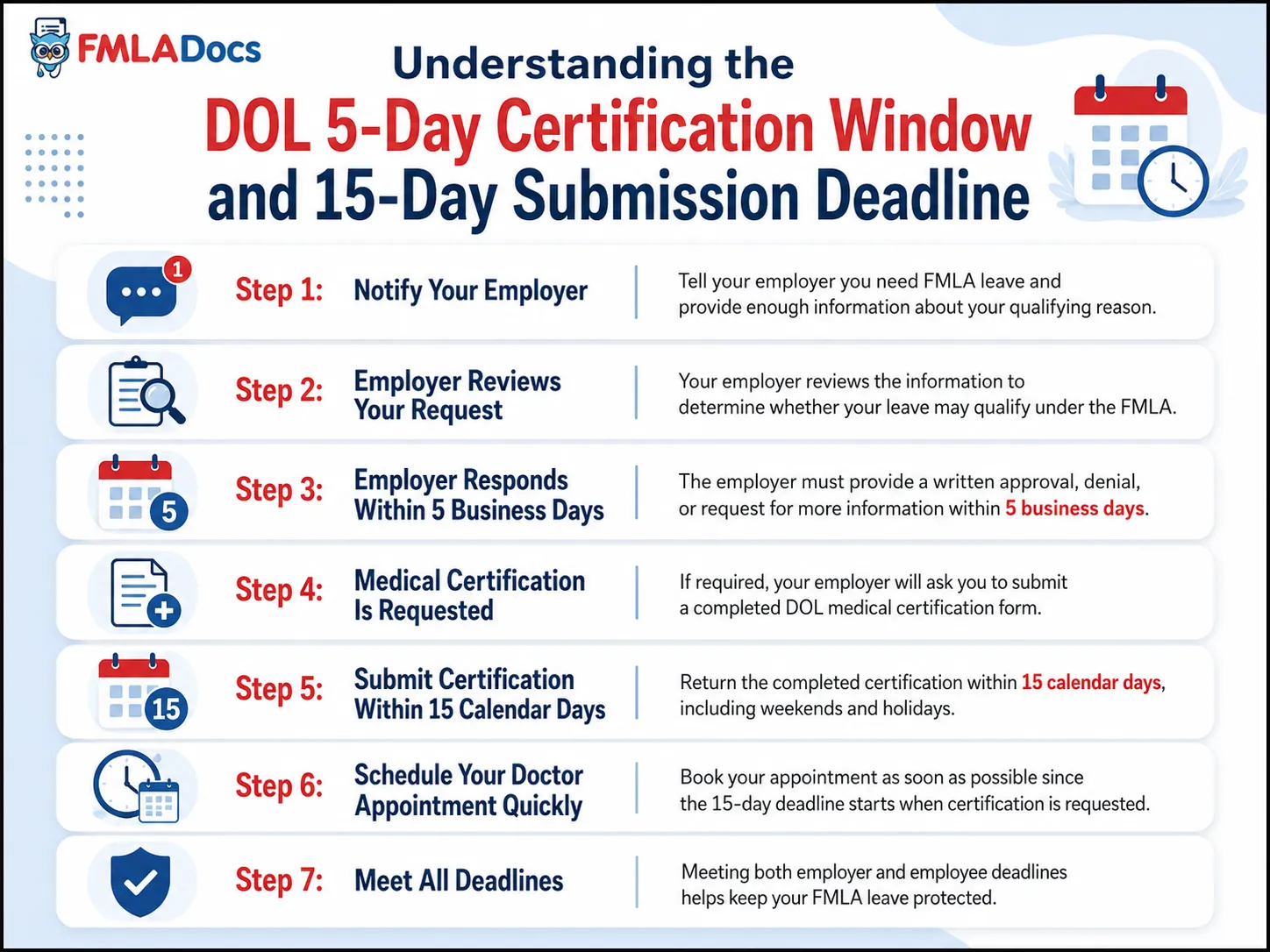
Understanding the DOL 5-Day Certification Window and 15-Day Submission Deadline Can Employer Deny FMLA With Doctor Note
Even with a doctor’s note, timing matters. The Department of Labor sets strict deadlines that affect whether your FMLA approval timeline stays on track. Miss these windows and your employer can legally delay or deny leave.
The 5-Day Employer Response Requirement
Once your employer receives enough information to determine if your leave qualifies as FMLA, they have five business days to respond. This written designation notice confirms approval or denial. It also outlines your rights and responsibilities during leave.
If your employer misses this deadline, they can’t retroactively deny your leave. The clock starts when they have sufficient details about your condition and need for time off.
Your 15-Day Certification Submission Window
After your employer formally requests medical certification, you have 15 calendar days to submit completed DOL forms. Not business days. Calendar days. This includes weekends and holidays.

The countdown begins when your employer makes the request, not when you schedule your doctor appointment. If your physician’s office has a three-week wait, you’re already behind before being seen. Many employees lose protection because they couldn’t secure appointments within this compressed timeline.
What Happens When Deadlines Are Missed
Missing the 15-day deadline without good cause allows your employer to delay or deny leave until you submit proper certification. If your certification arrives incomplete or insufficient, your employer must notify you in writing within five business days. You then get seven calendar days to fix deficiencies.
Extensions may be granted if circumstances beyond your control prevent timely submission. But you must communicate proactively with HR. Document every delay and explain why you couldn’t meet the deadline. Understanding when employers can legally deny FMLA requests helps you protect your rights during this process.
Read the full breakdown in FMLA approval timeline.
Valid Certification vs Incomplete Paperwork: What Employers Actually Need
Can employer deny FMLA with doctor note? Yes, if the documentation doesn’t meet federal standards. A standard doctor’s note stating you need time off isn’t the same as proper FMLA certification. Many employees discover this too late.
According to the Department of Labor, valid certification must include specific medical details that prove a serious health condition exists. Generic notes get rejected every day.
Required Information on DOL Certification Forms
Your certification must document when your condition began and how long it will last. It must state whether inpatient care was required. For ongoing conditions, it must specify treatment frequency with exact numbers.
For intermittent leave, providers must estimate episode frequency. Write “2-4 times monthly” instead of “as needed.” Include expected duration of each episode. Write “4-8 hours” or “1-2 days” instead of “varies.”
Most importantly, your provider must explain how your condition prevents you from performing essential job functions. Listing a diagnosis alone doesn’t cut it. The form needs specific examples of functional limitations.
Common Documentation Deficiencies That Trigger Denials
Incomplete paperwork includes blank required fields that providers skip. Vague statements like “patient needs rest” without clinical detail get rejected. Missing provider signatures or credentials cause automatic denials.
No treatment schedule for ongoing conditions leaves employers questioning medical necessity. Understanding FMLA medical certification requirements helps you avoid these common mistakes. Many physicians unfamiliar with FMLA provide insufficient documentation.
This forces employees to go back for corrections. Your 15-day certification window shrinks fast when forms bounce back.
Why a Standard Doctor’s Note Isn’t Enough
A note saying “John needs two weeks off” doesn’t establish a serious health condition under DOL definitions. Employers can legally reject certifications that don’t prove either inpatient care or continuing treatment occurred.
You need completed DOL Form WH-380-E or WH-380-F with all required medical details. These forms ask specific questions about diagnosis, treatment, and functional impact. Generic notes don’t answer those questions.
Working with providers who understand FMLA requirements makes the difference. FMLADocs connects you with board-certified physicians who complete certifications correctly the first time. This prevents delays that jeopardize your job protection.
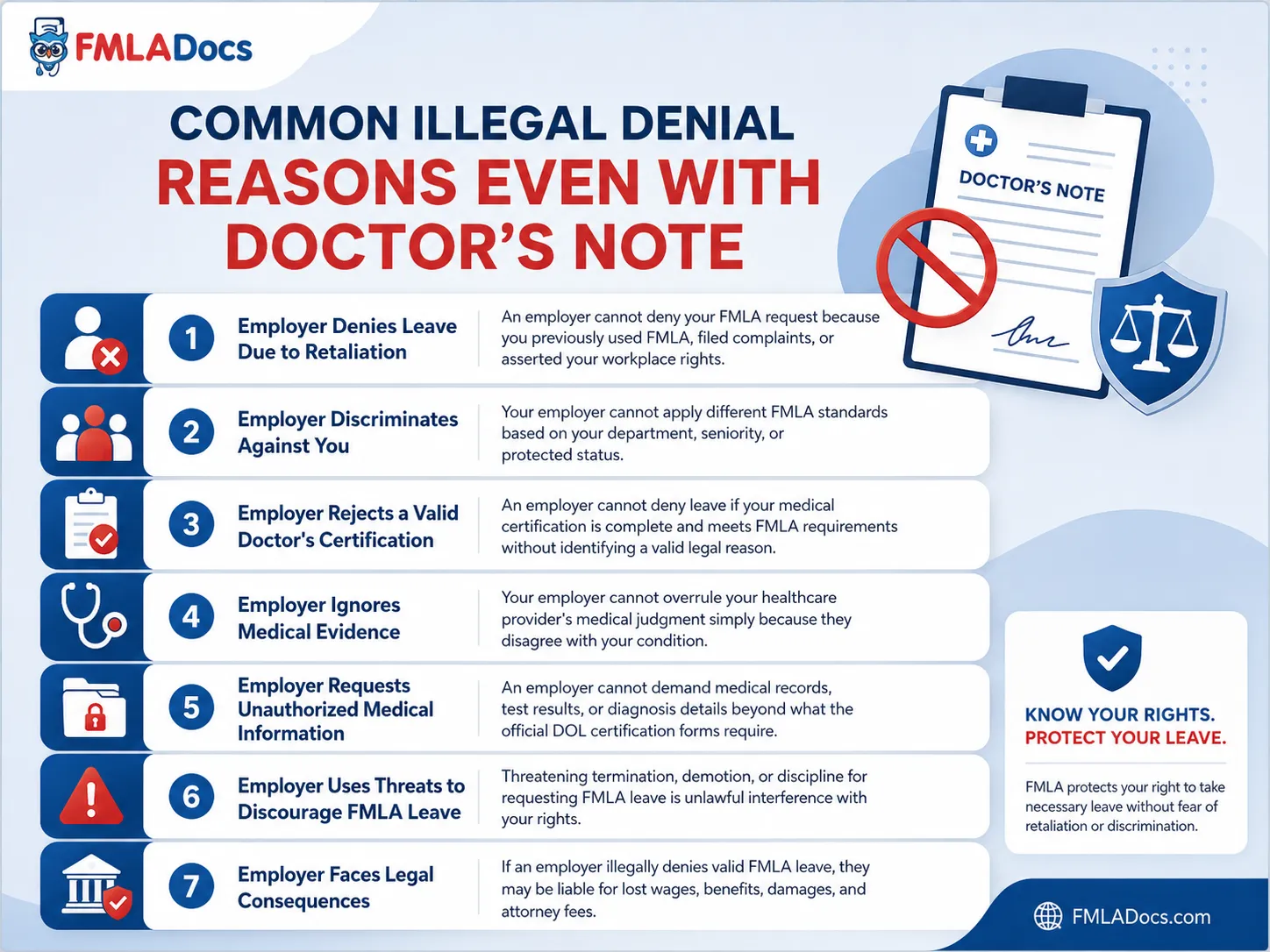
Common Illegal Denial Reasons: When Employer Violates Your FMLA Rights
Even with a valid doctor’s note, some employers deny FMLA requests for reasons that violate federal law. These illegal denials expose companies to serious legal liability. You need to know what constitutes unlawful interference with your rights.
Denials Based on Discrimination or Retaliation
Your employer can’t deny FMLA because you filed complaints before. They can’t reject your request because you discussed rights with coworkers. According to the EEOC’s FMLA discrimination protections, retaliation for previous FMLA use violates federal law.
Employers also can’t apply stricter standards to certain employees. Approving similar requests for some workers while denying yours suggests discrimination. This includes targeting specific departments, newer employees, or protected class members.
Rejecting Valid Certification Without Legitimate Basis
Your employer can’t reject properly completed certification without identifying specific problems in writing. They can’t deny leave because they disagree with your doctor’s medical judgment. Second opinions require proper recertification procedures under DOL rules.
Some employers deny leave for conditions they deem not serious enough. If your certification establishes continuing treatment or a chronic condition meeting DOL criteria, that’s illegal. Your employer doesn’t get to override medical expertise with their personal opinion.
Procedural Violations That Constitute Interference
Demanding more information than DOL forms request constitutes interference. Your employer can’t require diagnosis details beyond what’s legally allowed. They can’t ask for medical records or test results not specified on certification forms.
Threatening job loss before evaluating your certification is illegal interference. So is threatening demotion or discipline for simply requesting FMLA leave. These actions violate your right to job-protected time off.
Employers who deny valid FMLA requests face serious consequences. They may owe lost wages, benefits, and emotional distress damages. Attorney fees often apply in DOL or private lawsuits.
What to Document Throughout Your FMLA Request Process
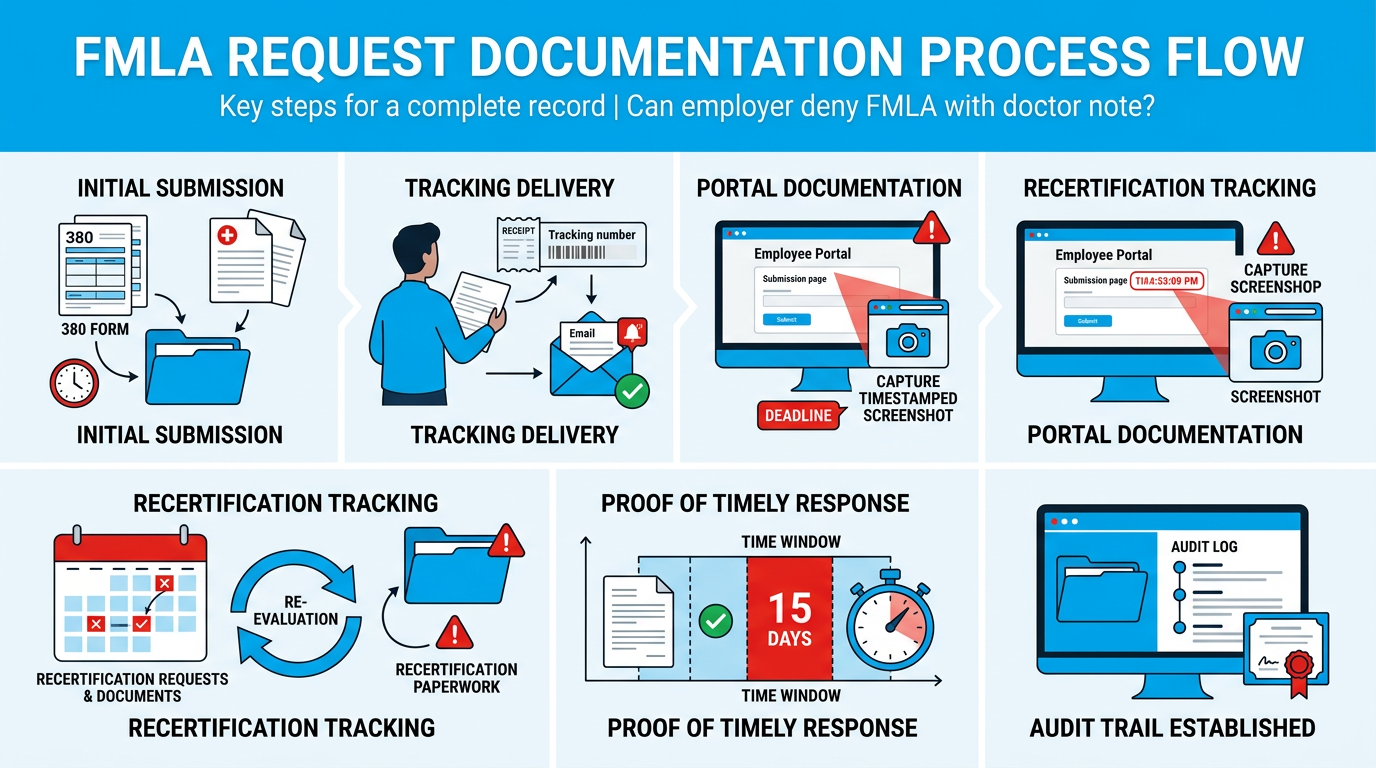
Proper documentation protects you if your employer denies FMLA with a doctor note. Start building your record the moment you notify HR about your need for leave. This evidence becomes critical if you need to file a complaint or pursue legal action.
Essential Records to Keep From Day One
Save all written communications from your employer. You need the eligibility notice they must send within five business days of your request. Keep the designation notice that confirms approval or denial with specific reasons. Store any requests for additional information or clarification.
Keep copies of all submitted paperwork before sending it. This includes completed WH-380 forms, any supplemental medical documentation, and recertification documents. Save proof of submission with timestamps. Screenshot portal submissions and track certified mail receipts. Keep delivery confirmations for all documents sent to your employer.
Documenting Employer Communications and Decisions
Document every conversation with HR. Record the date, time, who you spoke with, and what was discussed. Note any commitments made during the call. Follow up with email summaries like “Per our conversation today, you confirmed my leave request is being processed.”
Save emails to a personal account, not just your work email. You might lose access to company systems if your employment ends. This backup ensures you retain critical evidence. Note any verbal statements from supervisors or HR about your leave request.
Track performance reviews or discipline issued around the time of your request. Document how similarly situated employees were treated. This comparison can reveal discriminatory patterns if your employer denied FMLA with medical documentation while approving others.
Building Your Case for Potential Appeals or Complaints
If denied, document the specific reason given in writing. Save any notice stating deficiencies your employer claims exist. Record your efforts to cure those deficiencies within required timeframes. The DOL 5-day certification window matters when proving you responded promptly.
This documentation becomes your evidence if you need to understand what to do after denial and file a complaint with the DOL Wage and Hour Division. Organized records showing incomplete FMLA paperwork requests, illegal FMLA denial reasons, or employer rejected FMLA certification strengthen your case significantly.
Next Steps After FMLA Denial: HR Conversation and DOL Wage and Hour Division Complaint
Getting denied for FMLA with a doctor’s note doesn’t mean the fight is over. You have specific rights and clear steps to challenge the decision. Acting quickly within the first week gives you the best chance to fix the problem.
Immediate Actions Within 7 Days of Denial
Read your written denial notice carefully. Your employer must explain exactly why they rejected your request. Look for specific issues like missing information, incomplete forms, or eligibility concerns.
Contact your healthcare provider right away. Share the denial notice with them. Ask them to address each deficiency the employer identified. According to the incomplete certification guidelines, employers must identify specific problems before denying your request.
Submit corrected certification within the cure period if your employer flagged incomplete paperwork. Most employers give you seven days to fix documentation issues. Don’t miss this window.
Having the Right Conversation with HR
Schedule a meeting with HR to discuss the denial. Come prepared with specific questions. Ask what additional information would satisfy their requirements. Request clarification on how they determined you don’t qualify.
Take detailed notes during the meeting. Write down names, dates, and exact statements. Follow up with an email summary of what was discussed. This creates a paper trail if you need to file a complaint later.
Filing a Complaint with DOL Wage and Hour Division
If your employer continues the denial after you submit sufficient certification, file a complaint with the DOL. You can also file if you believe the denial is retaliatory or discriminatory.
File online at dol.gov/agencies/whd/contact/complaints. You can also call 1-866-487-9243 to speak with an investigator. The DOL investigates your employer’s FMLA practices and reviews your documentation.
The DOL can order remedies including reinstatement, back pay, and benefit restoration if they find a violation. You have two years from the violation date to file a private lawsuit. That extends to three years if the violation was willful. Prevailing employees can recover attorney fees from their employer.
Conclusion
Yes, can employer deny FMLA with doctor note. They can if you miss eligibility requirements or deadlines. They can if your paperwork lacks specific functional limitations. A simple doctor’s note isn’t the same as complete DOL certification forms.
You learned how the DOL 5-day certification window works. You discovered what makes paperwork valid versus incomplete. You explored common illegal FMLA denial reasons that violate your rights. You found out what to document throughout your request. You got clear next steps after denial, including how to file complaint DOL Wage and Hour Division.
Don’t assume you have no options after FMLA denial with medical documentation. Review the denial notice for specific gaps. Work with your provider to fix issues within the cure period. Document every interaction with HR and your healthcare team.
If your employer rejected FMLA certification despite proper forms, take action now. Contact the DOL Wage and Hour Division. Consult an employment attorney about your rights. Get help from professionals who understand federal standards.
FMLADocs connects you with board-certified physicians who complete proper certification within 24 to 48 hours, helping you avoid denials caused by incomplete FMLA paperwork. Start your certification process today or download our free guide to FMLA requirements.
Frequently Asked Questions
Can my employer legally deny FMLA even if I have a doctor's note?
Yes, employers can legally reject FMLA requests even with medical documentation. A standard doctor's note doesn't equal valid FMLA certification under federal law. Your employer can deny leave if your paperwork is incomplete, you miss submission deadlines, or you don't meet eligibility requirements. The Department of Labor requires specific medical details on official forms, not just a basic note saying you need time off. Missing any required elements gives your employer legal grounds for denial, even when your medical condition is legitimate and your doctor supports your need for leave.
How long do I have to submit FMLA certification after my employer requests it?
You have 15 calendar days to submit completed FMLA certification forms after your employer formally requests them. This includes weekends and holidays, not just business days. The countdown starts when your employer makes the request, not when you schedule your doctor appointment. If you can't get a physician appointment within this window, you're already behind before being seen. Many employees lose FMLA protection because they couldn't secure appointments within this compressed timeline. You can request extensions if circumstances beyond your control prevent timely submission, but you must communicate proactively with HR and document every delay.
What happens if I miss the 15-day FMLA certification deadline?
Missing the 15-day deadline without good cause allows your employer to delay or deny your leave until you submit proper certification. If your certification arrives incomplete or insufficient, your employer must notify you in writing within five business days. You then get seven calendar days to fix the deficiencies. Extensions may be granted if circumstances beyond your control prevented timely submission, but you must explain why you couldn't meet the deadline. Document every delay and communicate proactively with HR to protect your rights. Without proper documentation of delays, your employer has legal grounds to deny your request.
How quickly must my employer respond after receiving my FMLA request?
Your employer has five business days to respond once they receive enough information to determine if your leave qualifies as FMLA. This written designation notice must confirm approval or denial and outline your rights and responsibilities during leave. The clock starts when they have sufficient details about your condition and need for time off. If your employer misses this five-day deadline, they can't retroactively deny your leave. This protection ensures employers process requests promptly and don't leave you in limbo about whether your job is protected while you're dealing with a serious health condition.
What makes FMLA certification different from a regular doctor's note?
Valid FMLA certification requires specific medical details on official Department of Labor forms, not just a basic doctor's note. A standard note stating you need time off doesn't meet federal standards. The DOL requires complete forms with detailed information about your condition, treatment plan, and how it affects your ability to work. Many employees discover too late that their doctor's note doesn't qualify as proper certification. Federal law sets strict requirements for what medical documentation must include. Missing any required elements gives your employer legal grounds to reject your request, even when your medical condition is legitimate and serious.
What should I do if my employer denies my FMLA request despite having medical documentation?
First, review whether your certification met all Department of Labor requirements and deadlines. If your employer's denial seems illegal, document everything from day one, including all communications with HR and copies of submitted paperwork. You can file a complaint with the DOL Wage and Hour Division if you believe your rights were violated. Common illegal denial reasons include rejecting complete certification, ignoring valid medical documentation, or denying leave for discriminatory reasons. Understanding the difference between legal denials based on incomplete paperwork versus illegal denials that violate your rights helps you determine your next steps and whether to escalate the situation.
If I've already received FMLA certification, can my employer still deny my leave request?
No. Once your employer approves your FMLA certification and confirms eligibility, they cannot deny your leave. Denial of approved leave violates federal law. Employers can request recertification under specific circumstances (periodic updates, significant changes), but this differs from outright denial. If your employer denies previously approved leave, document everything and file a DOL complaint immediately
When can my employer request new FMLA certification if I already have a valid certification in place?
Employers can request recertification under 29 CFR § 825.307, but only for legitimate reasons: periodic updates (every 30+ days for ongoing conditions), annually for continuing conditions, significant circumstance changes, or incomplete original documentation. They cannot request recertification as retaliation or simply because they disagree with your doctor. Challenge improper requests by filing a DOL complaint.
Meet the author
Nida Hammad
I am a professional writer with over five years of experience creating clear, engaging, and well-researched content. I specialize in healthcare topics, helping readers understand complex information in simple wording. Currently, I write for FMLA DOC, where I focus on producing accurate and trusted guides for people seeking support with FMLA and medical needs.
Get Your FMLA Certification Online in Minutes